Learning how to start training kickboxing doesn’t require prior fighting experience—it’s a skill-based sport that welcomes complete beginners alongside seasoned athletes. Whether you’re drawn to kickboxing for fitness, self-defense, or competitive goals, the foundation is the same: proper stance, footwork, and technique learned from qualified instructors who understand how to scale intensity to your current level.
At Trein Club in Houston, our kickboxing program is designed for beginners who want to build real skills in a supportive environment. Unlike high-intensity group fitness classes, our structured kickboxing training teaches you authentic striking mechanics, defensive positioning, and conditioning—all while building confidence in an ego-free setting. Many students discover that kickboxing complements other martial arts beautifully; in fact, several of our members cross-train between our Brazilian Jiu-Jitsu and kickboxing classes to develop well-rounded fighting abilities.
The first step is understanding what to expect: proper hand wrapping, basic punch and kick combinations, bag work, and partner drills that scale to your fitness level. Our coaches assess where you’re starting from and progress you systematically, so you’re never overwhelmed or bored.
What Is Kickboxing and Why Start Training It
Kickboxing is a hybrid striking sport that blends punches from Western boxing with kicks borrowed from karate, Muay Thai, and other traditional martial arts. Born in the 1960s and 70s through cross-pollination between Japanese karateka and American boxers, the modern version has grown into one of the most effective full-body disciplines for fitness, self-defense, and competitive fighting. Unlike pure boxing, it engages the hips, legs, and core in every strike, making it uniquely demanding and rewarding.
People take up the sport for vastly different reasons: a parent looking to burn 800 calories an hour, a college student wanting confidence on the street, a professional decompressing after long workdays, or an athlete chasing amateur titles. What unites them is accessibility — you don’t need a martial arts background, ideal body type, or expensive equipment to begin. You just need a coach who can teach the fundamentals correctly from day one.
Difference Between Kickboxing Styles (American, Dutch, K-1, Muay Thai)
Understanding the major styles helps you pick a gym that matches your goals. American kickboxing (also called “full contact karate”) allows punches and kicks above the waist only — no leg kicks, no clinching, no knees. It’s the most boxing-oriented variant and emphasizes head movement and combinations.
Dutch kickboxing evolved in the Netherlands and is famous for its punishing low kicks, aggressive forward pressure, and brutal punch-kick combinations like the legendary “3-2-low kick.” Dutch gyms produced fighters like Ernesto Hoost and Ramon Dekkers and are often considered the gold standard for technical striking development.
K-1 rules, popularized by the Japanese promotion of the same name, permit punches, all kicks, and limited clinch knees, but no extended clinching or elbows. It’s the most common ruleset in modern professional kickboxing.
Muay Thai, while technically a separate art, is often grouped with kickboxing. It adds elbows, extended clinch work, sweeps, and a heavy emphasis on knees — making it the most complete stand-up striking system. If you’re deciding between disciplines, our breakdown on how much Muay Thai lessons cost can help you compare investment levels.
Key Benefits of Kickboxing: Fitness, Self-Defense, and Mental Health
Physically, this is one of the most efficient calorie-burning activities available — a one-hour session can burn between 600 and 900 calories while simultaneously building lean muscle, explosive power, and cardiovascular endurance. The rotational nature of strikes develops core strength that traditional gym work rarely matches.
From a self-defense standpoint, the sport teaches distance management, timing, and the ability to absorb and deliver impact under pressure — skills that translate directly to real-world confidence. Mentally, the focus required to execute combinations and read an opponent creates a meditative state that reduces stress, sharpens decision-making, and builds resilience. Many practitioners describe their first month on the mats as the best therapy they’ve ever experienced.
How to Start Training Kickboxing: Step-by-Step for Beginners
Getting started isn’t complicated, but the choices you make in your first 30 days will shape your trajectory for years. Follow this sequence to build a foundation that won’t need to be undone later.
Step 1 – Find the Right Gym and Coach
The single most important decision you’ll make is where you train. Look for gyms with credentialed coaches — ideally former or current competitors with verifiable records — and an emphasis on technique over “cardio kickboxing” workouts. Visit at least two or three facilities, take introductory classes, and observe how instructors interact with beginners. A good gym will pair you with experienced training partners during drills, correct your form patiently, and never push you into sparring before you’re ready.
Red flags include packed classes with no individual feedback, contracts pushed before you’ve trained, and a culture where injuries are normalized. Green flags include clean mats, structured curriculums, and members who look forward to coming back.
Step 2 – Get the Essential Gear Before Your First Class
Most reputable gyms will let you try a first class with rental gloves, but you should arrive prepared with the basics: comfortable athletic clothing (shorts or athletic pants, a moisture-wicking shirt), a water bottle, and a small towel. Within your first week, invest in your own hand wraps and 14- or 16-ounce boxing gloves. Buying personal gear immediately signals commitment to yourself and protects you from the hygiene issues of shared equipment.
Step 3 – Understand What to Expect in Your First Kickboxing Class
A typical beginner session lasts 60 to 90 minutes and follows a predictable structure: a 10–15 minute dynamic warm-up (jumping rope, shadow boxing, mobility work), 20–30 minutes of technique instruction and partner drilling, 15–20 minutes of pad or bag work, and a brief cool-down. You will sweat heavily, you will feel uncoordinated, and you will use muscles you didn’t know existed. This is normal. Expect mild soreness for two to three days afterward, especially in your shoulders, hips, and calves.
Step 4 – Learn the Fundamental Stance and Footwork
Everything begins with stance. In an orthodox position, your left foot leads, your right foot trails at roughly a 45-degree angle, your weight is evenly distributed, knees are slightly bent, hands are up by your cheeks, and your chin is tucked. Southpaws mirror this. From this base, you’ll learn to move using “step-drag” footwork — never crossing your feet, never bouncing wastefully — maintaining balance and range at all times. Master this in your first month and every technique that follows becomes easier.
10 Core Kickboxing Techniques Every Beginner Must Learn
The sport has hundreds of techniques, but roughly ten fundamentals account for 90% of what’s used at every level. Drill these obsessively.
Basic Punches: Jab, Cross, Hook, and Uppercut
The jab (lead-hand straight punch) is the most important strike in striking — it measures distance, sets up combinations, and disrupts opponents. The cross (rear-hand straight) is your power punch, driven by hip rotation and rear-foot pivot. The hook is a horizontal strike thrown with either hand, devastating at close range. The uppercut travels vertically upward, ideal against opponents who lean forward or cover up. Learn to throw each in isolation before chaining them into combinations like 1-2 (jab-cross) and 1-2-3 (jab-cross-lead hook).
Basic Kicks: Roundhouse, Front Kick, Side Kick, and Low Kick
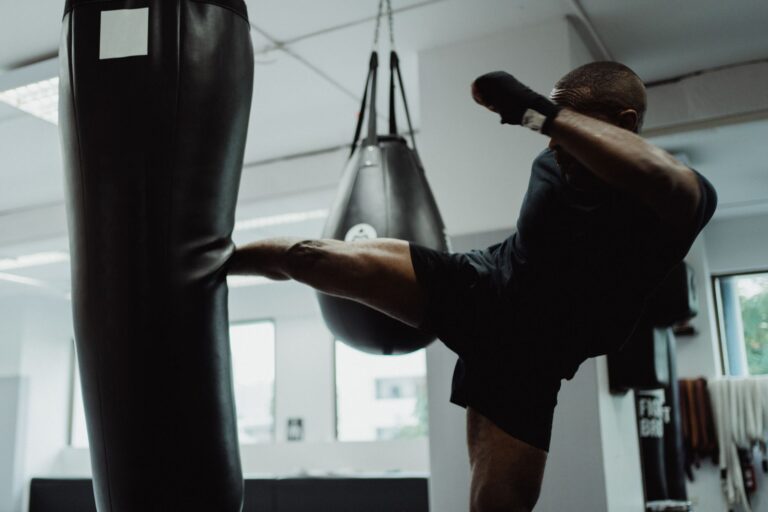
The roundhouse kick — delivered with the shin or instep using hip rotation — is the workhorse of the sport. The front kick (teep) uses the ball of the foot to push or stop an opponent. The side kick, less common today but a staple in American styles, drives straight outward with the heel. The low kick targets the thigh and ranks among the most fight-ending techniques in striking. Beginners should focus on the roundhouse and teep first; they’re the foundation.
Defensive Fundamentals: Guard, Slipping, and Blocking
Offense without defense is a recipe for injury. Learn the high guard (hands at your cheeks, elbows tight), slipping (subtle head movement to evade straight punches), parrying (deflecting punches with an open hand), and the shin check (lifting your lead leg to block low kicks). Most beginners obsess over hitting harder; experienced fighters obsess over not being hit.
Essential Gear and Equipment for Beginner Kickboxers
Gloves, Hand Wraps, and Shin Guards: What to Buy First
Your first three purchases should be hand wraps (180-inch Mexican-style cotton wraps are the standard), boxing gloves (14oz or 16oz for bag work and sparring), and shin guards (cloth-and-foam guards from reputable brands). Expect to spend $80–$150 total for entry-level versions of all three. Wraps protect the small bones in your hands; gloves protect both you and your partners; shin guards prevent the bone bruising that derails most beginners’ progress.
Mouthguard, Headgear, and Groin Protection
A boil-and-bite mouthguard ($15–$30) is mandatory the moment you start any contact drilling. Headgear becomes relevant when you begin light sparring — most gyms require it. Groin protection (a cup for men, pelvic guard for women) is non-negotiable for any partner work involving kicks. Don’t skip these. The cost of dental work or a concussion vastly exceeds the cost of protective equipment.
Budget vs. Premium Gear: What Actually Matters for Beginners
Newcomers often overspend on premium gear they don’t yet appreciate. Entry-level gloves from reputable brands (Hayabusa, Fairtex, Venum, Sanabul) perform well for the first 12–18 months. Where you should not cut corners: hand wraps (buy quality cotton, not synthetic), mouthguards (custom-fit if possible), and shin guards (full coverage, not the short “sparring socks”). Upgrade after you’ve trained consistently for six months and know your preferences.
How to Structure Your Kickboxing Training Schedule as a Beginner
How Many Days Per Week Should You Train Kickboxing
For absolute newcomers, two to three classes per week is the sweet spot for the first two months. This frequency allows your body to adapt to new movement patterns and impact loads without breaking down. After 8–12 weeks of consistent work, most students can increase to four sessions per week. Five or more days per week should be reserved for athletes with a year or more of steady mat time and active recovery protocols in place.
Balancing Technique Work, Conditioning, and Recovery
A well-structured week balances three pillars: technical training (classes, drilling, pad work), supplemental conditioning (strength, cardio, mobility), and recovery (sleep, nutrition, soft tissue work). A common beginner mistake is loading up on classes while neglecting sleep and active recovery, which leads to plateaus and injuries. Treat rest as part of your training plan, not a reward.
Sample Weekly Training Plan for Kickboxing Beginners
- Monday: Kickboxing class (60–90 min)
- Tuesday: Strength training (45 min) + mobility work (15 min)
- Wednesday: Kickboxing class (60–90 min)
- Thursday: Active recovery — light cardio, yoga, or sauna
- Friday: Kickboxing class (60–90 min)
- Saturday: Optional shadow boxing + jump rope (30 min)
- Sunday: Full rest
Supplemental Training to Accelerate Your Kickboxing Progress
Strength and Conditioning Exercises for Kickboxers
Strikers benefit most from compound movements that build hip drive, rotational power, and grip strength. Prioritize squats, deadlifts, kettlebell swings, push-ups, pull-ups, and weighted carries. Two strength sessions per week — kept under 45 minutes and focused on movement quality — will dramatically improve your striking power without sapping recovery from mat time.
Flexibility and Mobility Work to Improve Kicks
High kicks require hip mobility, not just flexibility. Daily 10-minute routines targeting the hip flexors, adductors, hamstrings, and thoracic spine will unlock kicks that previously felt impossible. Yoga is an excellent complement — many serious strikers attribute breakthroughs in their kicking to a consistent yoga practice.
Cardio Training: Running, Jump Rope, and Shadow Boxing
Jump rope is the cardio tool of choice for fighters because it develops the exact same calf endurance, timing, and rhythm needed for footwork. Aim for 10–20 minutes three times per week. Add a weekly 30-minute run for aerobic base, and 5–10 minutes of daily shadow boxing to reinforce technique while building conditioning.
How to Train Kickboxing at Home (Solo Training Guide)
Shadow Boxing: The Most Underrated Solo Drill
Shadow boxing is the single most valuable solo drill in striking. It requires no equipment, costs nothing, and develops technique, footwork, conditioning, and fight IQ simultaneously. Spend 3–5 rounds of three minutes each visualizing an opponent — throwing combinations, defending, moving, and resetting. Filming yourself and reviewing the footage accelerates progress dramatically.
Heavy Bag Workouts for Beginners at Home
If you have space and budget for a heavy bag (80–150 lbs hanging or freestanding), you can supplement gym training significantly. Structure home sessions in rounds: 3 minutes of work, 1 minute of rest, for 4–6 rounds. Focus on technique and combinations, not pure power. Hitting the bag wildly without coaching reinforces bad habits faster than it builds good ones.
Limitations of Training Alone and How to Overcome Them
Solo work cannot replicate the timing, pressure, and adaptive feedback that come from training with partners and a qualified coach. No amount of bag work teaches you to read an opponent or react to live strikes. Use home practice as supplementary work — never as a replacement for gym time. If your access to a gym is limited, prioritize one high-quality private session per month over daily solo workouts.
Common Beginner Mistakes and How to Avoid Them
Skipping the Basics and Rushing to Spar
Eager newcomers often want to spar within their first weeks. This is the fastest way to develop bad habits, suffer concussions, and burn out. Most reputable coaches won’t allow students to spar until they’ve demonstrated competent fundamentals — usually after 2–3 months of consistent training. Embrace the drill phase; it’s where real fighters are built.
Neglecting Defense in Favor of Offense
Beginners gravitate toward hitting harder when they should be focusing on not getting hit. For every offensive technique you drill, drill its defensive counterpart. Your future training partners — and your brain — will thank you.
Overtraining and Ignoring Recovery
The enthusiasm that drives newcomers to train six days a week in their first month is the same enthusiasm that puts them on the sidelines by month three with shin splints, joint pain, or burnout. Progress in martial arts is non-linear and long-term. Sleep 7–9 hours, eat enough protein, hydrate, and take your rest days seriously.
Injury Prevention and Safety Tips for Kickboxing Beginners
Most Common Kickboxing Injuries and How to Prevent Them
The most frequent beginner injuries are shin bruises, knuckle and wrist sprains, rolled ankles, and overuse problems in the hips and lower back. Prevention comes from proper hand wrapping, conditioned shins (gradual progression, never forced), quality footwork that doesn’t compromise ankle position, and adequate warm-ups. Concussions, while rarer in technical training, are the most serious risk — always wear a mouthguard, never spar without supervision, and stop immediately if you feel unwell after a head impact.
Proper Warm-Up and Cool-Down Routines
A proper warm-up should last 10–15 minutes and progress from light cardio (jump rope, jogging) to dynamic mobility (leg swings, hip circles, arm rotations) to sport-specific movement (shadow boxing). Cool-downs should include 5–10 minutes of light movement followed by static stretching of the hips, hamstrings, calves, and shoulders.
When and How to Start Sparring Safely
Sparring should begin only after you’ve trained consistently for at least 2–3 months and your coach has cleared you. Start with light technical exchanges — 30–50% intensity — focused on movement, timing, and applying techniques rather than winning. Always wear full protective gear, choose partners with control, and stop immediately if intensity escalates beyond what was agreed. Hard rounds should be rare and purposeful, not a weekly default.
Frequently Asked Questions About Starting Kickboxing
How long does it take to get good at kickboxing?
Basic competence — clean technique, comfortable footwork, ability to spar lightly — typically takes 6–12 months of consistent training (3+ classes per week). Advanced proficiency suitable for amateur competition usually requires 2–4 years. Mastery is a decade-long pursuit. The good news: you’ll feel fitter and more confident within the first month.
Can I start kickboxing with no prior martial arts experience?
Absolutely. The vast majority of newcomers walk into their first class with zero martial arts background, and most programs are specifically designed for them. Similar principles apply to grappling — if you’re curious, our guide on starting BJJ with no prior martial arts experience covers the same concept in detail.
Is kickboxing good for weight loss and fitness?
It ranks among the most effective fitness activities available, burning 600–900 calories per hour while building muscle, cardiovascular capacity, and coordination. Combined with reasonable nutrition, most students see significant body composition changes within 8–12 weeks. The mix of strength, cardio, and skill work makes it dramatically more sustainable than traditional gym routines for many people.
How do I find a good kickboxing gym near me?
Search for facilities with credentialed coaches (current or former competitors), structured curriculums, and visible technique focus. Read reviews, but visit in person — observe a class before signing up, take an intro session, and trust your instincts about the culture. Avoid gyms that emphasize “cardio kickboxing” if you want real skill development, and steer clear of places that push contracts before you’ve trained.
Can I learn kickboxing at home without a gym?
You can build conditioning, basic technique, and bag-work skill at home, but you cannot become a competent striker without partner training and qualified coaching. Use home work as a supplement, not a replacement. At minimum, find a gym for one weekly class or biweekly private lesson.
What is the best age to start kickboxing?
Kids can begin as young as 5–7 in age-appropriate programs that focus on movement, coordination, and discipline rather than contact. Teens and adults of any age can start at any time — gyms regularly welcome students in their 40s, 50s, and beyond. The “best age” is whatever age you are right now.
How much does kickboxing training typically cost?
Group memberships generally range from $120 to $250 per month depending on city, gym quality, and access level. Private lessons range from $60 to $150+ per session. For a detailed comparison, see our guides on Muay Thai lesson pricing and private Muay Thai lessons — pricing structures are similar across striking disciplines.
Should I train kickboxing or Muay Thai as a beginner?
Both are excellent starting points. Kickboxing is slightly more accessible for total newcomers — fewer techniques to learn initially, less clinch work, less shin conditioning required early. Muay Thai is more complete (adds elbows, knees, clinching, sweeps) and is often considered the more effective striking art overall. The best answer: try both if possible. Most quality gyms — including those offering both disciplines under one roof — will let you sample classes before committing.