
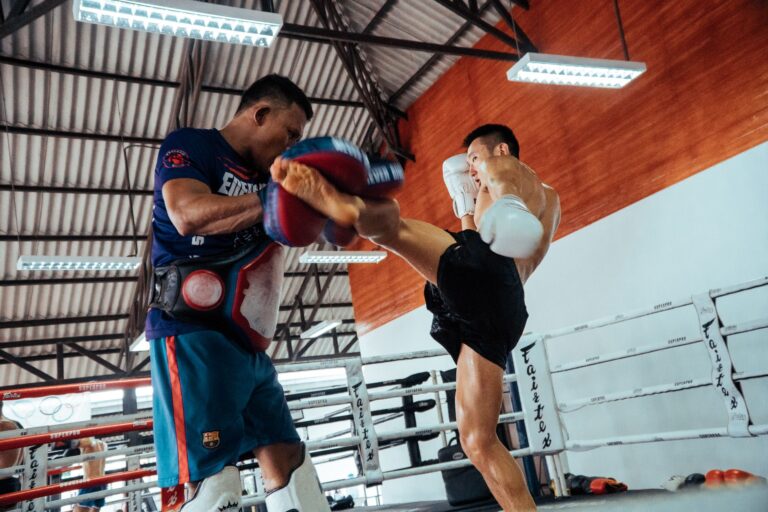
If you’re curious about how much Muay Thai lessons cost, you’re probably weighing whether striking training fits your budget and lifestyle. Prices vary widely depending on where you train, class format, and instructor experience—but what often matters more than the sticker price is what you actually get for your investment. A striking program that pairs real technique with recovery support, community, and personalized coaching delivers far more value than a basic drop-in class at a commercial gym.
At Trein Club in Houston, our Muay Thai classes are part of a comprehensive striking program that blends kickboxing, boxing, and Muay Thai fundamentals through advanced levels, with both self-defense and sport-focused tracks. You’ll train under experienced coaches in a 19,000-square-foot facility designed for serious practice—complete with bag work, pad drills, sparring, and access to recovery tools like cold plunge, infrared sauna, and massage. Rather than charging per class, we offer membership packages that give you unlimited access to striking, plus all our other programs: yoga, strength and conditioning, Brazilian Jiu-Jitsu, and our on-site café.
The best way to understand if Trein is the right fit? Experience it firsthand. We offer a trial membership so you can attend three classes before committing—no pressure, just real training with real champions.
How Much Do Muay Thai Lessons Cost? A Complete Price Breakdown
The honest answer to “how much are Muay Thai lessons” is: it depends on where you train, who teaches you, and how often you show up. In the United States, plan on spending between $20 and $40 per drop-in class, or roughly $120 to $250 per month for unlimited group training at a reputable gym. One-on-one sessions typically run $60 to $150 per hour, while training camps in Thailand can dip as low as $10 to $15 per session. What you pay reflects instructor pedigree, facility quality, class size, and whether striking is bundled with other disciplines like Brazilian Jiu-Jitsu, strength and conditioning, or recovery services.
Before committing to any gym, it helps to understand the full picture — not just the sticker price on the membership page, but also gear, sparring equipment, competition fees, and the kind of coaching you’re actually getting in return. Below is a complete breakdown of what Muay Thai really costs in 2025, how to spot fair pricing, and when a higher price tag is genuinely worth it.
Average Cost of Muay Thai Classes in the USA and UK
Pricing in Western markets has stabilized over the past five years as the sport’s popularity has grown alongside MMA and boutique fitness. In major U.S. cities like Houston, Los Angeles, New York, and Miami, monthly memberships at quality academies cluster between $150 and $250. In the UK, equivalent gyms charge roughly £80 to £150 per month depending on the city, with London predictably sitting at the top of the range. Suburban and smaller-town gyms can dip below those figures, sometimes offering unlimited classes for $90 to $120 per month.
Group Class Pricing: What to Expect Per Session and Per Month
Group sessions are the backbone of every Muay Thai program and the most affordable way to train consistently. Per-session drop-in rates typically range from $20 to $35 in the U.S. and £12 to £20 in the UK. Class packs (10, 20, or unlimited) bring the per-class cost down significantly — often to $12 to $18 per session when you commit to a monthly plan. A typical group session lasts 60 to 75 minutes and includes warm-up, technique, pad work, bag work, and conditioning.
Private Muay Thai Lesson Costs vs. Group Classes
One-on-one lessons run substantially higher, generally $60 to $150 per hour depending on the instructor’s competition résumé and the gym’s market. Semi-private sessions (two to four students) usually fall between $40 and $80 per person. Privates accelerate progress dramatically because every minute is dedicated to your specific technique, timing, and footwork. For a deeper look at when one-on-one training pays off, see our guide on private lesson costs.
Gym Membership Models: Drop-In, Monthly, and Annual Plans
Most gyms offer three pricing tiers:
- Drop-in: Maximum flexibility, highest per-class cost ($20–$40).
- Monthly unlimited: The sweet spot for committed students ($120–$250), often with no contract.
- Annual or 6-month prepaid plans: Discounts of 10–25%, sometimes including free gear, recovery services, or guest passes.
Boutique academies that bundle Muay Thai with BJJ, yoga, strength training, and recovery — a model used by holistic clubs like Trein Club in Houston — often justify higher monthly rates by giving you access to multiple disciplines under one membership, which works out significantly cheaper than paying for each separately.
Muay Thai Lesson Costs in Thailand: Training at the Source
Training in Thailand is a rite of passage for many practitioners, and the cost structure is fundamentally different from the West. Thai camps operate on a daily, weekly, or monthly basis, often including accommodation, two sessions per day, and access to legendary trainers — many of whom are former Lumpinee or Rajadamnern champions.
How Much Do Muay Thai Classes Cost in Bangkok vs. Chiang Mai vs. Phuket
Pricing varies meaningfully by region:
- Bangkok: Drop-in classes from 400–700 THB ($11–$20). Premium gyms catering to foreigners can charge more.
- Chiang Mai: Generally cheaper and more relaxed — 300–500 THB ($8–$14) per session, with strong technical instruction.
- Phuket: The most tourist-driven scene, with world-famous gyms like Tiger and Sinbi charging 500–800 THB ($14–$22) per session and offering polished facilities.
Training Camp Packages in Thailand: Daily, Weekly, and Monthly Rates
Camp packages are where Thailand becomes a remarkable value. Expect:
- Daily: 500–800 THB ($14–$22), usually two sessions.
- Weekly: 3,000–5,000 THB ($85–$140).
- Monthly: 9,000–15,000 THB ($250–$420) for unlimited training, sometimes with shared housing on-site.
Is Training Muay Thai in Thailand Actually Cheaper?
Per session, absolutely — and the cultural immersion is irreplaceable. But once you factor in flights, visa runs, accommodation outside the camp, food, and time away from work, a month in Thailand can easily reach $1,800–$3,000. Compared to $200 a month at a quality local gym, Thailand is an experience purchase, not a budget hack. Most serious students do both: train consistently at home and travel to Thailand once a year for an intensive block.
Factors That Affect the Price of Muay Thai Lessons
Two gyms in the same zip code can charge wildly different rates. Here’s what actually drives the price tag.
Instructor Experience and Credentials
A coach with a verifiable competition record — Lumpinee, Rajadamnern, K-1, Glory, or ONE Championship experience — commands a premium, and rightly so. The same logic applies across combat sports: training under a proven champion is fundamentally different from learning from someone who watched YouTube tutorials. It’s the same reason students pay more to train Brazilian Jiu-Jitsu under a world champion.
Location: Urban Gyms vs. Suburban or Rural Studios
Real estate is the single biggest variable in gym pricing. Manhattan, downtown Houston, and central London gyms pay premium rent and pass that through to memberships. A suburban gym 20 minutes away with the same coaching quality can be 30–40% cheaper. The trade-off is commute time, class schedules, and the strength of the community on the mat.
Class Size and Format (Group, Semi-Private, Private)
The smaller the class, the higher the price — but also the more individual feedback you receive. A 25-person session is energetic and social; a 6-person semi-private gets you corrected on every round. Most students progress fastest with a hybrid approach: 3–4 group classes per week plus one private or semi-private per month.
Gym Reputation and Facilities
A 19,000-square-foot facility with natural light, full showers, a recovery lounge, cold plunge, and an in-house cafe costs more to operate than a strip-mall garage gym — but the membership often includes far more than just striking. When a single price gives you access to Muay Thai, BJJ, yoga, strength training, and recovery services, the per-discipline math suddenly looks very different.
Hidden Costs of Muay Thai Training You Should Budget For
The monthly membership is just the entry point. Here’s what new students consistently underestimate.
Required Gear: Gloves, Hand Wraps, Shin Guards, and More
A complete beginner gear kit typically includes:
- Hand wraps: $10–$15
- Boxing/Muay Thai gloves (14–16 oz): $60–$200
- Shin guards: $50–$150
- Mouthguard: $15–$40
- Muay Thai shorts: $30–$60
- Gym bag and water bottle: $30–$50
Expect to spend $200–$500 upfront for solid entry-level gear. Avoid the cheapest gloves — they fall apart quickly and don’t protect your hands. If you’re brand new and unsure whether you’ll stick with it, our guide on starting kickboxing training walks through the bare minimum to begin.
Grading Fees, Sparring Gear, and Competition Costs
Muay Thai doesn’t have a universal belt system like BJJ, but many Western gyms use a Pra Jiad (armband) ranking system with grading fees of $40–$100 per level. Sparring gear (headgear, elbow pads, additional gloves) adds another $150–$300 once you’re ready to spar. Competing? Budget $50–$150 in entry fees per amateur smoker or sanctioned bout, plus travel and medicals.
How to Find Affordable Muay Thai Classes Near You
You don’t have to sacrifice quality to land a fair price. The trick is knowing how to shop and how to ask.
Tips for Negotiating Gym Memberships and Getting Discounts
- Ask about family rates if you’re enrolling a spouse or kids.
- Inquire about off-peak memberships (mornings or midday) at 20–30% off.
- Look for student, military, or first-responder discounts.
- Prepay for 6 or 12 months to unlock a lower monthly rate.
- Refer a friend — most gyms offer one free month for each successful referral.
Free Trials and Intro Offers: How to Test a Gym Before Committing
The single best filter is the trial class. Reputable gyms are happy to let you train before you commit — many offer a free first class, a discounted week, or a multi-class trial package. At Trein Club, for example, the standard offer is three classes before you commit, which is enough time to see the coaching style, meet training partners, and feel the room’s culture. If a gym refuses any kind of trial, that’s a red flag about their confidence in the product.
Is Muay Thai Worth the Cost? Value Compared to Other Martial Arts
Muay Thai is one of the highest-value martial arts you can train, dollar for dollar. It develops striking proficiency, cardiovascular conditioning, full-body strength, mental toughness, and real self-defense skills in a single discipline. The fitness benefits alone rival any boutique HIIT studio at a fraction of the cost, and unlike a treadmill membership, you actually walk away with a skill.
Muay Thai vs. BJJ vs. Boxing: Monthly Cost Comparison
Across the U.S., monthly memberships generally land like this:
- Boxing: $100–$200/month
- Muay Thai / Kickboxing: $120–$250/month
- Brazilian Jiu-Jitsu: $150–$300/month
- Hybrid / multi-discipline academies: $200–$300/month for access to all of the above
BJJ tends to sit at the top because mat space, gi laundering needs, and the technical depth of the curriculum push operational costs up. That said, if you’re weighing combat sports, it’s worth understanding both. Our explainer on the BJJ belt system and the physical benefits of training BJJ can help you decide whether to focus on one art or combine striking with grappling for a complete game.
Frequently Asked Questions About Muay Thai Lesson Prices
FAQ: How much does a single Muay Thai class cost on average?
In the U.S., a single drop-in session runs $20 to $35 at most gyms. Premium boutique academies in major metros may charge up to $40, while suburban or community gyms can come in as low as $15. In Thailand, the same class can cost $8 to $20.
FAQ: How much should I pay for Muay Thai lessons per month?
A fair price for unlimited monthly group classes in the U.S. is $150 to $220. If you’re paying more than $250, you should be getting elite coaching, multiple disciplines bundled in, premium facilities, or all three. Less than $100 a month usually points to a smaller gym or limited class access — not necessarily bad, but verify the coaching credentials.
FAQ: Are private Muay Thai lessons worth the extra cost?
Yes, if you have specific technical goals, are preparing for a fight, or have plateaued. Privates compress months of group-class learning into focused, personalized sessions. For casual students training three times a week, group classes alone are typically sufficient for the first 12–18 months.
FAQ: How much do Muay Thai lessons cost in Thailand compared to the West?
Per session, Thailand is roughly 50–70% cheaper. Monthly camp packages in Thailand range from $250 to $420 for unlimited training, versus $150 to $250 for unlimited classes in the U.S. The catch is travel and living expenses, which can double or triple your total spend.
FAQ: What is a reasonable price for Muay Thai classes for beginners?
Beginners should look for a trial offer first, then budget $120 to $180 per month for unlimited fundamentals classes plus around $200–$300 in initial gear. Avoid signing a long-term contract before you’ve trained for at least two weeks.
FAQ: Can I learn Muay Thai cheaply or for free online?
You can pick up the names of techniques and shadow-box drills from YouTube, but you cannot truly learn Muay Thai online. The art requires physical contact, real-time correction, sparring, and conditioning that only an in-person coach and training partners can provide. Online content is a supplement, never a substitute.
FAQ: How many Muay Thai classes per week do I need to progress?
Two to three sessions per week is the minimum for steady technical progress. Four to five gets you into competitive shape. Anything more demands careful attention to recovery — which is why elite academies pair training with mobility work, strength and conditioning, and recovery services like infrared sauna, cold plunge, and bodywork to keep your body durable for the long haul.