Striking classes are excellent for total beginners, especially when taught in a supportive environment that prioritizes fundamentals over intimidation. Whether you’re curious about kickboxing, Muay Thai, or boxing, a well-structured striking program meets you exactly where you are—no prior experience needed. The key is finding instruction that breaks down basic techniques clearly, lets you progress at your own pace, and creates space for questions without judgment.
At Trein Club in Houston, our striking program blends kickboxing, Muay Thai, and boxing into a well-rounded stand-up curriculum designed for beginners through advanced practitioners. We teach fundamentals classes that focus on proper stance, footwork, basic combinations, and breathing before you ever step into pad drills or bag work. Many beginners worry they’ll be out of place or unable to keep up—that’s exactly why we separate skill levels and frame striking as a personal journey, not a competitive proving ground.
Beyond technique, striking offers real benefits for beginners: full-body conditioning, stress relief, genuine self-defense skills, and the confidence that comes from learning something challenging in a welcoming community. If you’ve been hesitant to try, the barrier is lower than you think.
Are Striking Classes Good for Total Beginners? The Honest Answer
Yes — striking classes are one of the smartest training choices a total beginner can make, and in many ways they outperform the traditional gym floor. The honest answer, though, comes with nuance: a well-run striking class is structured, technique-first, and coach-led, so you develop a real skill while getting in shape. A poorly run one is chaotic, ego-driven, and pushes you into sparring long before you’re ready. The variable isn’t the sport — it’s the gym you walk into.
At Trein Club in Oak Forest, Houston, our striking program blends boxing, kickboxing, and Muay Thai in a beginner-friendly setting where fundamentals classes stay separate from advanced sessions. People with zero background walk in, and by the end of that first hour they can stand, move, and throw a jab — sore, smiling, and already thinking about coming back. That’s the bar any beginner should hold a gym to. If a place can’t clear it, the sport isn’t the problem.
What Counts as a ‘Striking Class’? (Boxing, Kickboxing, Muay Thai & More Explained)
“Striking” is the umbrella label for martial arts built around hitting with fists, feet, elbows, and knees — the opposite pole from grappling arts like Brazilian Jiu-Jitsu, which revolve around takedowns, control, and submissions. When someone talks about a “striking class,” they usually mean one of the following:
- Boxing: Hands only — jabs, crosses, hooks, uppercuts. Heavy emphasis on head movement and footwork.
- Kickboxing: Punches plus kicks. Rulesets vary (American, Dutch, K-1), but it delivers a well-rounded stand-up base.
- Muay Thai: The “art of eight limbs” — fists, elbows, knees, shins, and the clinch. Widely regarded as the most complete striking system.
- MMA striking: A hybrid approach that adapts strikes to coexist with grappling, wrestling, and takedowns.
- Cardio kickboxing / fitness boxing: Bag-and-shadow workouts with no partner drills or contact. Solid conditioning, but not true martial arts training.
Trein Club’s striking program deliberately blends boxing, kickboxing, and Muay Thai, so beginners build a well-rounded stand-up foundation instead of being forced to pick a lane on day one. If you want a deeper look at two of the most popular styles side by side, our guide on kickboxing vs Muay Thai for self-defense breaks down the practical differences.
Key Benefits of Striking Classes for Absolute Beginners
Striking training pays dividends across three axes — physical, psychological, and neurological — starting on day one.
Fitness and Conditioning Gains from Day One
A single one-hour session works as a full-body interval workout: warm-ups mobilize every joint, pad drills spike your heart rate, bag rounds build anaerobic capacity, and shadowboxing sharpens shoulder endurance. Beginners typically burn 500–800 calories per class and see rapid gains in cardio, coordination, and lean muscle within four to six weeks. Unlike treadmill cardio, you’re too locked in on hitting the target correctly to notice you’re tired. If weight loss is on your radar, we broke down the science in is kickboxing a good workout for losing weight?.
Building Confidence and Self-Defense Awareness Early
Confidence in striking has nothing to do with becoming a fighter — it comes from discovering that your body can produce force, absorb impact on the bag, and hold a proper stance under mild pressure. Beginners often describe walking down the street differently after just a few weeks: taller, more aware, less anxious in crowds. That’s not machismo; it’s earned self-trust. The shift is especially profound for women, quieter adults, and anyone who has spent years steering clear of physical conflict.
Learning Discipline, Focus, and Body Coordination
Striking is a coordination puzzle: hip rotation, weight transfer, guard position, and breathing all have to fire together to produce a clean punch or kick. Learning that retrains your nervous system. Members regularly notice sharper focus at work, better posture, and improved coordination in unrelated activities like tennis, dancing, or lifting. The habit of showing up, wrapping your hands, and drilling the same jab for the hundredth time bleeds into every other part of life.
What to Realistically Expect in Your First Striking Class
Typical Structure of a Beginner Striking Session
A well-run beginner class runs around 60 minutes and follows a predictable arc: a 10–15 minute warm-up (jumping rope, shadowboxing, dynamic stretching), a 15–20 minute technique block where the coach demonstrates one or two movements, 20 minutes of partner or bag drills to apply the technique, and a 5–10 minute cool-down or conditioning finisher. You’ll sweat, but nothing will catch you by surprise.
Basic Techniques Taught to Beginners (Stance, Guard, Footwork, Jab)
Every beginner starts with the same building blocks: stance (feet shoulder-width, dominant foot back, weight balanced), guard (hands up at temple height, chin tucked, elbows in), footwork (small, deliberate steps that keep your base intact), and the jab (the lead-hand straight punch that sets up everything else). Expect several classes dedicated to refining just those four elements. That’s a feature, not a bug — every world-class striker still drills the same fundamentals daily.
Will You Spar on Day One? Understanding Contact Levels for Beginners
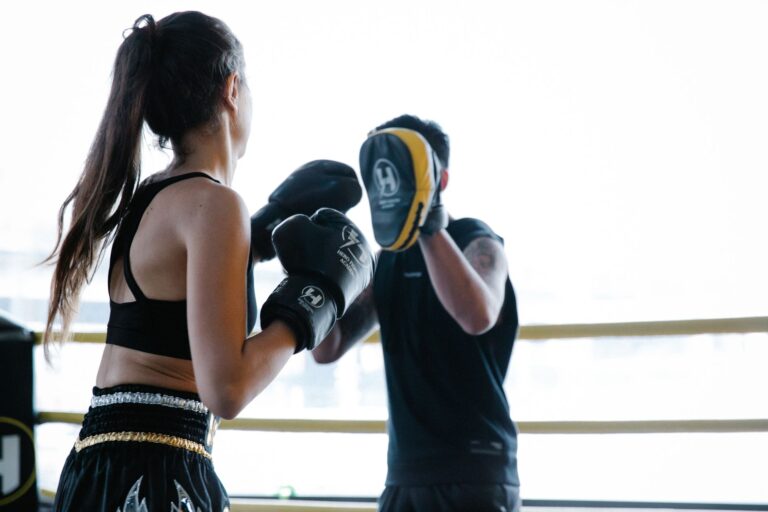
No. Any legitimate gym will keep first-timers out of sparring. Contact for beginners is limited to bag work (you hitting a heavy bag) and pad work (a partner or coach holding focus mitts for you). Light technical sparring — controlled, low-intensity, with headgear and shin guards — typically enters the mix only after weeks or months of fundamentals. If a gym pushes a first-day beginner into sparring, walk out.
Potential Challenges Beginners Face in Striking Classes
Physical Demands: Are You Fit Enough to Start?
You don’t need to be fit to start — striking classes get you fit. That said, the first two weeks are humbling: your shoulders will burn from holding your hands up, your calves will ache from staying on the balls of your feet, and your lungs will remind you they’ve been neglected. Modify freely, take water breaks, and trust that conditioning arrives faster than you expect. Members over 40 and people with no athletic background usually acclimate within three to four weeks.
Feeling Overwhelmed or Out of Place in Your First Classes
The most common beginner fear isn’t getting hit — it’s looking foolish. Everyone in the room was a first-timer once, and in a healthy gym culture nobody’s tracking how you look. At Trein Club, our “Fit No Boxes” philosophy means the mat is openly welcoming to every level, every body type, and every goal. If you feel judged, that’s a culture problem at the gym, not something you brought with you.
Injury Risk and How Good Gyms Minimize It for Newcomers
Beginner-level striking has a low injury rate — comparable to recreational tennis or basketball — because there’s no live contact. The typical issues are sore wrists from poor punching form and shin bruising once kicks enter the picture. Good gyms manage that risk with proper hand-wrapping instruction, gradual progression, glove and shin-guard requirements, and coaches who actively correct technique before bad habits calcify.
How to Choose the Right Striking Class as a Beginner
Beginner-Specific Classes vs. Open-Level Classes: Which Is Better?
For your first three to six months, opt for beginner-specific or fundamentals classes whenever they’re on the schedule. Open-level sessions assume you already know the vocabulary and move at a pace that leaves newcomers frustrated. A dedicated beginner track lets you build technique and confidence before mixing with intermediate students — and it keeps everyone safer.
Boxing vs. Kickboxing vs. Muay Thai vs. MMA for Beginners: A Quick Comparison
- Boxing: Easiest entry point. Only hands, so fewer moving parts. The footwork and head movement transfer cleanly to every other style.
- Kickboxing: A comfortable middle ground. Adds kicks without the complexity of clinch and elbows.
- Muay Thai: Steeper learning curve, but the most complete striking art. The best long-term investment for self-defense and MMA.
- MMA striking: Only worth pursuing once you have a stand-up base, since it layers grappling considerations on top.
A gym that blends all three (boxing, kickboxing, Muay Thai) — like Trein Club — lets beginners sample styles under one membership rather than committing blind.
Red Flags and Green Flags When Evaluating a Striking Gym
Green flags: credentialed coaches, a clean facility, structured fundamentals classes, a free trial offer, a beginner-friendly culture, visible women and older adults training, and clear rules around sparring intensity. Red flags: pressure to sign a long contract before trying a class, coaches sparring hard with beginners, dirty mats, no warm-up structure, a macho or intimidating vibe, and no clear beginner track. If you’re near the Heights, our overview on where to take Muay Thai classes near Houston Heights covers what to look for locally.
What to Bring and How to Prepare for Your First Striking Class
Essential Gear for Beginners (Gloves, Hand Wraps, Mouthguard)
For your first class, most gyms provide loaner gloves so you don’t have to buy anything up front. Once you commit, invest in:
- Hand wraps (180-inch cotton or Mexican-style) — protect your wrists and knuckles.
- Boxing gloves — 14 or 16 oz for general training, depending on your size.
- Mouthguard — a boil-and-bite is perfectly fine to start.
- Shin guards — only once you’re training kickboxing or Muay Thai and starting light contact drills.
- Athletic shorts or leggings, a moisture-wicking shirt, and a water bottle.
For a full walkthrough of setup, gear, and expectations, see how to start training kickboxing.
Mental Preparation: The Right Mindset Before Walking In
Show up with three intentions: listen more than you talk, be a good partner, and expect to be a beginner. You’re not there to look good — you’re there to learn. Nerves are normal and usually dissolve within the first ten minutes of any warm-up. The best beginners aren’t the athletic ones; they’re the coachable ones.
How Fast Do Beginners Progress in Striking Classes?
Realistic Timeline: From Zero to Comfortable Sparring
Training two to three times a week, most beginners hit these milestones:
- Weeks 1–4: Stance, guard, jab, cross, and basic footwork start feeling natural.
- Months 2–3: Combinations flow, kicks become coordinated, bag work sharpens.
- Months 4–6: Light technical sparring becomes possible and even enjoyable.
- Year 1: You move like someone who trains — because you do.
Tips to Accelerate Your Learning as a Beginner
Show up consistently (three focused sessions per week beat six sporadic ones), film yourself shadowboxing occasionally to catch form errors, ask coaches specific questions, drill the fundamentals at home for five minutes a day, and cross-train — yoga and strength work make striking dramatically easier. Elite strikers like Alex Pereira didn’t get there on talent alone; they built it through years of deliberate reps that all started with the same jab you’re learning.
Should You Start with One Striking Style or Mix Multiple Arts?
For a total beginner, mixing usually beats specializing — as long as the styles share fundamentals. Boxing, kickboxing, and Muay Thai all rely on the same stance, guard, and footwork, so training across them reinforces one base while broadening your toolkit. Specialization matters later, once you know which style genuinely excites you and whether competition is on the table. Adding a grappling art like Brazilian Jiu-Jitsu alongside your stand-up work is also a game-changer for self-defense and body awareness, since it teaches you what to do the moment a fight leaves the feet.
Online Striking Courses vs. In-Person Classes for Beginners: Pros and Cons
Online courses work well as a supplement — you can rewatch technique breakdowns, study famous fighters, and shadowbox in your living room. But they can’t replace in-person coaching for beginners, because striking is a feedback sport: your stance, weight transfer, and hip rotation need real-time correction that no video can offer.
Pros of online: cheap, flexible, unlimited replays.
Cons of online: no correction, no conditioning under pressure, no partner drills, no community, higher risk of grooving in bad habits.
Pros of in-person: coach feedback, structured progression, real accountability, community and belonging, safer skill acquisition.
Cons of in-person: requires scheduling and a monthly investment.
The right formula is in-person as your primary training, with online content as optional homework.
FAQ: Are striking classes safe for people with no fighting experience?
Yes, when the format is designed for beginners. Early classes involve zero live contact — only shadowboxing, bag work, and pad drills with a coach or trained partner. Injury rates for beginner-level striking sit alongside recreational sports, and reputable gyms strictly control sparring intensity.
FAQ: How many striking classes per week should a beginner attend?
Two to three per week is the sweet spot. It’s frequent enough to build skill and conditioning without wrecking your recovery. One class per week is fine for casual fitness, but progress will be slow. Four or more is generally only needed once you’re preparing for competition.
FAQ: Do I need to be fit before starting striking classes?
No. Striking classes are how you get fit. The first two to three weeks are the hardest as your body adapts, but every fundamentals session allows modifications, water breaks, and self-paced effort. Show up as you are.
FAQ: Will I be forced to spar as a beginner in striking classes?
Absolutely not, at any reputable gym. Sparring is optional and only introduced after you’ve built a technical foundation — usually several weeks or months in. If a gym pressures a first-timer into hard sparring, that’s a serious red flag.
FAQ: What is the easiest striking martial art for a complete beginner to learn?
Boxing is usually the easiest entry point because it involves only hand strikes and simpler footwork, letting beginners lock in the basics quickly. Kickboxing is a close second. Muay Thai has a steeper learning curve but rewards patience with the most complete stand-up skill set.
FAQ: How long does it take to get good at striking from scratch?
Feeling competent — moving well, throwing clean combinations, sparring lightly with control — takes about six to twelve months of consistent training. Feeling skilled is a two-to-three-year arc. Mastery is a lifelong practice, which is exactly what makes it worthwhile.
FAQ: Can older adults or women benefit from beginner striking classes?
Yes, enormously. Striking is one of the most inclusive combat sports for adults of any age and for women — it builds bone density, coordination, cardiovascular health, and confidence in equal measure. Trein Club’s beginner classes regularly include members in their 40s, 50s, and 60s, along with a strong contingent of women who find the environment welcoming and ego-free.
FAQ: What gear do I absolutely need before my first striking class?
Nothing beyond athletic clothes, a water bottle, and an open mind. Most gyms — Trein Club included — provide loaner gloves for your trial. Once you decide to continue, prioritize hand wraps, your own gloves, and a mouthguard before anything else.
If you’re in Houston and curious what an intentional, beginner-friendly striking program actually feels like, take a look at how to book a striking trial class in Oak Forest — three sessions to experience the coaching, the community, and the space before committing to anything.