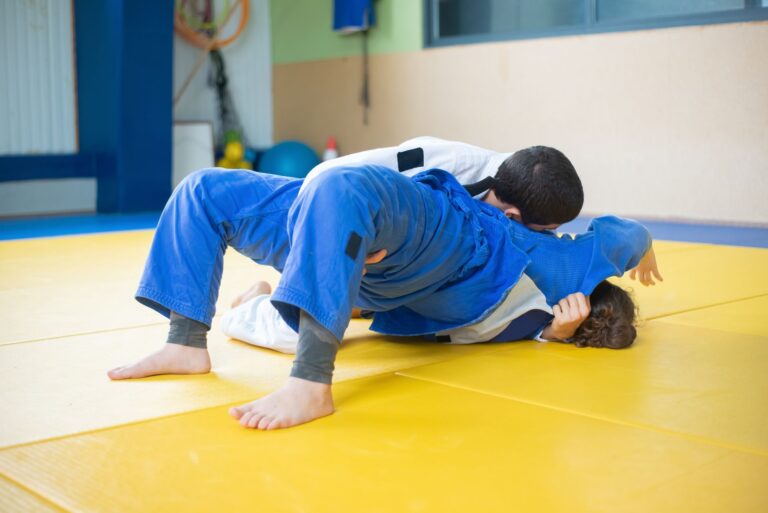
If you’re researching how much jiu jitsu classes for kids cost in Houston, you’ve probably noticed the prices vary wildly—from budget chain gyms to premium academies—and it’s hard to know what you’re actually paying for. Most parents want to understand not just the monthly fee, but what their child will actually gain: real instruction, a welcoming environment, measurable progress in confidence and discipline, and a place where kids genuinely want to show up. At Trein Club in Oak Forest, we’ve built our kids program around exactly those outcomes, with instruction directly from world-class coaches and a culture that makes jiu jitsu accessible and transformative rather than intimidating or ego-driven.
The cost of kids jiu jitsu reflects what’s included—and frankly, most gyms undersell what quality instruction and community are worth. We believe families deserve transparency about pricing, but more importantly, they deserve to experience the difference before committing. That’s why we offer a trial experience: three classes to see how your child connects with our instructors, our community, and the sport itself, with no pressure and no long-term contract required.
How Much Do Jiu Jitsu Classes Cost for Kids? (2024 Price Guide)
If you’re a parent looking into Brazilian Jiu-Jitsu for your child, price is almost always one of the first questions you ask — and one of the hardest to get a straight answer on. Most academies don’t publish rates online, quotes swing wildly from city to city, and the figure on the membership page rarely reflects what you’ll actually spend once uniforms, registration, and belt tests are factored in. In this guide, we break down real 2024 price ranges for kids BJJ around the world, what’s typically included, what pushes the cost up or down, and how to make sure you’re paying for genuine value — not just a logo on a wall.
As a benchmark: in most major U.S. cities, kids Brazilian Jiu-Jitsu memberships fall between $120 and $250 per month, with premium schools in metro areas like Houston, Los Angeles, New York, and Miami often sitting toward the higher end. Plan on an additional one-time investment of $80–$150 for a gi and, at some schools, small registration or belt-testing fees throughout the year.
Average Monthly Cost of Kids BJJ Classes by Region
Pricing for kids’ jiu-jitsu is shaped by local cost of living, instructor pedigree, and how the academy positions itself in the market. Here’s what parents realistically pay in the three regions where BJJ has grown the fastest.
United States: Typical Price Ranges for Kids BJJ
Across the U.S., kids BJJ memberships generally break down like this:
- Budget / community gyms: $90–$130 per month, often with 2 classes per week and limited amenities.
- Mid-range academies: $130–$180 per month, usually 2–3 classes per week, a structured curriculum, and belt progression.
- Premium and championship-led academies: $180–$275 per month, unlimited kids classes, world-class instructors, modern facility, and family programming.
In Houston specifically, kids programs at reputable schools tend to land between $150 and $250 per month. For a deeper Houston-focused breakdown, our full guide on jiu-jitsu costs for kids walks through what parents pay locally and what actually justifies the higher end.
Australia: Kids BJJ Pricing in Sydney, Newcastle, and Beyond
Australian academies tend to price memberships weekly rather than monthly. In Sydney, kids BJJ typically runs AUD $35–$60 per week, which works out to roughly AUD $150–$260 per month. Newcastle, Brisbane, and Perth trend slightly lower — closer to AUD $120–$200 per month. Joining fees of AUD $50–$100 are common, and most academies include a gi with an annual sign-up.
UK and Europe: What Parents Pay for Children’s Jiu Jitsu
In the UK, kids jiu-jitsu ranges from £50–£120 per month, with London academies at the top of that band and smaller regional clubs at the bottom. Across mainland Europe, expect €60–€130 per month in cities like Madrid, Berlin, Lisbon, and Amsterdam. European schools more frequently charge per-term rather than monthly, and many bundle the gi into the first term’s fee.
What’s Included in a Kids BJJ Membership?
The sticker price rarely tells the full story. Before you compare gyms head-to-head, you need to understand what’s actually inside the monthly fee — and what’s billed separately.
Number of Classes Per Week vs. Monthly Fee
The single biggest factor behind price differences is class access. A $120/month program that allows two sessions per week is not cheaper than a $200/month program with unlimited attendance — it’s a completely different offer. Ask specifically:
- How many classes per week is my child allowed to attend?
- Are open mats, seminars, or homeschool sessions included?
- Can my child cross-train in kids striking, wrestling, or yoga at no additional cost?
At Trein Club, for example, the kids membership is built around unlimited access because consistency — three to four sessions a week — is what actually moves a child forward in confidence and skill.
Gi, Uniform, and Equipment Costs to Budget For
Every BJJ student needs a gi (the traditional uniform). For kids, a good beginner gi costs $60–$120, and most children can wear the same one for a year or more before sizing up. You’ll also want:
- A belt (usually included with the gi, or $10–$20 separately — here’s how to tie a jiu-jitsu belt).
- A rashguard for no-gi classes: $25–$45.
- A mouthguard (recommended for older kids doing live rolling): $10–$25.
Total first-year equipment investment usually lands between $100 and $180 — a one-time cost that’s significantly lower than most team sports.
Registration Fees and Belt Testing Fees Explained
Some academies charge a one-time registration or “enrollment” fee ranging from $50 to $200. Others charge for belt promotions, especially at the stripe and grey/yellow/orange belt levels for kids — typically $30–$75 per test. These aren’t universal; many quality schools (Trein Club included) skip both to keep pricing transparent. Always ask up front so you’re not surprised three months in.
Factors That Affect the Price of Kids Jiu Jitsu Classes
Academy Reputation and Instructor Credentials
You are paying for who is on the mat, not just the mat itself. A program taught by a black belt with real competition credentials and a professional teaching structure is worth considerably more than a hobbyist class run out of a rented rec room. Pedigree matters especially for kids, where safety, patience, and age-appropriate technique are non-negotiable. When Pedro Araujo, a 4x World Champion, personally shapes the curriculum, you’re not just paying for classes — you’re paying for a decade of championship methodology filtered down to a 7-year-old’s first arm-drag.
Location: Urban vs. Suburban vs. Rural Gyms
Rent drives price. Academies in dense urban cores or affluent suburbs pay more per square foot and pass that on. A 19,000-square-foot facility in a Houston metro location will price differently from a 2,000-square-foot storefront in a smaller town — but the trade-off is usually a broader schedule, more instructors, and better amenities like showers, a recovery lounge, and family-friendly waiting areas.
Class Size and Curriculum Quality
A “cheap” class packed with 40 kids and one instructor is rarely a bargain. Look for a documented age-graded curriculum (usually 4–6, 7–10, 11–14 age brackets), a healthy coach-to-student ratio (ideally 1:10 or better for young kids), and a clear belt progression system. These structural details matter more than any dollar figure on the pricing page.
Drop-In vs. Monthly Membership Pricing
Drop-in rates for kids typically run $20–$40 per class — useful for traveling families but never economical as a primary training model. If your child attends even twice a week, a monthly membership pays for itself within the first two weeks.
How to Find Affordable Kids BJJ Classes Without Sacrificing Quality
Family Discounts and Sibling Plans
Most reputable academies offer sibling discounts of 10–25% on the second and third child. Some also bundle a parent membership at a reduced rate when at least one child is enrolled — a smart way to turn training into a shared family activity rather than a drop-off obligation.
Free Trial Classes: What to Expect and How to Use Them
Never sign a membership without visiting first. Almost every quality academy offers a free trial class, and many now offer a multi-class trial so children can experience the environment across different coaches and class formats. Trein Club’s “come experience 3 classes before you commit” trial is built exactly for this — long enough for a nervous kid to warm up, meet a teammate, and actually decide if they enjoy it, rather than making a call based on 45 anxious minutes on day one.
On the trial, watch for: how coaches speak to the youngest kids, whether older students help newer ones, how clean the mats and bathrooms are, and whether your child is smiling by minute 30.
Annual Memberships vs. Month-to-Month: Which Saves More?
Annual paid-in-full memberships typically save 10–20% compared to month-to-month. They make sense once you’re confident your child is committed — usually after 60–90 days. Avoid signing a long contract before your child has completed a real trial period; a good academy will never pressure you to.
Is Kids BJJ Worth the Cost? Benefits Beyond the Mat
Discipline, Confidence, and Bully Prevention
This is the part that doesn’t show up on the price sheet, and it’s the reason parents overwhelmingly stay. Jiu-jitsu teaches kids to stay calm under pressure, resolve conflict without escalation, and carry themselves with the quiet confidence that comes from knowing they can protect themselves. If bullying is part of why you’re researching classes, our article on how BJJ helps kids deal with bullying goes deep on the psychology of what changes in a bullied child after a few months of training.
Physical Fitness and Motor Skill Development
BJJ develops coordination, balance, core strength, and body awareness in ways that soccer, basketball, or screen-based activities simply can’t. Kids learn to move their whole body against resistance, which builds real-world athleticism rather than sport-specific specialization.
Comparing BJJ Costs to Other Kids’ Sports and Martial Arts
Put next to competitive alternatives, BJJ is often the better deal:
- Club soccer / travel teams: $2,000–$5,000/year plus tournament travel.
- Competitive gymnastics: $200–$400/month plus meets and leotards.
- Hockey: $1,500–$4,000/year with equipment.
- Traditional karate / TKD: $120–$180/month, but often with heavy belt-testing fees.
- Kids BJJ (premium): $150–$250/month, one gi per year, minimal extras.
For a closer comparison with another well-known brand, see our breakdown of Gracie Jiu-Jitsu costs for kids.
Training as a Family: Can You Save Money on BJJ Together?
Family Membership Plans at Major Academies
Family plans are increasingly common at premium academies. A typical structure might be: first family member at full price, each additional member at 20–30% off. When two parents and one child all train, the combined cost per person often drops below what a single boutique gym membership would run.
Benefits of Training BJJ Alongside Your Child
Beyond the discount, training together changes the dynamic at home. You share a vocabulary, celebrate the same promotions, understand what a hard day on the mat feels like, and build a rhythm around showing up together. Parents who start training after their kids consistently report better sleep, less stress, and a stronger connection with their child than they had before signing up. At Trein Club, we also see many parents branch into striking and Muay Thai classes, yoga, or strength training under the same roof — turning the club into a genuine family third space rather than a drop-off point.
Frequently Asked Questions
How much does kids jiu jitsu cost per month on average?
Across the U.S., kids BJJ averages $120–$250 per month. Budget community gyms may go as low as $90, while premium championship-led academies in major metros can reach $275. In Houston, most quality programs sit between $150 and $250.
Is $250 a month too much for kids BJJ classes?
Not if the program includes unlimited classes, world-class instruction, a modern facility, and family support systems. Compared to travel soccer or competitive gymnastics, $250/month is often significantly less per hour of coached instruction. What matters is what’s included — not the raw number.
What age can kids start jiu jitsu classes?
Most academies accept children starting at age 4, with dedicated “little champions” or “tiny tigers” classes for the 4–6 range that focus on movement, listening skills, and games. From age 7 onward, kids can typically join structured technique classes.
Are there cheaper alternatives to monthly BJJ memberships for kids?
Yes — homeschool BJJ programs (often priced lower and held during school hours), summer camps, community center classes, and multi-class trial packs can all reduce entry cost. But for consistent progress, a monthly membership at a real academy remains the best value.
Do kids need a gi to start BJJ, and how much does one cost?
Kids don’t need a gi for the very first trial class — regular athletic clothing is fine. Once enrolled, a kids gi runs $60–$120 and lasts a year or more. Some academies include a free gi with annual membership sign-up.
Do most BJJ gyms offer a free trial class for kids?
Yes. Almost all reputable academies offer at least one free trial, and many now offer a 3-class or week-long trial to give kids time to acclimate. Never commit to a membership without using the trial first.
Is jiu jitsu only for rich families, or are there budget-friendly options?
Absolutely not. While premium academies exist, community gyms, homeschool programs, sibling discounts, and family plans make BJJ accessible across income levels. Many schools also offer scholarships or work-trade arrangements for families in tight financial situations — it never hurts to ask.
How many classes per week should a beginner kid attend?
Two classes per week is the minimum for real progress; three is the sweet spot for building skill, confidence, and friendships without burnout. Unlimited memberships are valuable precisely because they let kids attend 3–4 times a week once they fall in love with the sport — which, more often than not, is exactly what happens.