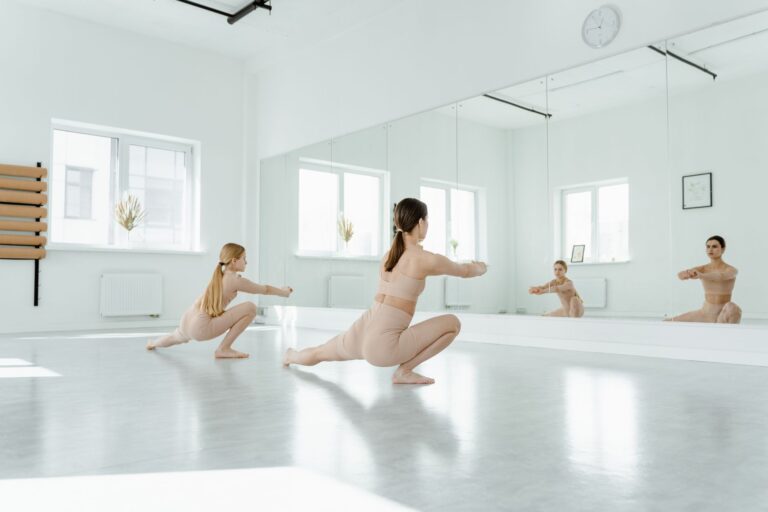
Orientation and mobility training is far more than learning to move through space—it’s about developing body awareness, confidence, and the ability to navigate your environment with intention and control. Whether you’re a complete beginner stepping onto the mats for the first time or an athlete looking to prevent injury and improve performance, understanding how your body moves and responds is foundational to everything you’ll do at Trein Club. In Brazilian Jiu-Jitsu, striking, yoga, and strength training alike, this awareness becomes your competitive edge and your shield against burnout.
At Trein Club in Houston, we treat mobility and movement orientation as essential pillars of training—not afterthoughts. Our programs, led by Pedro Araujo and his championship team, weave mobility work, breathwork, and intentional movement patterns into every class, from fundamentals for kids and adults to advanced conditioning. This holistic approach means you’re not just learning techniques; you’re building a stronger, more resilient body that moves with purpose and stays injury-free for the long term.
If you’ve felt stuck in ordinary gyms or intimidated by combat sports, this is your invitation to experience training that honors your body’s intelligence and your individual goals.
What Is Orientation and Mobility Training? A Complete Overview
Orientation and Mobility (O&M) training is a specialized rehabilitation discipline that teaches people who are blind, have low vision, or live with visual impairments how to travel safely, efficiently, and independently through their surroundings. It’s a structured, evidence-based process delivered by certified professionals who combine spatial awareness education, sensory work, and hands-on technique instruction to restore one of the most fundamental human capacities: the ability to move through the world with confidence.
Although the term is most often linked to vision loss, its underlying philosophy — that movement is a skill that can be relearned, refined, and personalized — resonates far beyond that population. At its heart, O&M gives people back their autonomy through intentional, guided practice.
Defining Orientation and Mobility (O&M): The Two Core Concepts Explained
Orientation refers to a person’s ability to understand where they are in space, where they want to go, and how to plan a route to get there. It draws on cognitive mapping, memory, environmental cues (sound, smell, texture, temperature), and problem-solving. Mobility, by contrast, is the physical act of moving safely and efficiently from point A to point B — including posture, gait, obstacle detection, and the use of tools such as a long cane or guide dog.
In practice, the two concepts are inseparable. A traveler must know where they are (orientation) to decide how to move (mobility), and that movement in turn generates the sensory feedback that keeps them oriented. Effective O&M training weaves both together in every session.
Who Needs Orientation and Mobility Training? Eligible Populations and Conditions
O&M services are designed for anyone whose vision affects safe, independent travel. Common candidates include:
- Children born with congenital blindness or low vision
- Adults with acquired vision loss from diabetic retinopathy, macular degeneration, glaucoma, or retinitis pigmentosa
- Older adults experiencing age-related visual decline
- People recovering from traumatic brain injury or stroke that affects visual processing
- Individuals with deafblindness or combined sensory impairments
- Anyone with a progressive eye condition preparing for future changes in sight
Eligibility is not defined by a specific acuity threshold. Functional vision — how a person actually uses their sight in daily life — matters more than the numbers on an eye chart.
Key Skills Taught in Orientation and Mobility Training
O&M curricula are built around a progression of skills, starting with the safest, most controlled techniques and advancing toward complex, real-world independent travel.
Protective Techniques and Sighted Guide Methods
Beginners typically learn upper and lower body protective techniques — positioning the arms to shield the head, face, and torso from unseen obstacles when moving through familiar indoor spaces. The sighted guide technique teaches a traveler how to walk safely with a companion by holding just above the guide’s elbow, allowing the guide’s body movement to telegraph turns, stairs, and narrow passages.
Long Cane Techniques: The Foundation of Independent Travel
The long white cane remains the most widely used mobility tool worldwide. Learners practice the two-point touch, constant contact, and diagonal techniques, each calibrated to different environments. Cane length, grip, arc width, and tip selection are all tailored to the individual’s height, stride, and travel goals.
Using Remaining Vision and Sensory Substitution Strategies
For travelers with low vision, O&M includes strategies for making the most of residual sight — scanning techniques, contrast enhancement, lighting adjustments, and magnification. For those with little or no functional vision, training emphasizes auditory localization (identifying sound sources and traffic patterns), tactile discrimination (reading textures underfoot), and kinesthetic awareness (understanding body position and movement).
Navigating Public Transit, Street Crossings, and Complex Environments
Advanced training moves outdoors: intersections with and without audible signals, roundabouts, bus and subway systems, ride-share coordination, shopping centers, and multi-level buildings. Learners practice analyzing traffic patterns by ear, identifying safe crossing gaps, and recovering their bearings after unexpected detours.
Assistive Technology in O&M: GPS, Screen Readers, and Emerging Tools
Modern O&M integrates accessible GPS apps (BlindSquare, Soundscape, Nearby Explorer), smartphone screen readers, AI-powered scene description tools, ultrasonic sensors, and smart canes. Specialists teach not only how to operate these tools, but when to rely on them and when to fall back on foundational sensory skills.
The Role of a Certified Orientation and Mobility Specialist (COMS)
O&M training is delivered by a highly specialized professional, not a general fitness or rehabilitation coach. The Certified Orientation and Mobility Specialist (COMS) is the credentialed expert responsible for evaluation, instruction, and long-term progress tracking.
What Qualifications and Certifications Does a COMS Hold?
A COMS typically holds a bachelor’s or master’s degree in orientation and mobility or a closely related field from a university program approved by the Academy for Certification of Vision Rehabilitation and Education Professionals (ACVREP). Certification requires supervised internship hours, passing a comprehensive exam, and ongoing continuing education. Many COMS also carry credentials in vision rehabilitation therapy or in teaching students with visual impairments.
How a COMS Conducts an Initial Assessment and Builds a Training Plan
The first sessions are devoted to a functional assessment: reviewing medical and ophthalmological records, observing the learner in familiar and unfamiliar environments, testing residual vision under different lighting conditions, and interviewing the learner (and family, when appropriate) about goals. From there, the COMS drafts an individualized plan with measurable objectives — for example, independently walking from home to a bus stop within 90 days — and revises it as progress unfolds.
How Orientation and Mobility Training Works: The Step-by-Step Process
Training almost always follows a “familiar to unfamiliar, simple to complex” progression, honoring the same principles that guide any sound motor-learning program.
Indoor Environments: Home, School, and Workplace Navigation
Early lessons take place where the learner spends the most time. The COMS helps map furniture arrangements, identify landmarks, memorize routes between key rooms, and establish safe systems for stairs, doorways, and shared spaces. In schools and workplaces, this extends to locker rooms, cafeterias, elevators, and emergency exits.
Outdoor and Community-Based Training Progressions
Once indoor skills are solid, sessions move to quiet residential blocks, then to busier commercial streets, then to complex urban environments. Each stage builds on the last: sidewalk travel, driveway detection, controlled intersections, uncontrolled intersections, and eventually multi-leg trips involving transfers and unfamiliar destinations.
Training for Adults with Low Vision vs. Total Blindness: Key Differences
Low-vision travelers often benefit heavily from optical devices, high-contrast markers, and lighting strategies, and may use a support cane or identification cane rather than a full long cane. Travelers with total blindness rely more on auditory and tactile input and typically use a long cane or guide dog as their primary mobility tool. The COMS calibrates the balance of visual, auditory, and tactile training accordingly.
Proven Benefits of Orientation and Mobility Training on Quality of Life
The measurable outcomes of O&M go well beyond safe travel — they reach into nearly every domain of well-being.
Evidence from Clinical Research: What the Studies Show
Peer-reviewed research consistently associates O&M training with reduced fall rates, fewer travel-related injuries, higher rates of employment among working-age adults with visual impairment, and improved school performance for children. Longitudinal studies also show meaningful gains in self-reported quality of life and confidence scores.
Impact on Independence, Mental Health, and Social Participation
Learners who complete O&M report less anxiety about leaving home, stronger friendships and family relationships, greater engagement in work and volunteer activities, and lower rates of depression. Independence in travel is a gateway to independence in almost every other area of life — from grocery shopping to attending fitness classes to sustaining a career.
Orientation and Mobility Training for Children vs. Adults: What Changes?
The core principles remain consistent, but delivery differs dramatically based on developmental stage and life context.
O&M in Schools: Integration with Special Education and the IEP Process
For students with visual impairments, O&M is a related service under the Individuals with Disabilities Education Act (IDEA). Once eligibility is established, goals are written into the child’s Individualized Education Program (IEP) and delivered during the school day — often blending classroom, campus, and community sessions. Early exposure helps children develop spatial concepts alongside their peers.
O&M for Older Adults: Adapting to Age-Related Vision Loss
Adults losing sight later in life face a different challenge: relearning environments they’ve navigated confidently for decades. Training respects existing routines and independence, and often addresses co-occurring issues such as balance, hearing loss, and cognitive changes. Fall prevention becomes a central priority, which is why complementary work on general body control — including mobility training exercises and stability and mobility training — can meaningfully support O&M outcomes.
How to Access Orientation and Mobility Services
Getting connected to O&M isn’t always intuitive, but there are established pathways for children, working adults, and seniors alike.
Referral Pathways: Eye Care Professionals, Schools, and Rehabilitation Agencies
Ophthalmologists and optometrists (especially those specializing in low vision) are often the first to recommend O&M. Public schools coordinate services for eligible students through their special education departments. Adults typically access services through state vocational rehabilitation agencies, state commissions for the blind, Veterans Affairs (for eligible veterans), and community nonprofit organizations.
Funding, Insurance, and Government Programs That Cover O&M Training
Funding sources include state vocational rehabilitation programs, IDEA-funded school services, VA benefits, Medicaid waivers in some states, and grants from nonprofits like the American Foundation for the Blind, National Federation of the Blind, and local Lighthouse organizations. Medicare coverage is limited and evolving, so learners should verify current benefits directly.
Finding a Certified O&M Specialist Near You
ACVREP maintains a public registry of certified specialists searchable by location. State agencies for the blind, university vision programs, and organizations like the Association for Education and Rehabilitation of the Blind and Visually Impaired (AER) can also provide referrals.
FAQ: What is the difference between orientation and mobility?
Orientation is knowing where you are and how to plan a route to your destination using environmental cues and mental mapping. Mobility is the physical act of traveling that route safely — applying techniques, tools, and body mechanics. Orientation is cognitive; mobility is physical. Both are trained together because neither works well without the other.
FAQ: Who provides orientation and mobility training?
Training is delivered by a Certified Orientation and Mobility Specialist (COMS), credentialed by the Academy for Certification of Vision Rehabilitation and Education Professionals (ACVREP). These professionals hold specialized degrees, complete supervised internships, and pass a national certification exam. They work in schools, rehabilitation agencies, VA facilities, private practices, and community organizations.
FAQ: How long does orientation and mobility training take?
There is no fixed duration. Basic indoor cane skills may develop within a few weeks of regular sessions, while comprehensive independent travel in complex urban environments can take six months to two years or more. Progress depends on the learner’s age, vision status, prior experience, goals, and how often they practice between sessions.
FAQ: Is orientation and mobility training only for people who are completely blind?
No. O&M serves anyone whose vision affects safe travel, including people with low vision, progressive eye conditions, deafblindness, and visual processing disorders. In fact, a large portion of O&M learners have some usable vision and train specifically to maximize it while building backup non-visual skills.
FAQ: Can adults with acquired vision loss benefit from O&M training?
Absolutely. Adults who lose sight later in life often see dramatic gains from O&M because they already carry strong spatial memory of familiar environments. Training helps them adapt those mental maps to non-visual and low-vision strategies, rebuild confidence, prevent falls, and return to work, hobbies, and community life.
FAQ: Does Medicare or Medicaid cover orientation and mobility training?
Coverage varies. Medicare has historically been limited in covering O&M, though certain vision rehabilitation services may qualify under specific circumstances. Medicaid coverage depends on the state and may be available through home and community-based services waivers. State vocational rehabilitation agencies and VA benefits often cover training at no cost to eligible individuals. Always verify benefits directly with your provider.
FAQ: What is a COMS and how is it different from a vision rehabilitation therapist?
A COMS (Certified Orientation and Mobility Specialist) focuses on safe, independent travel — cane skills, route planning, street crossings, and community navigation. A Certified Vision Rehabilitation Therapist (CVRT) focuses on daily living skills such as cooking, personal management, adaptive communication, and home organization. The two roles frequently collaborate, and some professionals hold both credentials.
FAQ: What tools and devices are used during O&M training?
Common tools include the long white cane (in various tip and length configurations), support and identification canes, monoculars and other optical low-vision aids, tactile maps, accessible GPS apps, smartphone screen readers, AI scene-description apps, and increasingly, smart canes with ultrasonic obstacle detection. For learners who choose that path, guide dog training is a separate program pursued after foundational cane skills are established.