If you’re serious about recovery after intense training—whether you’re grinding through BJJ sessions, striking drills, or strength work—you’ve probably heard the debate: cold plunge vs infrared sauna, and which one actually delivers better results. Both tools have earned their place in serious athletes’ recovery routines, but they work in fundamentally different ways, and the answer depends on your goals, your body, and what you’re recovering from. At Trein Club in Houston, we treat recovery with the same intentionality we bring to training itself. Our members have access to both cold plunge and contrast therapy alongside infrared sauna, because the real advantage isn’t choosing one over the other—it’s understanding how each tool serves your body’s specific recovery needs. This guide breaks down the science, the benefits, and the practical differences so you can make an informed choice about what your body needs most.
Cold Plunge vs Infrared Sauna: Which Is Better for Recovery? (Quick Answer)
Neither modality is universally “better” — they solve different recovery problems. Cold plunge is superior for acute inflammation, post-training swelling, nervous system reset, and rapid turnaround between same-day sessions. Infrared sauna wins for chronic muscle tightness, joint stiffness, cardiovascular conditioning, deep relaxation, and long-term tissue repair. If you train hard and want the most complete recovery stack, the honest answer is that combining both through structured contrast therapy delivers more than either one alone. The right choice depends on your training intensity, your recovery goal on that specific day, and your medical profile — and at Trein Club in Houston, both are available side by side in our recovery lounge precisely because elite athletes and everyday members need different tools on different days.
How Each Method Works: The Science Behind Cold Plunge and Infrared Sauna
Understanding the physiology behind each modality is the fastest way to stop guessing and start using them intentionally. Cold and heat therapies both trigger a hormetic stress response — a small, controlled stressor that forces the body to adapt and come back stronger — but they activate almost opposite pathways.
What Happens to Your Body During a Cold Plunge
Submerging in water between 45°F and 55°F triggers immediate vasoconstriction: peripheral vessels tighten, pushing blood toward the core to protect vital organs. Norepinephrine spikes 200–500%, sharpening focus and dampening pain perception. Inflammatory cytokines drop, cortisol regulation improves, and the vagus nerve is stimulated, shifting the nervous system from sympathetic (“fight or flight”) toward parasympathetic (“rest and digest”) once you exit the water. Brown adipose tissue activates, boosting metabolism. For a deeper breakdown, see our guide on what cold plunge therapy is.
What Happens to Your Body During an Infrared Sauna Session
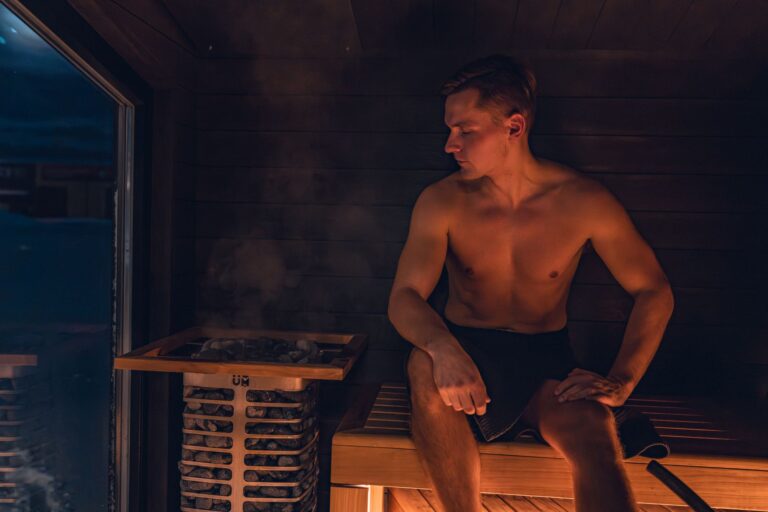
Unlike traditional saunas that heat the surrounding air, infrared units emit wavelengths (near, mid, and far infrared) that penetrate roughly 1.5 inches into tissue, raising core body temperature from the inside. This produces vasodilation — vessels expand, heart rate climbs to a level comparable to moderate cardio, and circulation increases dramatically. Heat shock proteins are released, repairing damaged cellular structures. Sweat production is heavy but at a lower ambient temperature (120–140°F versus 180–200°F for traditional saunas), making longer, more tolerable sessions possible. For a full list of physiological effects, review the benefits of infrared sauna.
Cold Plunge vs Infrared Sauna: Head-to-Head Recovery Benefits
Muscle Soreness and DOMS Relief
Cold plunge wins in the first 24 hours. By constricting blood flow and reducing metabolic activity in stressed tissue, ice baths blunt the inflammatory cascade responsible for delayed onset muscle soreness. Infrared sauna wins from day two onward, when increased circulation accelerates the clearance of metabolic waste and delivers nutrients to healing fibers. Serious jiu-jitsu athletes often use cold immediately post-training and heat the following morning.
Inflammation Reduction
Cold plunge is the more aggressive anti-inflammatory tool, ideal for acute swelling. Infrared sauna reduces chronic, systemic, low-grade inflammation via heat shock protein activation and improved circulation. If a joint is hot, red, or swollen right now, choose cold. If inflammation is diffuse, ongoing, and stress-related, choose heat.
Circulation and Blood Flow
Infrared sauna is the clear winner for expanding vascular capacity and delivering oxygenated blood to peripheral tissue. Cold plunge improves circulation indirectly — through the vasoconstriction-vasodilation rebound after you exit — but sauna is the sustained circulatory workout.
Nervous System Recovery and Stress Reduction
Both work, differently. Cold plunge produces a sharp sympathetic spike followed by a strong parasympathetic rebound, which is why practitioners feel euphoric and calm twenty minutes after exiting. Sauna induces parasympathetic dominance more gently and steadily — closer to the feeling of a long massage. For chronically wired, over-caffeinated professionals, sauna is usually more sustainable; for people who need to break through mental fog, cold is more effective.
Sleep Quality Improvement
Infrared sauna, especially in the evening, is arguably the most effective sleep-enhancing recovery tool available. The post-sauna drop in core body temperature mimics the natural circadian signal for sleep onset. Cold plunge is powerful for sleep too, but timing matters — done too close to bedtime, the norepinephrine surge can delay sleep. Cold in the morning, sauna at night is a widely used rule of thumb.
Mental Health and Mood Benefits
Cold plunge produces a dopamine release that stays elevated for hours, comparable in magnitude to what regulated stimulants produce, but without the crash. Regular users report meaningful reductions in depressive symptoms. Sauna releases endorphins and improves brain-derived neurotrophic factor (BDNF) expression, which supports long-term cognitive health. Both pair beautifully with a meditation practice — many members combine sauna sessions with yoga meditation or kriya yoga meditation for compounded mental recovery.
When Cold Plunge Wins: Best Use Cases for Ice Bath Recovery
Acute Injury and Swelling Management
A rolled ankle after sparring, a swollen finger from grip fighting, a fresh bruise from striking — this is textbook cold territory. Vasoconstriction limits fluid accumulation in the injured area, reduces pain signaling, and shortens the acute inflammation window. Apply cold within the first 24–48 hours; after that, switch to heat.
Post-High-Intensity or Endurance Training
After a maximal effort — competition-simulation rounds, a hard strength and conditioning session, a long run — cold plunge is the fastest way to shut down the exercise-induced inflammatory cascade and lower your perceived recovery time. Note: if the training goal was hypertrophy, wait 4–6 hours before plunging, since immediate cold exposure can slightly blunt muscle-building adaptations.
Rapid Recovery Between Same-Day Training Sessions
Athletes who train twice a day — a morning technique class and an evening sparring session, for example — use cold plunge between sessions to reset the nervous system and clear metabolic byproducts fast. Ten minutes in 50°F water at noon can make an evening session feel dramatically fresher.
When Infrared Sauna Wins: Best Use Cases for Heat Therapy Recovery
Chronic Muscle Tightness and Joint Stiffness
If you wake up stiff, your hips lock after long meetings, or your shoulders feel permanently knotted, sauna is the answer. Deep heat lengthens connective tissue, releases muscle guarding, and prepares the body for mobility work. Many members schedule sauna directly before mobility sessions — see our guides on incorporating mobility into your training and why mobility training matters to build a smart routine.
Deep Tissue Recovery and Collagen Support
Near-infrared wavelengths in particular stimulate mitochondrial activity in skin and connective tissue, supporting collagen synthesis and tendon repair — meaningful for grapplers who load their fingers, wrists, and knees repeatedly. Consistent use over weeks matters more than any single session; learn more about how long it takes to see infrared sauna benefits.
Detoxification and Lymphatic Drainage
Heavy sweat sessions support the elimination of heavy metals and lipid-soluble toxins through the skin, while heat-driven circulation supports lymphatic flow — a system that has no pump of its own and depends on movement and temperature changes to function.
Does Combining Cold Plunge and Infrared Sauna Maximize Recovery?
For most people, yes. The combination — known as contrast therapy — leverages both pathways in a single session and produces recovery outcomes neither modality achieves alone.
Contrast Therapy: The Science of Hot-Cold Cycling
Alternating between heat and cold creates a “vascular pump” effect: vessels dilate under heat, constrict under cold, then dilate again. This rhythmic pumping flushes metabolic waste from muscle tissue, delivers oxygen-rich blood to recovery sites, and trains the autonomic nervous system to shift efficiently between states. Research on contrast therapy shows meaningful reductions in DOMS and perceived fatigue compared with passive rest.
Recommended Protocol: Order, Timing, and Duration
A widely used, well-tolerated protocol looks like this: 15–20 minutes in the infrared sauna, then 2–3 minutes in the cold plunge, repeated for 2–3 cycles, always finishing on cold. Ending on cold locks in the vasoconstriction response and produces the characteristic post-session alertness and mood boost. For a full walkthrough with variations, read our detailed guide on how to do contrast therapy with sauna and cold plunge. Total session time: 45–75 minutes. Frequency: 2–4 times per week is a sweet spot for most training athletes.
Who Should Avoid Combining Both Modalities
Pregnant women, people with uncontrolled cardiovascular disease, individuals with Raynaud’s syndrome, and anyone recovering from a recent cardiac event should not do contrast therapy without medical clearance. Rapid vascular shifts place real demands on the heart. If you have any doubt, use one modality at a time and speak with a physician first.
Cold Plunge vs Infrared Sauna by Recovery Goal: A Decision Guide
Best Choice for Athletes and High-Performance Training
Use both, strategically. Cold plunge post-training on high-intensity days, sauna on lower-intensity or rest days, and contrast therapy 1–2 times per week. Jiu-jitsu, striking, and strength athletes at Trein Club typically build weekly recovery calendars that mirror their training load rather than defaulting to the same protocol every day.
Best Choice for General Fitness and Weekend Warriors
Infrared sauna is usually the better anchor. It’s more forgiving, easier to tolerate, produces excellent cardiovascular and stress benefits, and doesn’t require the mental preparation of cold exposure. Add cold plunge 1–2 times per week once you’re consistent.
Best Choice for Older Adults and Joint Health
Infrared sauna is generally the safer, more comfortable, and more effective option — it improves circulation, eases joint stiffness, supports cardiovascular health, and doesn’t stress the vascular system the way full cold immersion can. Cold applications, if used, should be brief and localized rather than full-body plunges.
Best Choice for Stress, Burnout, and Mental Recovery
Start with infrared sauna. Chronic stress means the sympathetic nervous system is already overstimulated — pushing it further with daily cold exposure can backfire. Sauna combined with breathwork and practices like raja yoga meditation restores parasympathetic tone more sustainably. Introduce cold plunge gradually once baseline stress is under control.
Safety Considerations, Contraindications, and Who Should Consult a Doctor First
Cold Plunge Safety: Temperature Ranges, Duration Limits, and Warning Signs
The standard therapeutic range is 45–55°F for 2–5 minutes; advanced users may extend to 8–10 minutes but rarely benefit from longer. Never plunge alone if you’re inexperienced. Warning signs to exit immediately: uncontrollable shivering that persists, numbness that doesn’t resolve, chest tightness, dizziness, or confusion. Contraindications include uncontrolled hypertension, heart disease, Raynaud’s, pregnancy, and cold urticaria. Warm up naturally after exiting rather than jumping into a hot shower.
Infrared Sauna Safety: Heat Tolerance, Hydration, and Contraindications
Sessions of 20–45 minutes at 120–140°F are typical. Hydrate aggressively before, during, and after — plan on 16–24 ounces of water with electrolytes per session. Contraindications include pregnancy, multiple sclerosis (heat can worsen symptoms), certain medications that impair sweating or thermoregulation, recent surgery, and severe cardiovascular disease. Exit if you feel lightheaded, nauseous, or your heart rate climbs uncomfortably high. Learn more about the specific benefits and safety parameters of infrared sauna before your first session.
Cost, Accessibility, and Practical Considerations
Home Setup vs Studio or Gym Access
Home cold plunge tubs range from $150 stock-tank DIY setups to $8,000–$15,000 chillers. Home infrared saunas run $2,000 for basic single-person units to $8,000+ for premium multi-person cabins. Both require space, electrical capacity, and ongoing maintenance. For most people, studio access is dramatically more cost-effective for the first year — you get professional-grade equipment, correct temperature control, hygiene protocols, and no maintenance headaches. At Trein Club, both modalities live inside the recovery lounge alongside compression therapy and massage, so members can build a full recovery session without leaving the building.
Cost Comparison: Cold Plunge Tubs vs Infrared Sauna Units
On a pure equipment basis, cold plunge is cheaper to start (a chest freezer conversion or stock tank works) but more expensive to run properly over time — chillers, ozone filtration, and water treatment add up. Infrared sauna has a higher upfront cost but negligible operating expense: a session costs pennies of electricity. If you’re choosing only one to invest in at home and you already have gym access to the other, sauna typically delivers a broader return across the family — kids, older parents, and non-athletes all benefit safely, while cold plunge is a more specialized tool. Either way, the smartest move is to test both consistently for a few weeks in a facility built for recovery before committing thousands of dollars to a home setup you may not end up using.