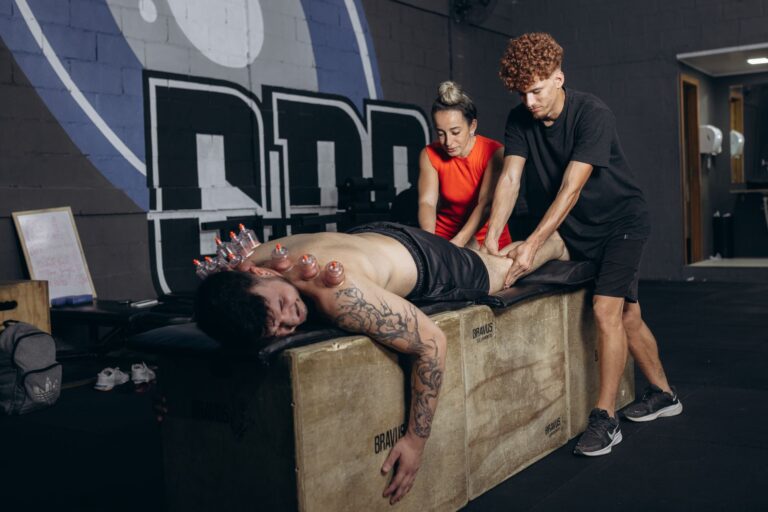

How to start mobility training doesn’t require expensive equipment, a gym membership, or years of athletic experience—it requires intention and consistency. Mobility training is the practice of improving your body’s ability to move freely through its full range of motion, and it’s one of the most overlooked tools for preventing injury, reducing pain, and performing better in whatever you do, whether that’s Brazilian Jiu-Jitsu, striking, strength training, or simply moving through your day without stiffness and tension.
The beauty of mobility work is that it meets you where you are. Beginners often confuse it with stretching, but mobility training is active and purposeful—it combines movement, breathwork, and body awareness to unlock tightness and build strength in positions your body rarely experiences. At Trein Club in Houston, our mobility training for athletes and martial artists is woven into every program, from our Vinyasa flow yoga classes led by 4x World Champion Pedro Araujo to our strength and conditioning sessions, because we understand that a body that moves well is a body that stays healthy, confident, and resilient.
In this guide, we’ll walk you through the fundamentals of starting a mobility practice that actually fits your life and goals.
What Is Mobility Training and Why Should You Start?
Mobility training is the practice of moving your joints through their full, controlled range of motion — with strength, stability, and intention. It’s not about touching your toes or holding a split. It’s about owning every degree of movement your body can produce, so you can squat deeper, punch harder, roll longer, sit at your desk pain-free, and pick up your kids without waking up sore the next day. At Trein Club, mobility sits at the intersection of our jiu-jitsu, striking, yoga, and strength programs because it’s the foundation that makes every other form of training safer and more productive.
If the concept is new to you and you’d like a broader primer, our guide on what mobility training is lays out the fundamentals in plain language. For anyone already curious about how it plugs into real-world movement — carrying groceries, playing with kids, rolling on the mats — the piece on functional mobility training is a natural next step.
Mobility vs. Flexibility vs. Strength: Key Differences Explained
These three words get used interchangeably, but they describe very different qualities. Flexibility is passive — how far a muscle can be lengthened when something else (gravity, a partner, a strap) moves it. Strength is the ability to produce force through a joint. Mobility is the marriage of the two: active, controlled range of motion powered by your own muscles. A dancer in a full split has flexibility. A powerlifter has strength. A jiu-jitsu athlete who can shoot a deep single-leg, recover guard, and stand up under pressure has mobility.
Science-Backed Benefits of Mobility Training for Beginners
Consistent mobility work improves joint health, lowers injury risk, sharpens neuromuscular control, and expands usable range in compound lifts like squats, deadlifts, and overhead presses. It eases the chronic stiffness of prolonged sitting, restores natural posture, boosts circulation to connective tissue, and speeds recovery between hard training sessions. For a deeper breakdown of the physiological wins, read our overview of the main benefits of mobility training.
How to Assess Your Current Mobility Before You Begin
Before you build a routine, you need a baseline. Mapping where you’re restricted lets you spend your time on the joints that actually need attention rather than repeating drills for areas that are already fine.
Simple Self-Assessment Tests for Hips, Shoulders, Ankles, and Spine
- Deep squat test: Feet shoulder-width, toes slightly out, drop into a full squat. Can you keep heels down, chest tall, knees tracking over toes? Restrictions usually live in the ankles or hips.
- Shoulder reach behind back: One hand over the shoulder, the other up from the low back. Fingers should touch or come close on both sides. Big side-to-side differences point to restricted shoulders or thoracic spine.
- Wall ankle test: Kneel a few inches from a wall and drive your knee forward without lifting the heel. If your knee can’t touch the wall from about 4 inches away, ankle mobility needs work.
- Cat-cow spinal scan: On hands and knees, alternate arching and rounding the spine. Look for segments that feel “stuck” or refuse to move.
How to Identify Your Weakest Mobility Areas and Prioritize Them
List your results and rank them by two criteria: severity of restriction and impact on your daily life or training. A desk worker with locked-up hips and a stiff thoracic spine should prioritize those over ankle work. A striker with limited hip rotation should attack that first. Spend 70% of your early sessions on your two worst areas; use the rest to maintain the joints that already move well.
How to Build a Beginner Mobility Training Routine from Scratch
How Many Days Per Week Should Beginners Train Mobility?
Mobility responds to frequency more than volume. Five to seven short sessions per week will beat two long ones every time. Beginners see the fastest gains at daily practice, even if that means only 10 minutes. For a more detailed answer, see our guide on how often you should do mobility training.
How Long Should Each Mobility Session Last?
Ten to twenty minutes is the sweet spot for beginners. Long enough to hit every major joint, short enough that you’ll actually do it tomorrow. On days you strength train or roll, you can shrink the dedicated block to five minutes and let warm-ups and cool-downs carry the rest.
The Best Time of Day to Do Mobility Work (Morning vs. Evening)
Morning sessions decompress the spine, wake up the nervous system, and set posture for the day. Evening sessions help you unwind, undo the effects of sitting, and improve sleep quality. Both work — the best time is the one you’ll do consistently. If you need help placing mobility inside a broader training week, our article on when to do mobility training breaks down the timing options.
The Essential Full-Body Beginner Mobility Routine (Step-by-Step)
Hip Mobility Exercises Every Beginner Needs
- 90/90 hip switches: Sit with one leg bent in front at 90°, the other bent to the side at 90°. Rotate slowly from side to side. 8–10 reps per side.
- World’s greatest stretch: Lunge, hand to the floor, opposite elbow to the instep, then rotate open. 5 reps per side.
- Cossack squats: Wide stance, shift weight over one bent leg while the other stays straight. 6–8 reps per side.
Shoulder and Thoracic Spine Mobility Drills for Desk Workers
- Thread the needle: On hands and knees, thread one arm under the other, then reach back up toward the ceiling. 6 reps per side.
- Wall slides: Back against a wall, arms in a “W,” slide up to a “Y” without letting elbows or wrists leave the wall. 10 reps.
- Prone Y-T-W raises: Face down, lift arms into each shape without shrugging. 8 reps of each.
Ankle and Knee Mobility Exercises for Better Movement
- Knee-over-toe wall drives: From a half-kneel, drive the front knee forward past the toes. 10 reps per side.
- Tibialis raises: Standing against a wall, lift toes off the floor while keeping heels planted. 15 reps.
- ATG split squats: Long lunge stance, drop the back knee toward the floor with the front heel down. 6–8 reps per side.
Spinal Mobility Movements to Relieve Stiffness and Pain
- Cat-cow: 10 slow reps, moving segment by segment.
- Seated spinal rotations: Sit tall, hands on shoulders, rotate side to side. 10 reps per side.
- Jefferson curls (light): Standing, roll down one vertebra at a time, then reverse. 5 slow reps.
A 10–20 Minute Daily Mobility Workout You Can Do Every Day
Warm-Up Phase: Preparing Your Joints for Movement (3–5 Minutes)
Start with circulation and joint prep: 60 seconds of easy marching or jumping jacks, then slow controlled articular rotations (CARs) for the neck, shoulders, hips, and ankles. Keep it smooth — this is a dial, not a switch.
Main Mobility Circuit: Full-Body Flow Routine (10–12 Minutes)
Move through the following as a flow, resting only as needed:
- World’s greatest stretch — 5 per side
- 90/90 hip switches — 8 per side
- Thread the needle — 6 per side
- Deep squat hold with reach — 30 seconds
- Cossack squats — 6 per side
- Cat-cow into down dog to cobra — 8 rounds
- Knee-over-toe wall drives — 10 per side
Cool-Down Phase: Locking In Range of Motion Gains (3–5 Minutes)
Finish with 2–3 end-range holds in your priority areas — pigeon pose, low lunge with rotation, or a supported thoracic extension over a rolled towel. Add box breathing (4 in, 4 hold, 4 out, 4 hold) for two minutes to downregulate the nervous system and cement the changes.
Should Beginners Focus on Mobility Before Strength Training?
Mobility and strength aren’t competitors — they’re partners. Without mobility, your strength gains have nowhere to go. Without strength, your mobility is fragile and injury-prone. The purpose of pairing them is exactly what we explore in our piece on stability and mobility training.
How to Combine Mobility and Strength Training Effectively
Use mobility as a warm-up before lifting (5–8 minutes targeting the joints you’re about to load), sprinkle short mobility “snacks” between sets, and save longer dedicated sessions for rest days or evenings. For frequency guidelines, see how often strength and mobility training should be conducted.
When to Prioritize Mobility Over Lifting (and Vice Versa)
Prioritize mobility when a joint restriction is limiting your lifts (a shallow squat caused by ankle stiffness, for example), when you’re returning from injury, or during high-stress weeks when heavy loading would be counterproductive. Prioritize lifting when your ranges are adequate and your goal is strength or hypertrophy — but never drop mobility entirely.
Common Beginner Mistakes in Mobility Training and How to Avoid Them
Confusing Passive Stretching with Active Mobility Work
Holding a hamstring stretch for 60 seconds while scrolling your phone is not mobility. Mobility requires active control — reaching an end range under your own muscular power. Passive stretching has a place, but active drills like CARs, controlled rotations, and end-range holds under tension are what actually build usable range.
Skipping Consistency: Why Daily Practice Beats Occasional Long Sessions
Tissue and nervous system adaptations happen through repeated exposure, not marathon workouts. Ten minutes every day will outperform a 90-minute session once a week — every time.
Ignoring Pain Signals vs. Normal Discomfort During Mobility Work
A stretch sensation, a working muscle, or the “novel” feeling of a new range is fine. Sharp, pinching, or nerve-like pain is not. If a drill hurts a joint, scale it back or work in a smaller range. Mobility should expand your options, never close them.
How to Progress Your Mobility Training Over Time
Week-by-Week Progression Plan for the First 30 Days
- Week 1: 10 minutes daily. Focus on learning the movements and mapping your restrictions.
- Week 2: 12–15 minutes daily. Add one end-range hold per priority area.
- Week 3: 15 minutes daily. Introduce loaded mobility (light bands or dumbbells in Cossack squats, ATG split squats).
- Week 4: 15–20 minutes daily. Retest your baseline assessments. Adjust priorities based on gains.
Signs You Are Making Real Mobility Gains
You’ll notice cleaner squats, easier overhead reaching, less morning stiffness, better posture during long workdays, and — for our members — deeper guards, higher kicks, and faster recovery between rounds. To understand the mechanisms behind these adaptations, our article on what mobility training does goes deeper.
When and How to Add Advanced Mobility Techniques
After 4–6 weeks of consistent practice, introduce loaded end-range work, PAILs/RAILs contractions, kettlebell armbars, and deeper isometric holds. Progress load and duration before range — earned range under load is what sticks.
Best Tools and Resources to Support Your Mobility Practice
Foam Rollers, Resistance Bands, and Mobility Balls: Do You Need Them?
No — but they help. A foam roller and a lacrosse ball unlock tight tissue before you train. Light resistance bands assist and challenge end-range positions. None of it is required to start; a yoga mat and 15 minutes is enough. At Trein Club, our recovery lounge pairs these tools with services like massage, contrast therapy, and the infrared sauna and cold plunge to accelerate the whole system.
Top Apps, YouTube Channels, and Programs for Guided Mobility Training
Apps like GOWOD and Pliability offer structured daily flows. YouTube channels from FRC-certified coaches and functional movement specialists are excellent free resources. But the fastest progress comes from in-person coaching — feedback, corrections, and community. Our yoga and mobility classes at Trein Club, led by Pedro Araujo (4x world champion and 500+ hour certified yoga trainer), combine Vinyasa flow, breathwork, and athlete-focused mobility in a way no app can replicate.
Frequently Asked Questions
How long does it take to see results from mobility training?
Most beginners feel meaningful changes — less stiffness, deeper squats, easier overhead reach — within 2–3 weeks of daily practice. Structural changes to connective tissue take longer, typically 8–12 weeks, but the day-to-day quality-of-life improvements come fast.
Can I do mobility training every day without overtraining?
Yes. Low-intensity mobility work is restorative and can be done daily. Just avoid pushing every session to maximum intensity — treat some days as active recovery.
Is mobility training good for people with chronic pain or injuries?
Often, yes — but with care. Mobility work can restore function and reduce pain from restricted joints, but anything sharp, radiating, or acute should be cleared with a medical professional first. Start conservatively and expand range only when it feels safe.
What is the difference between a mobility routine and a stretching routine?
Stretching is largely passive and focuses on lengthening muscle. Mobility is active and focuses on control through the full range of a joint. Mobility includes stretching but goes further by adding strength and neuromuscular control at end ranges.
Do I need a gym or equipment to start mobility training?
No. A small floor space and 10–15 minutes is enough. Equipment can accelerate progress later, but bodyweight drills alone will take beginners a long way.
Should beginners focus on mobility or flexibility first?
Mobility first. Passive flexibility without the strength to control it can actually make you more injury-prone. Build controlled range you can own before chasing extreme static positions.
How do I stay consistent with a daily mobility practice?
Anchor it to an existing habit — right after brushing your teeth, before your morning coffee, or immediately after work. Keep sessions short (10 minutes), keep the mat visible, and train with a community. At Trein Club, group classes and the “organized like a team, fighting like a family” culture are what turn intentions into consistent daily practice.