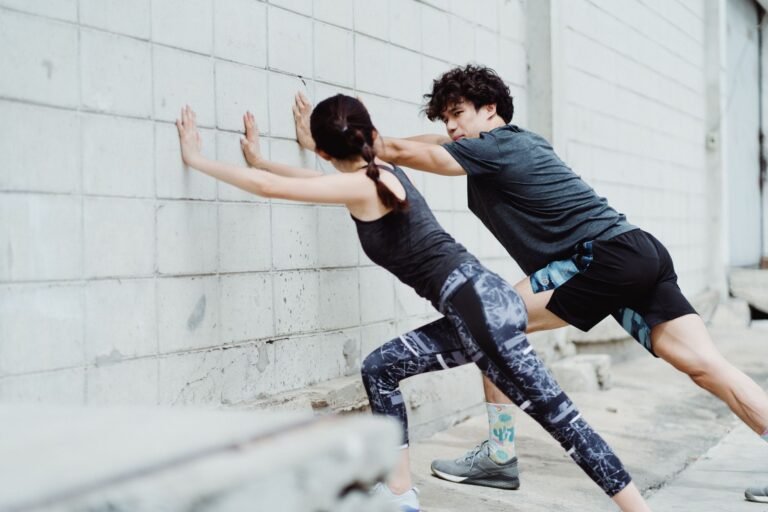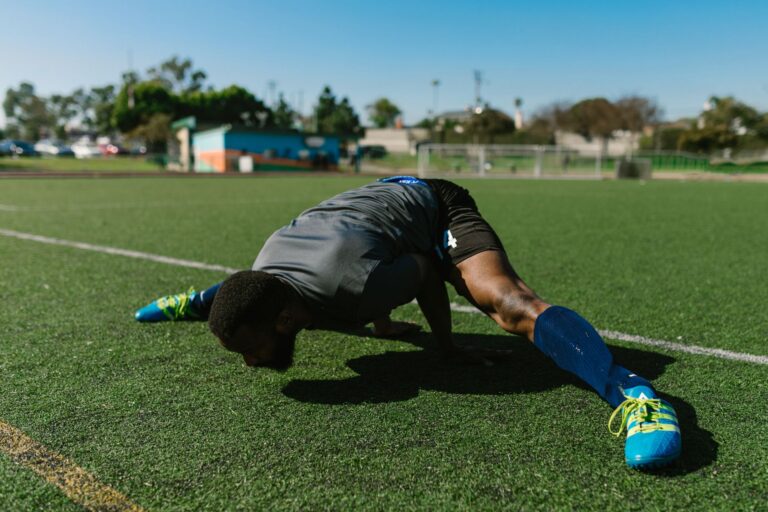
Learning how to teach vinyasa flow yoga requires more than memorizing sequences—it demands understanding how breath, movement, and intention weave together to create transformation. Whether you’re a yoga instructor looking to refine your teaching methodology or a martial artist seeking to integrate vinyasa into your training program, the ability to guide students through flowing sequences that build strength, mobility, and mental clarity is a skill that elevates any movement practice. At Trein Club in Houston, vinyasa flow isn’t treated as separate from combat sports or strength training; it’s woven into our holistic wellness model as an essential tool for recovery, injury prevention, and performance enhancement. Pedro Araujo, our founder and 500+ hour certified yoga trainer, teaches vinyasa alongside our world-class jiu-jitsu and striking programs because he understands that true athleticism requires balance between intensity and recovery, power and flexibility, effort and ease.
The principles of effective vinyasa instruction—how to cue transitions, modify poses for different bodies, and create a rhythm that keeps students engaged—apply whether you’re teaching a studio full of yogis or athletes looking to stay mobile and injury-free. In this guide, we’ll break down the foundational skills that make vinyasa teaching effective, intentional, and accessible to students at every level.
What Is Vinyasa Flow Yoga? Core Principles Every Teacher Must Know
Before you can teach vinyasa flow, you need to grasp what makes it fundamentally different from a string of postures stitched together. Vinyasa is a philosophy of movement — a practice where breath dictates transition, transition dictates pace, and pace shapes the emotional temperature of the room. A skilled teacher is not choreographing a workout; they are guiding a moving meditation where every inhale and exhale carries intention. This mindset shift is what separates instructors who lead sequences from those who craft experiences.
Whether you are working with athletes, absolute beginners, or a mixed room, the same core principles apply: intelligent sequencing, breath-led movement, safe alignment, and the ability to read the energy of the students in front of you. If you want a deeper primer, our guide on what is vinyasa flow lays the foundation you will build on as a teacher.
The Meaning of Vinyasa: Breath-Movement Synchronization Explained
The Sanskrit word “vinyasa” is often translated as “to place in a special way.” In practice, it means every movement is linked to a specific inhale or exhale — arms rise on the inhale, folds happen on the exhale, the chest opens on the inhale, releases arrive on the exhale. This synchronization is not decorative; it is what transforms physical exercise into a nervous-system practice. When you teach, your cueing must reinforce this link constantly. If students are moving faster than they are breathing, the flow is gone. To explore this concept further, our article on what does vinyasa flow mean unpacks the linguistic and practical roots.
How Vinyasa Differs from Other Yoga Styles (Hatha, Ashtanga, Power Yoga)
Hatha is typically slower and pose-focused, holding shapes for multiple breaths with rest between them. Ashtanga follows a fixed, repeatable series in a set order — the same postures always appear in the same sequence. Power yoga is a Western, fitness-forward offshoot that borrows vinyasa’s structure but often prioritizes intensity over breath. Vinyasa sits in the middle: creative and variable like power yoga, yet rooted in breath discipline like Ashtanga. As a teacher, this freedom is both your greatest tool and your biggest responsibility — you decide the sequence, the pace, the peak, and the theme every single class.
10 Key Elements of Vinyasa Flow Yoga Every Teacher Should Master
Teaching vinyasa well is a craft built from repeatable technical skills. The elements below are non-negotiable — they show up in every class, whether you are running a beginner workshop or leading a room full of jiu-jitsu competitors using yoga as recovery.
1. Breath as the Foundation: Teaching Ujjayi Pranayama to Students
Ujjayi — the “ocean breath” — is created by a gentle constriction at the back of the throat, producing an audible, wave-like sound. It regulates pace, warms the body, and gives students an anchor when a pose gets hard. Introduce it in the first five minutes of class with a simple cue: “Breathe in through your nose, exhale through your nose, and whisper ‘haaa’ at the back of your throat.” Return to that reminder throughout the practice, especially before peak postures.
2. The Sun Salutation: Building Block of Every Vinyasa Class
Surya Namaskar A and B are the alphabet of vinyasa. Every teacher should lead them fluidly without notes, in perfect breath sync, with clean transitions. They serve as warm-up, connective tissue between standing sequences, and a diagnostic tool — how a student moves through a sun salutation tells you exactly where their mobility, strength, and breath capacity stand.
3. Transitions and Linking Poses: How to Create Seamless Flow
Amateur teachers cue poses. Skilled teachers cue transitions. The movement between Warrior II and Extended Side Angle is where students learn control, and where injuries typically happen if you skip cues. Practice narrating the path: “Straighten the front leg, windmill the arms up, then bend and reach the front hand forward and down.” Transitions are your signature.
4. Pace and Rhythm: Matching Movement Speed to Student Level
A beginner room needs one full breath per movement, sometimes two. An intermediate room can flow with half-breath transitions. Advanced practitioners can move continuously. Watch chests, not faces — if students are holding their breath to keep up, slow down immediately. Pace is the single most common thing new teachers get wrong.
5. Cueing Effectively: Verbal, Visual, and Hands-On Adjustments
Layer your instruction: verbal cues for the whole room, visual demonstrations for the shape, and hands-on adjustments only when consent has been established and only when they genuinely help. Prioritize alignment cues that prevent injury (shoulders stacked over wrists in plank, front knee over ankle in lunges) over purely aesthetic ones.
How to Structure a Vinyasa Flow Yoga Class: Step-by-Step Framework
Every well-taught vinyasa class follows an arc: settle, warm, build, peak, cool, close. Skipping or rushing stages breaks the physiological logic of the practice. Here is the framework most experienced teachers rely on.
Opening and Centering (5–10 Minutes): Setting Intention and Breath Awareness
Begin seated or supine. Guide three to five minutes of breath awareness, introduce Ujjayi, and offer a theme — gratitude, steadiness, courage, whatever fits the day. This is where students shift from their day into their practice. Never skip it, even in a fast-paced class.
Warm-Up Phase (10–15 Minutes): Mobilizing Joints and Activating the Body
Cat-cow, thread the needle, low lunges, and two to three rounds of Sun Salutation A prepare the spine, hips, and shoulders. This phase should raise body temperature progressively without spiking heart rate too early.
Peak Pose Sequencing (20–25 Minutes): Building Toward the Apex Posture
This is the heart of the class. Every pose in this phase should prepare the body for the peak — if your apex is Crow Pose, you are opening hips, strengthening wrists, and firing the core. If your apex is Bird of Paradise, you are warming hamstrings and opening shoulders. Nothing is random.
Cool-Down and Counter Poses (10 Minutes): Releasing Tension Safely
After the peak, systematically release what you loaded. Backbends after forward folds, twists to neutralize the spine, hip openers on the floor, and gentle inversions like Legs Up the Wall. The nervous system needs this downshift.
Savasana and Closing (5–10 Minutes): Integrating the Practice
Savasana is not optional and it is not filler. It is when the physiological benefits of the class consolidate. Give students at least five minutes of true stillness, then a slow return to seated. Close with a shared breath or a simple word of gratitude.
How to Create a 60-Minute Vinyasa Sequence: A Complete Class Plan Template
Planning a class in advance is the mark of a professional teacher. Freestyling works occasionally, but a written plan ensures your sequencing is anatomically sound and your peak pose has been earned.
Choosing a Theme or Peak Pose (e.g., Eagle Pose, Warrior Series)
Start with either a physical goal (peak pose) or a philosophical one (a theme like “rooting down to rise up”). Ideally, connect the two — Eagle Pose pairs naturally with themes of focus and single-pointed attention. Warrior sequences pair with courage and steadiness. This gives your class a narrative.
Mapping the Arc: Intensity Curve from Start to Finish
Sketch the intensity as a curve: low at the opening, rising through warm-up, peaking around minute 35–40, then falling steadily through cool-down to zero at Savasana. If your class stays flat or spikes twice, students leave feeling unfinished.
Balancing Standing, Seated, and Supine Poses Within the Flow
A common mistake is spending 40 minutes standing and then rushing floor work. A balanced 60-minute vinyasa class typically includes about 25 minutes of standing sequences, 10 minutes of seated hip and forward-fold work, 10 minutes of supine release, and 5–7 minutes of Savasana, with the remainder in transitions and opening.
Sample 60-Minute Vinyasa Class Plan with Pose-by-Pose Breakdown
Peak pose: Half Moon (Ardha Chandrasana). Theme: balance and trust.
- 0–7 min: Seated centering, Ujjayi introduction, cat-cow, thread the needle.
- 7–15 min: Three rounds of Sun Salutation A, two rounds of Sun Salutation B.
- 15–30 min: Standing sequence — Warrior II, Extended Side Angle, Triangle, Wide-Legged Forward Fold, repeat other side.
- 30–40 min: Peak build — Warrior III, Standing Splits, Half Moon (both sides), Tree Pose.
- 40–48 min: Floor sequence — Pigeon, Seated Forward Fold, Bound Angle, supine twist.
- 48–52 min: Bridge Pose, Happy Baby, Legs Up the Wall.
- 52–60 min: Savasana and closing.
How to Teach Vinyasa Yoga for All Levels in the Same Class
Most classes you teach will place beginners next to seasoned practitioners. Your job is to make everyone feel seen and challenged without leaving anyone behind. This becomes especially true in hybrid environments like ours, where yoga for athletes often means combat athletes with strong bodies but tight hips training alongside first-time yogis.
Offering Modifications and Progressions for Every Pose
For every pose you teach, know two variations down and one variation up. In Chaturanga, offer knees-down for beginners and full expression for advanced students. In Crow, offer a block under the forehead for beginners and Side Crow for advanced. Cue all options without hierarchy — “take the version that serves your body today.”
Using Props (Blocks, Straps, Blankets) to Make Flow Accessible
Props are not for weak students; they are for smart ones. Blocks under the hands in Half Moon make the pose accessible to tight hamstrings. Straps in seated forward folds preserve spinal length. Blankets under knees protect joints in low lunges. Normalize prop use by reaching for them yourself when you demonstrate.
Teaching Beginners the Vinyasa Transition: Chaturanga, Up Dog, Down Dog
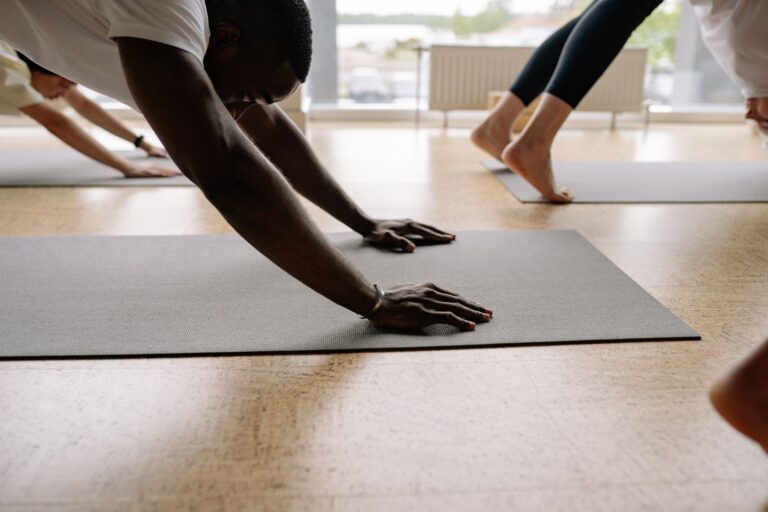
The vinyasa transition (plank to chaturanga to upward-facing dog to downward-facing dog) is where most beginners get injured. Teach it as a standalone skill in the first ten minutes: shoulders forward over fingertips in plank, elbows tight to ribs on the descent, chest and thighs lifted in up dog. Offer the knees-chest-chin variation as the default for beginners, not as a downgrade.
How to Read the Room and Adjust Pacing in Real Time
Look up from your mat. If half the room is behind on breath, hold the next pose longer. If the room is buzzing with energy, add an extra round of sun salutations. If shoulders are collapsing, drop the vinyasa transitions for two rounds. Teaching live is a conversation, not a monologue.
Common Mistakes New Vinyasa Teachers Make (and How to Fix Them)
Every teacher makes these mistakes early. The fix is awareness plus deliberate practice.
Over-Cueing vs. Under-Cueing: Finding the Right Balance
Over-cueing floods students with information — “engage your bandhas, soften your jaw, spread your toes, lift your pelvic floor, drop your shoulders” all in one breath. Under-cueing leaves them guessing. The fix: one alignment cue, one breath cue, one intention cue per pose. Then let students be in the pose.
Neglecting Safety Cues for High-Risk Poses (Chaturanga, Inversions)
Chaturanga is the most-injured pose in modern yoga. Every time you cue it, remind students: elbows tight to ribs, shoulders no lower than elbows, option to lower knees. For inversions, always cue an exit strategy before the entry. Safety cues are not optional add-ons; they are the reason students trust you.
Poor Sequencing Logic: Why Anatomical Order Matters
You cannot teach Wheel Pose without first opening shoulders, hip flexors, and thoracic spine. You cannot teach Crow without wrist and core prep. Sequencing follows anatomy: open, then strengthen, then integrate, then peak, then release. Study the joints and muscles involved in your peak pose and work backward.
Teaching Vinyasa in Special Contexts: Hot Yoga, Online Classes, and Large Groups
Different environments change how you teach. In heated rooms, slow the pace and add extra water breaks — the heat is already doing part of the work, and pushing intensity risks overheating. Cue hydration early, offer child’s pose more frequently, and shorten peak holds.
For online classes, over-cue what you would normally show visually. Assume students cannot see your screen clearly and use precise directional language (“right hand forward, left hand back”). Position your camera to show your full mat, and pause more often for questions or check-ins.
In large groups (30+ students), your voice and clarity matter more than your demonstration. Use a microphone if possible, teach from a raised position, and lean on repeatable structures — students in the back need patterns they can follow even if they cannot hear every word. Walk the room during holds, not during transitions, so you never leave a group unattended mid-flow.
Teaching vinyasa is a lifelong craft. At Trein Club, our yoga program — led by Pedro Araujo, a 4x Jiu-Jitsu World Champion and 500+ hour certified yoga trainer — treats vinyasa as both a standalone practice and a performance tool that supports our athletes on the mats. Understanding why yoga is good for athletes is exactly why we built our program the way we did: breath, mobility, and mindfulness woven into a training culture that respects every body walking through the door.