The purpose of stability and mobility training extends far beyond flexibility stretches or balance exercises—it’s the foundation that allows your body to move with control, power, and longevity, whether you’re stepping onto the jiu-jitsu mat for the first time or training for competition. When stability and mobility work together, they create the conditions for injury prevention, better technique execution, and improved performance across all movement patterns. In martial arts especially, where your joints are constantly challenged through grappling, submissions, and positional transitions, this type of training becomes non-negotiable.
At Trein Club in Houston, we’ve learned from working with athletes of all levels that the strongest competitors aren’t always the ones lifting the heaviest weights—they’re the ones who’ve invested in their body’s fundamental movement quality. Our yoga and mobility classes, led by Pedro Araujo and his team, are designed specifically for martial artists and athletes who want to move with intention, recover faster, and stay healthy for years to come. Stability and mobility training isn’t something you do after you’ve “made it” in your sport; it’s the intelligent foundation that gets you there and keeps you there.
What Is the Purpose of Stability and Mobility Training?
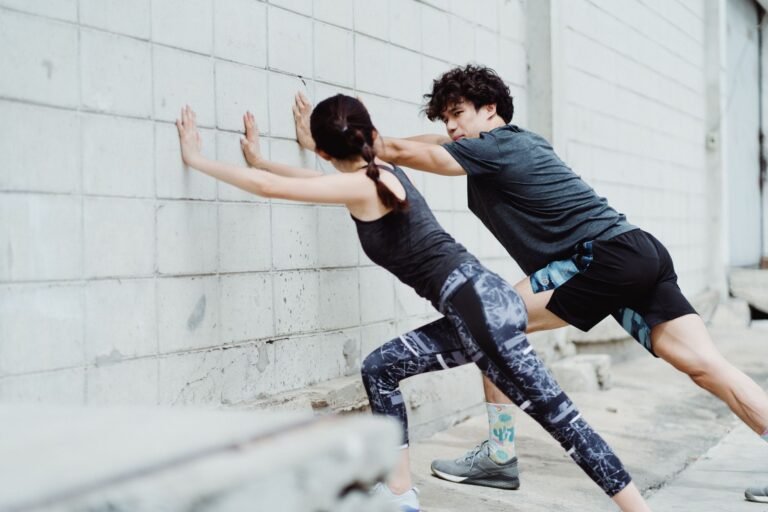
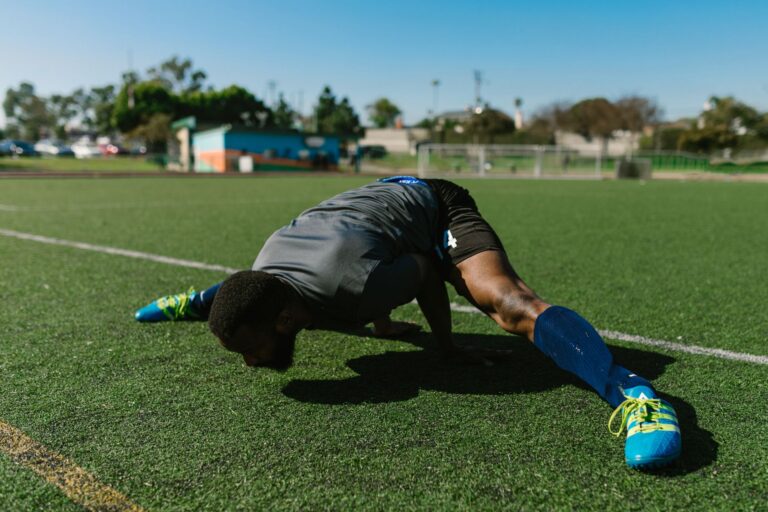
The purpose of stability and mobility training is to build a body that moves the way it was designed to: joints traveling through full, pain-free ranges of motion, and muscles capable of controlling those ranges under load. Put simply, mobility gives you access to positions, and stability gives you the strength to own them. Together, they underpin every athletic skill, from a jiu-jitsu shrimp to a deep squat to picking up a child without tweaking your back.
This kind of work is often framed as “extra” — something you tack on when there’s time. In reality, it’s the connective tissue between everything else you do. Without adequate hip range, your squat compensates through the lumbar spine. Without shoulder control, your bench press recruits the wrong tissues and eventually breaks down. The goal isn’t flexibility for its own sake; it’s building durable, controlled, resilient movement that supports performance, longevity, and quality of life.
Understanding the Difference Between Stability and Mobility
Before programming either one, it helps to separate the two concepts clearly. They are complementary, but they develop different qualities and demand different methods.
What Is Mobility Training and Why Does It Matter?
Mobility is active, controlled range of motion around a joint. It differs from flexibility — which is passive length — because it requires that you move through that range under your own power, with intent. A gymnast who can lift her leg overhead without using her hands has hip mobility. Someone who can only reach that position with a resistance band is showing flexibility, not mobility.
Mobility matters because your nervous system won’t allow you into ranges it doesn’t trust. If your hips can passively rotate 90 degrees but you can only actively control 60, your body will guard the last 30. Training this quality teaches the brain that the range is safe, usable, and worth defending. For a deeper technical breakdown, see our guide to mobility training exercises and the main benefits of mobility training.
What Is Stability Training and Why Does It Matter?
Stability is the ability to control a joint or a body segment against forces trying to move it — gravity, an opponent, your own momentum. It depends on the coordination of small stabilizing muscles, the timing of the nervous system, and the integrity of connective tissue. A stable shoulder doesn’t collapse when you press overhead. A stable spine doesn’t buckle when you deadlift.
Stability matters because strength without control is dangerous. You can be strong enough to lift a heavy weight and still lack the joint-level control to do it safely twice. Training this quality means loading the body in positions that challenge balance, coordination, and micro-control, not just gross force production.
How Stability and Mobility Work Together in the Body
Think of mobility as the size of the room and stability as the furniture arranged inside it. A big empty room is unusable; a crowded small room is also unusable. What you want is a space large enough to move through, with furniture placed to support real activity. In the body, this means every joint needs a working range and the strength to control that range end-to-end. When one is missing, the other becomes a liability — a mobile joint without control is a joint prone to dislocation, sprains, and chronic overuse.
Key Benefits of Stability and Mobility Training
Injury Prevention and Reduced Risk of Musculoskeletal Damage
The most commonly cited benefit is injury prevention. Most non-contact injuries — pulled hamstrings, tweaked lower backs, sprained ankles — happen when a joint is forced into a range the body doesn’t have the strength or control to manage. Combining these two qualities in training closes that gap. Athletes who devote time to it consistently report fewer training interruptions, and rehabilitation professionals rely on it as a first line of defense against recurring musculoskeletal issues.
Improved Functional Movement and Daily Performance
Functional movement — squatting, hinging, rotating, reaching, carrying — depends on both qualities. Better range lets you access positions like a deep squat or a full overhead reach. Better control lets you hold those positions with load. The payoff shows up everywhere: getting off the floor easily, lifting groceries without strain, sitting for long stretches without pain, playing with kids without the fear of “throwing something out.”
Enhanced Athletic Performance and Strength Output
Strength is produced through a chain. Weak links leak force. If your ankles can’t dorsiflex properly, your squat depth suffers and your quads never get a full stimulus. If your thoracic spine can’t extend, the overhead press compresses the lumbar spine instead of loading the shoulders. Cleaning up these qualities lets your primary movers produce more force through better mechanical positions — which is why serious lifters, grapplers, and endurance athletes treat this work as non-negotiable.
Better Posture, Balance, and Body Control
Modern life pushes the body into predictable postural distortions: rounded shoulders, forward head, tight hip flexors, weak glutes. This kind of training reverses the pattern by restoring range where it’s been lost and building strength in the muscles that hold you upright. Balance improves because proprioception — your sense of where your joints are in space — sharpens every time you challenge yourself under controlled conditions.
Faster Recovery and Rehabilitation After Injury
After an injury, the body protects itself by tightening around the affected area and dampening motor recruitment. Progressive stability and mobility work is how you unwind that protection safely. It’s why physical therapy protocols lean heavily on isometrics, controlled articular rotations, and low-load drills before returning athletes to full training. Pairing this work with modalities like infrared sauna sessions can further support tissue recovery and range-of-motion gains.
The Role of Core Stability in Overall Body Function
How Core Stability Supports Trunk Function and Standing Balance
The core is not just the abs. It’s the entire cylinder of muscle surrounding the spine — deep abdominals, obliques, multifidus, diaphragm, and pelvic floor — that stabilizes the trunk during every movement. When this system is strong, the limbs have a solid platform to push and pull against. When it’s weak, the limbs waste energy compensating for a wobbly center. Standing balance, especially on one leg or unstable surfaces, depends directly on how well this system fires.
Lumbo-Pelvic Stability: Why It Is Central to Movement Quality
The lumbo-pelvic region — where the lower spine meets the pelvis — is the anatomical center of the body and the intersection of nearly every major movement chain. Poor control here is the root of most chronic low back pain, hip issues, and even knee problems downstream. Training this area with anti-extension, anti-rotation, and anti-lateral-flexion drills (planks, dead bugs, Pallof presses, bird dogs) is what most people mean when they talk about “core work” that actually transfers to real life.
Upper Trunk Stability and Its Impact on Posture and Performance
Upper trunk control — the ability to manage the ribs, thoracic spine, and shoulder girdle — determines how well you can press, pull, and rotate without collapsing. It’s what separates a clean overhead position from a compensated one. For grapplers, strikers, and yoga practitioners alike, this is where a lot of performance is left on the table. Practices like Vinyasa flow yoga are particularly effective because they load the upper trunk in dynamic, breath-driven patterns that develop both qualities at once.
The Joint-by-Joint Approach: Which Joints Need Mobility vs. Stability
Physical therapist Gray Cook and strength coach Michael Boyle popularized the “joint-by-joint” model: the body alternates joints that primarily need mobility with joints that primarily need stability. When one joint fails at its job, the neighboring joint takes on a role it wasn’t built for — and that’s usually where pain shows up.
Ankles and Hips: Primary Mobility Joints
Ankles need dorsiflexion for squatting, running, and cutting. Hips need rotation, flexion, and extension for nearly everything. When ankles get stiff, knees start collapsing inward or the lower back rounds. When hips lock up, the lumbar spine picks up the slack — and pays for it. Prioritizing range here protects everything above and below.
Knees and Lumbar Spine: Primary Stability Joints
Knees and the lower back are built to be stable. They flex and extend, but they aren’t meant to twist, sway, or absorb rotational forces beyond a small range. When people chase “more flexibility” in these joints, they often create the exact instability that leads to injury. The fix isn’t to stretch — it’s to build control and let the neighboring mobile joints do their job.
Thoracic Spine and Shoulders: Balancing Both Demands
The thoracic spine (upper back) needs mobility, especially in rotation and extension. The shoulder is a hybrid: the glenohumeral joint needs range, while the scapula needs control against the ribcage. Getting these right is why overhead athletes, grapplers, and desk workers often need the most nuanced programming — a mix of thoracic openers, scapular control drills, and rotator cuff work.
Best Exercises for Stability and Mobility Training
Functional Exercises That Train Stability and Mobility Simultaneously
The most efficient movements develop both qualities at once. Examples include:
- Cossack squats — hip and ankle range with lateral control
- 90/90 hip transitions — active hip rotation with core control
- Single-leg deadlifts — hamstring and hip range under a stability demand
- Bear crawls and crab reaches — full-body coordination with joint control
- Loaded carries (suitcase, overhead) — trunk stability with shoulder mobility
The Turkish Get-Up: A Full-Body Stability and Mobility Builder
The Turkish get-up is arguably the single best exercise for combining both qualities. Starting on the floor and standing up while holding a weight overhead demands shoulder stability, thoracic mobility, hip mobility, core control, and coordination through every phase. Done slowly with a light kettlebell, it exposes weaknesses no isolated drill will catch — and builds them at the same time.
Pilates-Based Movements for Lumbo-Pelvic Stability and Flexibility
Pilates was built around the concept of controlled movement from a stable center. Exercises like the hundred, roll-ups, single-leg circles, and the swan train the deep core while simultaneously mobilizing the spine and hips. It’s a natural complement to strength training and a favorite among rehab professionals for exactly this reason.
Core Stability Exercises Backed by Clinical Research
The core exercises that consistently show up in the research literature are the ones that resist motion rather than create it:
- Front and side planks — anti-extension and anti-lateral-flexion
- Bird dogs — anti-rotation with contralateral limb control
- Dead bugs — anti-extension with reciprocal limb movement
- Pallof presses — anti-rotation under tension
- McGill’s “big three” (curl-up, side plank, bird dog) — spine-sparing core work
How to Program Stability and Mobility Training Into Your Routine
Fitting Stability and Mobility Work Alongside Strength and Cardio
You don’t need a separate hour to develop these qualities. The most sustainable approach is integration:
- Warm-ups — 8-10 minutes of mobility drills that prep the movements of the day
- Between sets — 30-60 seconds of stability work while resting from strength lifts
- Cooldowns — 5-10 minutes of controlled stretching and breathwork
- Dedicated sessions — one or two yoga or mobility-focused sessions per week
Recommended Frequency and Duration for Optimal Results
For most people, brief, frequent doses beat long occasional sessions. Ten to fifteen minutes of focused work five or six days a week produces far more adaptation than a single 90-minute session on Sunday. Dedicated mobility or yoga classes two to three times per week accelerate progress. For a deeper look, see our guides on how often you should do mobility training and how to combine strength and mobility work.
Beginner vs. Advanced Progressions in Stability and Mobility Training
Beginners should focus on floor-based drills, bodyweight only, and holding positions for time. Once basic ranges are accessible and control is consistent, progressions include adding load (light kettlebells or dumbbells), moving to unstable surfaces, reducing points of contact (single-leg, single-arm variations), and increasing tempo demands. The mistake most people make is chasing advanced variations before mastering the basics — which reintroduces the exact compensations the training was supposed to fix.
Who Benefits Most from Stability and Mobility Training?
Athletes Looking to Maximize Performance and Reduce Injury Risk
Every serious athlete — grappler, striker, runner, lifter — hits a ceiling set by their weakest joint. Combat sports in particular demand extreme ranges under high force, which is why jiu-jitsu practitioners and strikers increasingly integrate yoga for athletes as a core part of their training week rather than an afterthought.
Older Adults Seeking to Maintain Independence and Prevent Falls
After 50, these qualities become directly linked to independence. The ability to get up off the floor, catch yourself when you stumble, or reach a top shelf without pain determines quality of life in the decades to come. Research consistently shows that balance and mobility training reduces fall risk in older adults more than any other single intervention.
Office Workers and Sedentary Individuals with Postural Imbalances
Sitting eight hours a day shortens hip flexors, weakens glutes, rounds the upper back, and locks up the neck. Stability and mobility training is the direct antidote — and it doesn’t require athletic ambition. Even 15 minutes a day of targeted work can reverse most of what a workday does to the body.
Patients in Rehabilitation Settings After Neurological or Orthopedic Injury
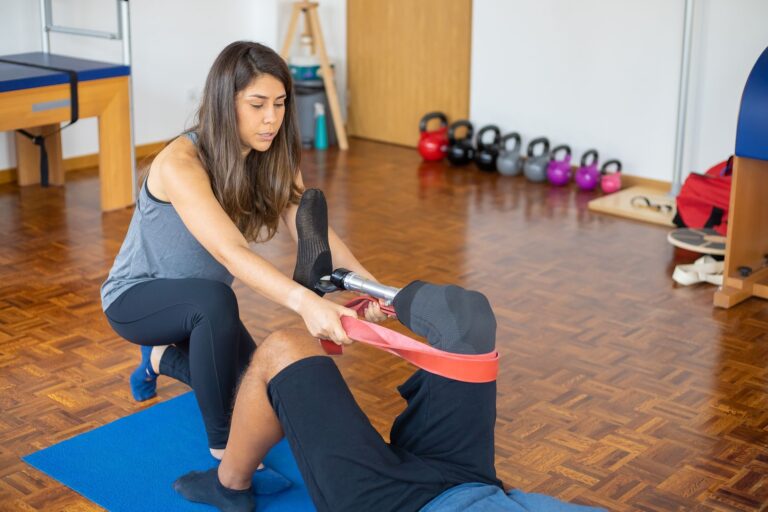
In clinical rehab, these drills are the bridge between injury and return to activity. After a stroke, joint replacement, or ligament reconstruction, restoring controlled range of motion is the first goal, followed by rebuilding stability, then strength. It’s a template that applies far beyond the clinic — anyone recovering from a nagging injury benefits from the same progression.
Frequently Asked Questions
Is stability and mobility training the same as stretching?
No. Stretching lengthens tissue passively. Mobility training builds active, controlled range, and stability training builds the strength to own that range. Static stretching alone doesn’t produce the neuromuscular adaptations this kind of work does.
How long before I see results?
Most people notice reduced stiffness within a week or two of consistent practice. Meaningful gains in range of motion, control, and strength typically appear at the 6-8 week mark, and long-term postural changes take three to six months.
Can I do this if I have an existing injury?
In most cases, yes — but with modifications. This kind of work is a cornerstone of rehab. That said, work with a qualified coach or physical therapist to make sure you’re loading the right tissues without aggravating the injury.
Do I need equipment?
Not really. A yoga mat, a foam roller, a resistance band, and one moderate kettlebell cover 90% of what most people need. Bodyweight alone is enough to make dramatic progress at the beginner and intermediate levels.
How does yoga fit into this?
Yoga — particularly Vinyasa — is one of the most efficient formats for developing both qualities at once, because it moves through full-body ranges under active control and links movement to breath. If you’re new to it, our breakdown of how to do Vinyasa flow properly is a good starting point.