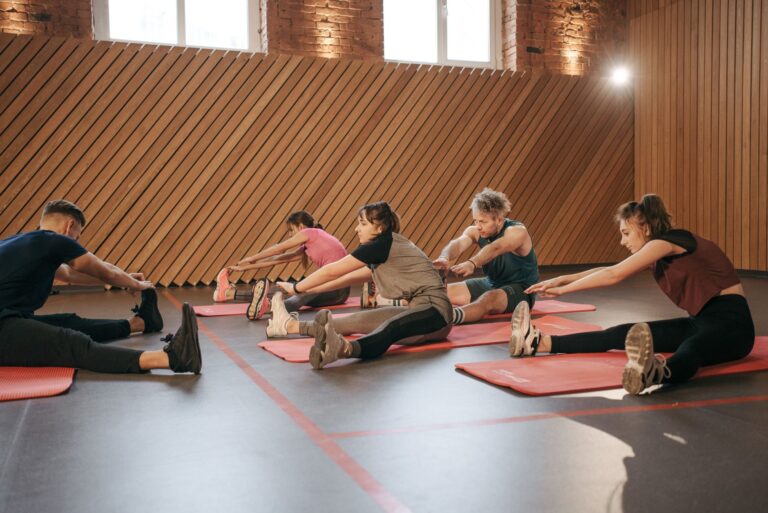
Why yoga is good for athletes often comes down to one simple truth: the best performers don’t just train harder—they train smarter. Whether you’re a competitive BJJ athlete, a weekend warrior, or someone building strength and conditioning, yoga bridges the gap between raw power and sustainable performance. It lengthens muscles that grow tight from intense training, sharpens body awareness on the mat, and builds the mental resilience that separates champions from the rest. At Trein Club in Houston, we’ve seen firsthand how our athlete members who combine Brazilian Jiu-Jitsu with our Vinyasa flow and mobility classes recover faster, move with greater precision, and stay injury-free longer than those who skip the mat work entirely.
The connection isn’t mystical—it’s biomechanical and neurological. Yoga teaches your nervous system to find calm under pressure, improves hip and shoulder mobility that directly translates to better technique, and strengthens stabilizer muscles that prevent the injuries that sideline athletes. For BJJ practitioners especially, the breathwork and mindfulness components become tactical tools during rolling, giving you the mental clarity to execute your game plan when fatigue sets in.
Founded by Pedro Araujo, a 4x Jiu-Jitsu World Champion and 500+ hour certified yoga trainer, Trein Club was built on the belief that elite athletes need more than just drilling—they need intentional recovery and mind-body integration to truly evolve.
Why Yoga Is Good for Athletes: The Complete Performance Guide
Ask any world-class competitor what separates a good career from a great one, and the answer rarely comes down to raw talent. It comes down to how the body holds up over time, how the mind performs under pressure, and how quickly recovery happens between sessions. Yoga sits at the intersection of all three. For athletes — whether you’re a jiu-jitsu competitor chasing IBJJF medals, a runner logging weekly miles, a parent playing weekend soccer, or a striker sharpening your Muay Thai — a consistent yoga practice is one of the highest-leverage additions you can make to your training week.
This guide breaks down exactly why the practice works for athletic bodies: the physical adaptations, the peer-reviewed science, the mental performance edge, the injury prevention math, the best styles for different sports, the essential poses, and how to actually fit it into an already-packed schedule. At Trein Club in Houston, yoga is taught by Pedro Araujo — a 4x Jiu-Jitsu World Champion and 500+ hour certified yoga trainer — which means every class is designed with the athletic body in mind, not the generic studio flow.
How Yoga Directly Improves Athletic Performance
The physical case isn’t abstract. Athletes who practice consistently see measurable changes in the qualities that decide competitions: mobility, stability, control, and breath capacity. Here’s how each one shifts.
Increased Flexibility and Range of Motion for Sport-Specific Movements
Flexibility isn’t about touching your toes — it’s about accessing the ranges your sport actually demands. A jiu-jitsu practitioner needs open hips for guard retention. A sprinter needs long hip flexors and hamstrings to extend the stride. A boxer needs thoracic rotation to generate torque. Yoga systematically loads joints through their end ranges under control, which builds usable range of motion rather than passive flexibility. Over weeks, this translates directly into deeper squats, higher kicks, more efficient submissions, and less energy wasted fighting your own tissues.
Enhanced Balance, Stability, and Proprioception
Proprioception — your body’s ability to sense its position in space — is the invisible skill behind every clean takedown, cutting movement, or mid-air adjustment. Balance-focused poses like Tree, Eagle, and Warrior III force small stabilizer muscles to work in ways that machines and free weights never trigger. Athletes who add two to three sessions per week typically report noticeably better single-leg control within a month, which shows up as fewer ankle rolls, cleaner base in grappling, and better posture during fatigue.
Greater Core Strength and Body Control
The core gets trained as an integrated system: transverse abdominis, obliques, deep spinal stabilizers, pelvic floor, and diaphragm all working together. This is functionally different from crunches or planks alone. Holding Boat, transitioning through Chaturanga, or floating into Crow demands the exact type of anti-rotation and anti-extension strength that protects the spine in contact sports and generates power in rotational disciplines like tennis, golf, and striking.
Improved Breathing Efficiency and Oxygen Utilization
Most athletes breathe inefficiently — shallow, chest-dominant, and reactive. Pranayama and breath-linked movement teach diaphragmatic breathing, longer exhales, and controlled nasal breathing under load. The performance implication is significant: better CO2 tolerance, lower resting heart rate, faster recovery between rounds, and steadier decision-making when lactic acid builds. For grapplers especially, the ability to breathe calmly while trapped in a bad position is often the difference between escaping and tapping.
The Science Behind Yoga and Athletic Performance
What Research Says: Key Findings from Peer-Reviewed Studies
Yoga is no longer a fringe recommendation. Peer-reviewed studies published in journals like the International Journal of Yoga and the Journal of Strength and Conditioning Research have documented improvements in flexibility, balance, muscular endurance, and even measures like VO2 max in athletes who added it to their programs. Research on collegiate athletes has shown reductions in perceived stress, better sleep quality, and improved joint range of motion in as little as eight to twelve weeks of consistent practice.
10-Week Yoga Programs and Measurable Gains in Flexibility and Balance
One frequently cited study on male college athletes added biweekly sessions over ten weeks and measured statistically significant improvements in flexibility (sit-and-reach) and balance (stork stand) compared to a non-yoga control group — while regular sport training stayed identical for both groups. The takeaway is practical: two focused sessions per week, for roughly two and a half months, is enough to produce measurable adaptations you can feel on the mat, the field, or the court.
How Yoga Compares to Traditional Stretching and Cross-Training Methods
Static stretching alone tends to produce short-term flexibility gains without much strength or neuromuscular benefit — and done before intense training, it can temporarily reduce power output. Yoga is fundamentally different because it combines loaded stretching, isometric strength, balance, and breath control in a single session. Compared to foam rolling or generic mobility drills, it produces broader adaptations because it trains the nervous system, not just the tissue.
Mental Performance Benefits of Yoga for Athletes
Stress Reduction, Cortisol Control, and Pre-Competition Anxiety
Chronic training raises cortisol. Chronic stress outside of training raises it further. Left unmanaged, elevated cortisol impairs recovery, disrupts sleep, and blunts performance. Yoga — particularly slower styles and breath-focused practice — activates the parasympathetic nervous system, measurably lowering cortisol and improving heart rate variability markers of stress. For competitors, this translates into calmer warm-ups, less wasted energy pre-match, and better emotional regulation. If you compete, our guide on mental strategies BJJ competitors use before a match pairs well with a consistent practice.
Focus, Mindfulness, and Mental Resilience Under Pressure
Yoga trains attention. Holding a challenging pose while breathing slowly is essentially a rehearsal for staying composed when things get hard — which is what every athletic performance eventually becomes. Over time, this builds the mental muscle to stay present when you’re tired, behind on points, or stuck in a bad round. Athletes describe it as “quieter” internal noise during competition.
Better Sleep Quality and Cognitive Recovery
Sleep is where adaptation actually happens. Yoga practiced in the evening — especially restorative or yin styles — improves sleep onset, sleep depth, and total sleep time. Better sleep means better memory consolidation of skills learned in training, sharper reaction time, and stronger hormonal recovery. For athletes juggling work, family, and training, this is often the most underrated benefit of the whole practice.
Injury Prevention and Faster Recovery Through Yoga
How Yoga Reduces Overuse Injuries in High-Impact Sports
Overuse injuries almost always stem from imbalances: tight hip flexors paired with weak glutes, dominant traps and weak lower traps, a hypermobile lower back compensating for a stiff mid-back. Yoga systematically addresses these asymmetries by moving joints through full ranges and loading opposing muscle groups. Runners get healthier knees. Grapplers get more durable necks and shoulders. Strikers get hips that don’t seize up after heavy pad rounds.
Yoga for Overhead Athletes: Shoulder Stability and Mobility
Swimmers, tennis players, volleyball athletes, and strikers all live in overhead positions. Poses like Dolphin, Downward Dog, and Thread the Needle build scapular control, thoracic extension, and rotator cuff endurance — the exact qualities that protect the shoulder from wear. For anyone training striking regularly, this kind of mobility work is a natural complement; see our overview of the best kickboxing and Muay Thai classes in Houston.
Active Recovery: Using Yoga Between Training Sessions
Recovery days are not off days — they’re adaptation days. Light practice on rest days increases blood flow, flushes metabolic waste, and keeps tissues supple without adding training stress. This is why at Trein Club, yoga sits alongside cold plunge, infrared sauna, compression, and massage as a core pillar of the recovery system, not an optional add-on.
Best Types of Yoga for Athletes by Sport and Goal
Power and Strength Athletes: Ashtanga and Power Yoga
Lifters, sprinters, and strength-dominant athletes benefit most from vigorous, structured styles like Ashtanga or Power Yoga. These practices maintain muscular engagement, build isometric strength, and open the hips and shoulders without turning the athlete into a passive noodle. Think of it as mobility with tension — exactly what heavy lifters need.
Endurance Athletes: Yin Yoga and Restorative Yoga
Runners, cyclists, and long-distance grapplers accumulate deep fascial tightness that active stretching alone can’t reach. Yin — long holds of two to five minutes in passive stretches — targets connective tissue and restores length in overworked areas like hip flexors, IT bands, and the plantar fascia. Restorative work adds parasympathetic recovery on top.
Team Sport Athletes: Vinyasa Flow for Agility and Coordination
Basketball, soccer, and combat sport athletes need dynamic mobility and rhythm. Vinyasa flow — the style Pedro leads at Trein Club — links breath and movement through continuous transitions, which trains coordination, timing, and rotational control. It’s arguably the most sport-transferable style for anyone whose game involves quick direction changes.
Is Bikram (Hot) Yoga Worth It for Athletes?
Hot yoga has genuine cardiovascular and heat-adaptation benefits, and the warmth allows deeper stretching. But it’s not magic, and for athletes already training hard, layering heat stress on top of training stress can hurt recovery. Use it selectively — one session a week at most — rather than as your primary practice.
6 Essential Yoga Poses Every Athlete Should Practice
Downward-Facing Dog: Full Posterior Chain Release
Downward Dog opens the calves, hamstrings, and shoulders simultaneously while building wrist and scapular strength. Athletes who spend time in flexion — cyclists, grapplers, desk workers — get an immediate reset from just five slow breaths here.
Warrior II: Hip Strength, Stability, and Lateral Power
Warrior II builds isometric strength in the glutes and quads while opening the hip of the front leg and stretching the inner thigh of the back leg. It’s a foundational shape for lateral athletes and anyone who needs to generate power from a wide base — wrestlers, strikers, tennis players.
Pigeon Pose: Deep Hip Flexor and Glute Recovery
Pigeon is the single most requested pose in athlete-focused classes because it targets the piriformis and deep hip rotators — chronic tightness zones for runners and grapplers. Two to three minutes per side, several times a week, changes how your hips feel within a month.
Bridge Pose: Posterior Chain Activation and Spine Health
Bridge counteracts hours of sitting by firing up the glutes, opening the hip flexors, and gently extending the spine. It’s also a safe entry point for athletes to explore backbends before progressing to Wheel or Camel.
Eagle Pose: Balance, Focus, and Joint Mobility
Eagle wraps the arms and legs into a bind that challenges balance while opening the upper back and outer hips. For combat athletes, it’s an excellent test of single-leg proprioception under mental focus.
Child’s Pose: Nervous System Reset and Active Recovery
Child’s Pose looks passive, but it’s one of the most valuable shapes in the athlete’s toolkit. Long holds with slow nasal breathing signal safety to the nervous system, drop heart rate, and reset breathing patterns. Use it between hard rounds, after training, or before sleep.
How to Integrate Yoga Into an Athletic Training Schedule
How Many Days Per Week Should Athletes Do Yoga?
For most athletes, two to three sessions per week is the sweet spot: enough to produce adaptation without eating into recovery from primary training. One longer session (60–75 minutes) plus one or two shorter mobility flows (20–30 minutes) at home is a sustainable structure. During heavy competition camps, dropping to one weekly session focused purely on recovery still keeps the benefits alive.
Pre-Workout vs. Post-Workout Yoga: What Works Best
Pre-workout practice should be dynamic and short — think Sun Salutations and mobility flows to raise body temperature and prime range of motion, not long passive holds that reduce power output. Post-workout sessions can be longer and deeper, capitalizing on warm tissues to build lasting flexibility. Dedicated yoga days work best as standalone sessions, ideally on lighter training days.
Sample Weekly Yoga Plan for Athletes at Any Level
Here’s a practical template you can adapt to any sport:
- Monday: 10-minute dynamic flow before primary training.
- Tuesday: Primary sport session; 5 minutes of Child’s Pose and breathwork after.
- Wednesday: 60-minute Vinyasa or Power Yoga class (standalone).
- Thursday: Primary sport session; 10 minutes of Pigeon and hip openers after.
- Friday: Light mobility flow (20 minutes) at home.
- Saturday: Hard training or competition; brief cooldown flow.
- Sunday: 45–60 minutes of Yin or Restorative yoga for full recovery.
Athletes who train striking or grappling multiple times a week benefit especially from pairing yoga with their combat sport schedule — the mobility gains show up immediately in guard retention, kick height, and shoulder durability. If you’re new to combat sports and wondering whether the intensity is right for you, our post on whether striking classes are good for total beginners is a good starting point, and yoga is often the perfect complement for beginners building body awareness.
At Trein Club in Oak Forest, yoga is built into the same 19,000-square-foot space as our BJJ, striking, and strength programs — which means athletes can flow, train, recover, and grab a coffee at Caffe & Trein without ever leaving the building. Whether you’re a black belt sharpening the edges or a first-timer curious about how the practice could change the way your body feels tomorrow, it belongs in your week.