If you’ve scrolled past yoga studios or fitness content online, you’ve probably heard the term “vinyasa flow” tossed around—but what’s vinyasa flow, really, and why does it matter for martial artists and people serious about movement? At its core, vinyasa flow is a dynamic style of yoga that links breath with movement, creating a continuous, almost meditative sequence that builds strength, flexibility, and mental clarity. Unlike static stretching or rigid gym routines, vinyasa is fluid and intentional, making it especially powerful for athletes, grapplers, and anyone looking to move with purpose rather than just go through the motions.
At Trein Club in Houston, we’ve woven vinyasa flow into our yoga program because we’ve seen firsthand how it transforms not just flexibility and recovery, but also focus and resilience on and off the mat. Whether you’re training Brazilian Jiu-Jitsu, striking, or strength work, vinyasa complements athletic performance by improving mobility, breath control, and the mind-body connection that separates good athletes from great ones. The practice fits perfectly with our philosophy that training should be holistic—combining elite instruction with recovery and wellness under one roof.
What Is Vinyasa Flow? A Clear, Complete Answer
Vinyasa flow is a dynamic style of yoga in which movement and breath are synchronized so precisely that the practice feels less like a series of static poses and more like a continuous, moving meditation. Rather than holding one shape, pausing, then holding another, you travel from posture to posture with each inhale and exhale marking a transition. That rhythm — breath in, breath out, shape shifting with every cycle — is the signature of the style and the reason it has become one of the most widely practiced forms of yoga in studios around the world.
The Simple Definition: Movement Linked to Breath
At its most practical level, vinyasa flow means “breath-synchronized movement.” Every time you raise your arms, fold forward, step back into a lunge, or lift your chest, that motion is triggered by either an inhale or an exhale. The breath is not a background function — it is the metronome of the class. When practitioners describe vinyasa as feeling like a dance or a wave, they are pointing to this coupling of breath and body, which trains the nervous system to stay calm and focused even while the body is working hard.
What ‘Vinyasa’ Actually Means (Sanskrit Origin Explained)
The word vinyasa comes from Sanskrit, joining nyasa (“to place”) with the prefix vi (“in a special way”). Translated loosely, it means “to place in a specific, intentional way.” That etymology matters because it shifts the emphasis away from simply “flowing fast” and toward mindful, deliberate placement of the body in space. If you want to go deeper into the meaning behind the name, our breakdown of what vinyasa flow means unpacks the philosophy in more detail.
What Happens in a Vinyasa Flow Class
A well-taught vinyasa class has an arc. It builds heat gradually, peaks with more demanding postures, and then guides you back down into stillness. Knowing the general shape of that arc removes most of the anxiety beginners feel when walking into their first session.
The Typical Class Structure From Warm-Up to Savasana
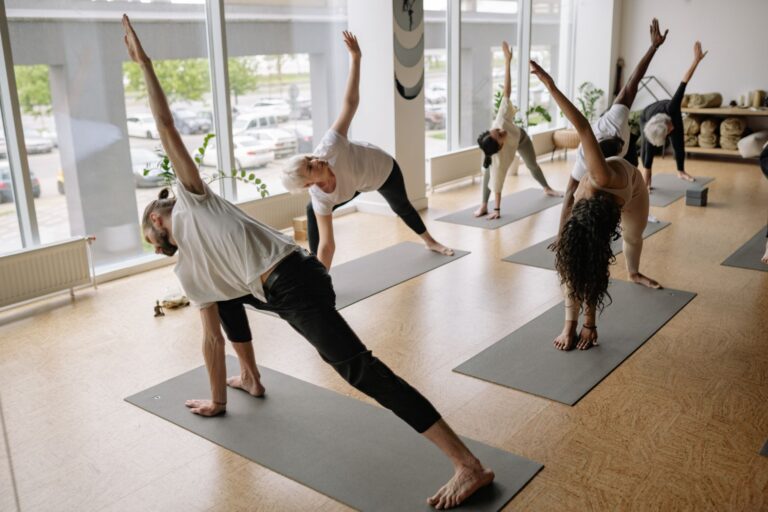
Most classes open with a few minutes of centering — sitting comfortably, tuning into breath, and setting an intention. From there, the teacher guides gentle warm-ups: cat-cow, seated twists, or slow movement through child’s pose. Sun salutations follow, gradually raising the heart rate. The middle of class explores standing poses, balances, backbends, or hip openers, often in creative combinations. Things wind down with seated stretches, a spinal twist, and finally savasana — a few minutes of stillness on your back that allows the nervous system to integrate everything.
The Core Vinyasa Sequence: Plank → Chaturanga → Upward Dog → Downward Dog
The four-pose transition sometimes just called “a vinyasa” is the connective tissue of the entire practice. From a high plank you lower halfway down into chaturanga (a low, elbow-bent push-up position), roll forward and open the chest into upward-facing dog, and then press back into downward-facing dog. That mini-sequence repeats dozens of times in a typical class, which is why learning to do it cleanly matters. Our guide on how to do vinyasa flow properly walks through the alignment cues that protect the shoulders and wrists.
How Breath Cues Drive Every Transition
Teachers cue movement with breath: “inhale, reach up; exhale, fold forward; inhale, halfway lift; exhale, step back to plank.” Once your ear tunes into these cues, you stop having to think about what comes next — the breath tells you. This is also where the mental training happens. When class gets challenging and the breath wants to become shallow or held, the discipline of returning to slow, steady nasal breathing rewires your response to stress in real time.
Vinyasa Flow vs. Other Yoga Styles: Key Differences
“Yoga” is an umbrella term. Under it sit dozens of styles with radically different paces, philosophies, and intensities. Understanding where vinyasa sits in that landscape helps you pick the right class for your body and your goals.
Vinyasa vs. Hatha: Pace, Structure, and Breath
Hatha yoga is the traditional foundation from which most modern styles evolved. In a hatha class you typically hold poses for several breaths, with clear pauses between shapes. It is slower, more instructional, and often better for absorbing alignment details. Vinyasa takes those same postures and stitches them into continuous sequences. If hatha is a photo album, vinyasa is a film reel.
Vinyasa vs. Ashtanga: Flexibility vs. Fixed Sequence
Ashtanga is actually the parent style of vinyasa. It follows a strict, fixed sequence of postures that never changes — the Primary Series is the same in Houston as it is in Tokyo. Vinyasa borrowed the breath-with-movement principle but discarded the rigidity, giving teachers freedom to design fresh sequences. That means every vinyasa class you take feels different, which many students find more engaging over the long term.
Vinyasa vs. Yin and Gentle Yoga: Intensity and Purpose
Yin yoga is the near-opposite of vinyasa. Poses are held on the floor for three to five minutes to target deep connective tissue, and the class is passive rather than active. Gentle yoga sits somewhere in between — restorative, slow, but still moving. Vinyasa is the more athletic choice, closer to a moving strength-and-mobility workout with a strong meditative component built in.
Physical and Mental Benefits of Vinyasa Flow
The reason vinyasa spread from ashrams in India to studios in Oak Forest, Texas is simple: it works on multiple systems of the body and mind at once. Few disciplines deliver strength, cardio, flexibility, and stress reduction in a single hour.
Cardiovascular Fitness, Strength, and Flexibility Gains
Because vinyasa keeps you moving, your heart rate stays elevated in a moderate zone for most of the class. Chaturangas and plank variations build serious upper-body and core strength. Lunges, warriors, and chair pose develop lower-body endurance. And because every sequence takes joints through their full range of motion under load, flexibility improves without the passive, forced stretching that can cause injury. Curious about the calorie side? We break it down in how many calories vinyasa flow yoga burns.
Stress Reduction and the Mind-Body Connection
Slow, controlled breathing directly activates the parasympathetic nervous system — the “rest and digest” branch. When you spend an hour breathing deeply while doing something physically demanding, you teach your body that effort does not have to equal panic. Most students walk out of class calmer, clearer, and more focused than when they walked in. Over months of practice, that resilience carries into work, parenting, and hard training on the mats.
Why the Flowing Format Builds Body Awareness Over Time
Repeating variations of the same sequences week after week trains proprioception — your sense of where your body is in space. That awareness pays off in every other physical discipline you do. Jiu-jitsu athletes with a yoga practice frame better, breathe smarter under pressure, and recover more quickly. If you compete or train seriously, our articles on yoga for athletes and why yoga is good for athletes go deeper on the crossover benefits.
Is Vinyasa Flow Right for You?
Vinyasa is one of the more accessible entry points into yoga because it can be scaled up or down. That said, it is not one-size-fits-all, and honest expectations help you show up ready.
Who Thrives in Vinyasa: Fitness Levels and Goals
The people who thrive in vinyasa are usually looking for more than passive stretching — they want to sweat, move, and feel worked at the end of class. Runners, cyclists, jiu-jitsu practitioners, strikers, weekend athletes, and desk-bound professionals with tight hips and shoulders all tend to love it. You do not need to be flexible; you need to be willing to breathe through discomfort.
Honest Challenges Beginners Face (and How to Overcome Them)
The most common early struggles are wrist fatigue from repeated chaturangas, feeling lost in transitions, and getting winded fast because the breath keeps getting held. All three resolve themselves within a few weeks of consistent practice. In the meantime: modify chaturanga by lowering the knees, keep your eyes on a neighbor whose flow you can follow, and remember that walking your feet forward instead of jumping is always acceptable.
Modifications and Props That Make Vinyasa Accessible
Blocks, straps, and blankets are not signs of weakness — they are tools that let anyone practice fully. A block under the hand shortens the distance to the floor in triangle pose. A strap extends your reach in seated forward folds. A folded blanket cushions sensitive knees. Good teachers offer these options constantly, and taking them is a sign of intelligence, not limitation.
How to Start Practicing Vinyasa Flow
The best way to learn vinyasa is in a room with a qualified teacher who can see your body and correct in real time. Videos and apps are useful supplements, but they cannot replace live feedback, especially in the first few months.
What to Expect in Your First Class
Arrive ten minutes early, tell the teacher it is your first class, and set up your mat toward the back where you can see other practitioners. Wear comfortable, fitted clothing — nothing that will fall over your face when you invert. Bring water, though most teachers recommend sipping only lightly during class. Expect to feel a little confused for the first twenty minutes; expect to feel unexpectedly good afterward.
Essential Poses to Learn Before You Begin
Familiarizing yourself with a handful of foundational shapes makes the first class dramatically easier. Learn the names and general shapes of downward-facing dog, plank, chaturanga, upward-facing dog, mountain pose, forward fold, warrior I, warrior II, and child’s pose. Even a five-minute review of images the night before will orient you when the teacher starts cueing quickly.
Tips for Practicing Safely and Building Consistency
Consistency matters more than intensity. Two or three classes a week for a month will transform how you feel more than one heroic weekend session followed by nothing. Protect your wrists by spreading the fingers wide and pressing through the knuckles. Never force a stretch; let range come from breath, not effort. And find a studio culture that fits you — a welcoming, ego-free room makes it far easier to keep showing up. That is exactly the environment we have built into our yoga program at Trein Club, where Pedro leads vinyasa alongside the jiu-jitsu, striking, and recovery programs that make the space more than a gym.
FAQ: What is the difference between yoga and vinyasa flow?
Yoga is the broad tradition that includes philosophy, breathwork, meditation, and physical postures. Vinyasa flow is one specific style within the physical postures branch, defined by continuous movement synchronized with breath. Every vinyasa class is yoga, but not every yoga class is vinyasa — hatha, yin, restorative, iyengar, and kundalini are all yoga too, with very different approaches.
FAQ: Is vinyasa flow good for beginners?
Yes, provided you choose an appropriate class level. Look for classes labeled “beginner,” “all levels,” or “vinyasa 1.” Avoid classes labeled “power,” “advanced,” or “vinyasa 2/3” in your first month. Tell the teacher you are new and take modifications freely. Most beginners feel comfortable within four to six classes.
FAQ: How long should a vinyasa flow session be?
Studio classes typically run 60 to 75 minutes, which allows enough time for a proper warm-up, peak sequences, cooldown, and savasana. At home, 20 to 30 minutes is plenty for a maintenance practice. Even a 10-minute sun-salutation flow before work delivers real benefit if done consistently.
FAQ: What does a vinyasa sequence look like step by step?
A basic sun salutation A goes: stand in mountain pose, inhale arms overhead, exhale fold forward, inhale halfway lift with a flat back, exhale step or jump back to plank, lower through chaturanga, inhale to upward-facing dog, exhale to downward-facing dog and hold for five breaths, then step forward and rise back to standing. That single sequence contains the entire logic of vinyasa in miniature.
FAQ: Is vinyasa flow the same as power yoga?
Power yoga is a more athletic, faster-paced offshoot of vinyasa. Both share the breath-with-movement principle, but power yoga typically features longer holds in strength-demanding poses, less spiritual framing, and a workout-first tone. Think of power yoga as vinyasa’s more intense cousin.
FAQ: How many times a week should I do vinyasa flow?
Two to four sessions per week is a sweet spot for most people. That frequency is enough to build noticeable strength, flexibility, and stress resilience without overloading the wrists and shoulders. Athletes cross-training for other sports often do two vinyasa sessions weekly as active recovery and mobility work.
FAQ: Can vinyasa flow help with weight loss?
It can contribute, though it works best combined with strength training, cardio, and sensible nutrition. A vigorous 60-minute vinyasa class burns roughly 300 to 500 calories depending on body weight and intensity. More importantly, regular practice reduces stress-driven cortisol and emotional eating, and it builds lean muscle that raises your baseline metabolism over time.