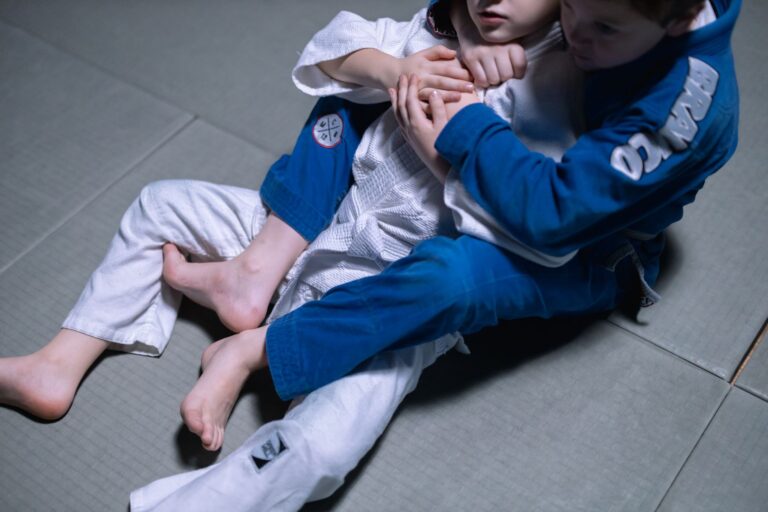
The benefits of BJJ for kids extend far beyond learning self-defense techniques on the mat. Brazilian Jiu-Jitsu has become one of the most effective ways to build confidence, discipline, and resilience in children while keeping them physically active and mentally engaged. At Trein Club in Houston, we’ve watched countless kids transform through structured BJJ training—developing problem-solving skills, emotional regulation, and a genuine sense of accomplishment as they progress through belt ranks.
What makes BJJ particularly valuable for young students is how it teaches real-world lessons without lectures. Kids learn to handle pressure, adapt to challenges, and persist through difficulty in a safe, supportive environment. Unlike sports where size or natural athleticism determine success, Brazilian Jiu-Jitsu rewards technique, strategy, and heart—meaning every child can excel regardless of their starting point. The peer community also plays a crucial role; training alongside other kids their age builds friendships rooted in shared growth rather than competition alone.
Whether your child is seeking confidence, physical fitness, or simply a positive outlet for energy, BJJ offers measurable benefits that parents notice both on and off the mat. Our kids’ programs at Trein Club are designed by world-class instructors who understand how to make training engaging, age-appropriate, and transformative.
Physical Health and Fitness Benefits of BJJ for Kids
Brazilian Jiu-Jitsu delivers comprehensive physical development that transcends traditional sports training. When children engage in BJJ, they activate multiple muscle groups simultaneously while building functional fitness that directly enhances everyday movement. Unlike isolated exercises or repetitive athletic activities, grappling demands full-body coordination and establishes a robust foundation for lifelong athletic capacity.
Improved Strength, Flexibility, and Cardiovascular Endurance
Training systematically develops functional strength in children through resistance-based movements that feel like play. Grappling positions require sustained muscle engagement—pushing, pulling, and stabilizing—that develops both upper and lower body strength proportionally. Constant positional shifts prevent overloading any single joint or muscle group, instead building balanced, resilient strength.
Flexibility improvements emerge naturally through the range of motion required in various techniques. Guard positions, leg lock escapes, and submission defenses all demand controlled mobility that develops safely through consistent practice. This enhanced mobility reduces injury risk in other activities and improves posture, particularly important for children spending extended time in sedentary positions.
Cardiovascular conditioning occurs through interval-style training inherent to rolling sessions. High-intensity grappling alternates with brief recovery periods, creating effective aerobic and anaerobic conditioning. Children’s heart health improves measurably, building cardiovascular capacity that supports sustained physical activity throughout their lives.
Weight Management and Healthy Development
BJJ provides a calorie-intensive activity that children genuinely enjoy, making weight management feel natural rather than forced. A typical kids’ class burns 300-500 calories depending on intensity and body weight, while the enjoyment factor ensures consistent attendance—the real driver of long-term fitness results.
Beyond calorie expenditure, training establishes healthy movement patterns and positive relationships with physical activity. Children who train develop intrinsic motivation for fitness rather than external pressure, creating habits that persist into adulthood. The progressive nature of belt advancement provides concrete goals tied to physical improvement, reinforcing the connection between training and measurable progress.
Mental and Emotional Development Through BJJ
The psychological benefits of BJJ for children often surpass the physical gains. Training in a structured, supportive environment teaches emotional regulation, resilience, and self-awareness during critical developmental years. These mental skills compound over time, creating psychological resilience that serves children across academics, relationships, and future challenges.
Building Confidence and Self-Esteem
Confidence emerges through mastery and competence. BJJ provides constant opportunities for skill acquisition and demonstrable progress. Each class introduces new techniques; each rolling session presents problems to solve. This cumulative competence builds genuine self-esteem—not the fragile kind based on participation recognition, but earned confidence from real accomplishment.
The belt ranking system creates visible milestones that children work toward intentionally. Earning a new belt represents months of consistent effort and skill development. This tangible recognition of progress reinforces self-belief and demonstrates that dedication produces results. Children learn they can set ambitious goals and achieve them through sustained effort.
Rolling with partners of varying sizes and skill levels teaches children they can handle challenges. When a smaller child successfully executes a technique against a larger training partner, or escapes a difficult position, they internalize that intelligence and technique matter more than physical dominance. This realization builds profound confidence that extends beyond the mat.
Stress Relief and Emotional Regulation
BJJ provides a healthy outlet for stress children accumulate from academics, social pressures, and family dynamics. The physical intensity of training activates the parasympathetic nervous system following exertion, creating a natural stress-relief cycle. Children leave class physically tired but mentally clear—a state that improves sleep quality and emotional baseline.
The focused attention required during rolling creates a form of moving meditation. During grappling, children cannot ruminate about social anxieties or academic worries—the immediate physical challenges demand present-moment awareness. This mental training teaches children to compartmentalize stress and maintain focus on what they can control.
Training in an ego-free environment where mistakes are expected and learning is celebrated also reduces performance anxiety. Children learn to view errors as information rather than failures, a cognitive shift that reduces anxiety across life domains. The supportive coaching and peer environment reinforce that struggle is normal and necessary for growth.
Cognitive and Social Skills Development
BJJ training activates problem-solving and social intelligence simultaneously. Each rolling session presents novel physical problems requiring creative solutions; each class interaction teaches social navigation and respect. These cognitive and interpersonal skills develop together, creating well-rounded development.
Problem-Solving and Strategic Thinking
Brazilian Jiu-Jitsu is often called “physical chess” because it demands constant tactical decision-making. Children learn positions, escapes, and submissions—but more importantly, they learn when and why to apply each technique. Rolling partners adapt and counter, forcing children to think several moves ahead, anticipate responses, and adjust strategies in real-time.
This strategic thinking transfers directly to academic and life problem-solving. Children who train develop pattern recognition, cause-and-effect reasoning, and the ability to analyze complex situations from multiple angles. The iterative nature of learning—trying an approach, failing, analyzing why, and adjusting—builds scientific thinking and intellectual flexibility.
The physical problem-solving also builds spatial reasoning and body awareness. Children develop intuitive understanding of leverage, angles, and mechanical advantage. These concepts, learned through experience rather than textbooks, create embodied knowledge that supports STEM learning and practical reasoning.
Teamwork, Respect, and Social Interaction
Training happens in a community context where children must cooperate to learn. Partners are essential—rolling alone teaches nothing. This interdependence creates genuine teamwork where children understand that training partners’ improvement benefits everyone. A stronger, more skilled partner makes you better; their success is your success.
The martial arts tradition emphasizes respect explicitly. Children learn to respect instructors, training partners, and themselves. This respect isn’t forced compliance but earned through understanding—respecting instructors because they possess knowledge and skill; respecting partners because they’re helping you improve. This earned respect differs fundamentally from obedience and creates authentic character development.
Social interaction in BJJ happens naturally around shared challenges and goals. Children from different backgrounds, schools, and social groups train together without the status hierarchies that often complicate childhood friendships. The common purpose of improvement creates bonds based on mutual respect rather than social convenience, developing children’s capacity for authentic connection.
Discipline and Character Building
Discipline in BJJ emerges from internal motivation rather than external punishment. Children learn that consistent effort produces results, that showing up matters, and that progress requires patience. These lessons, learned through physical experience, create character foundations that persist throughout life.
Goal-Setting and Perseverance Through Belt Progression
The belt ranking system provides a structured framework for goal-setting that children can understand and work toward. The progression from white belt through the colored belts to black belt represents years of dedicated training. Children learn that meaningful achievements require sustained effort and that setbacks are normal parts of the journey.
Each belt test represents a concrete goal with clear requirements. Children know exactly what techniques and knowledge they need to demonstrate. This clarity teaches effective goal-setting—specific, measurable, achievable targets that guide daily training. The months between promotions teach patience and the value of incremental progress.
Inevitably, children plateau or struggle with specific techniques. These moments teach perseverance. When a child can’t execute a technique for weeks or months, then finally succeeds, they experience genuine perseverance. They learn that struggle precedes breakthrough, that consistency matters more than talent, and that effort compounds over time. These lessons become self-reinforcing as children apply them to academics and other challenges.
Respect for Authority and Martial Arts Values
The instructor-student relationship in BJJ embodies healthy authority. Instructors earn respect through competence, clear communication, and genuine care for students’ development. Children learn to respect authority based on legitimate expertise rather than fear or coercion. This distinction teaches children to evaluate authority critically while recognizing when guidance serves their interests.
Martial arts values—honor, humility, discipline, perseverance—are woven throughout BJJ culture. Children absorb these values through immersion rather than lectures. Bowing to the instructor, helping training partners up after rolling, celebrating others’ promotions—these rituals reinforce values that shape character. The ego-free training environment where advanced students help beginners and technique dominates over strength embodies humility in action.
Children also learn that discipline creates freedom. The structured training, consistent effort, and skill development paradoxically increase their choices and capabilities. This understanding of how discipline enables rather than restricts freedom is crucial for healthy development and future success.
BJJ for Kids with ADHD and Special Needs
BJJ has emerged as a particularly effective activity for children with ADHD and other neurodevelopmental differences. The combination of physical intensity, immediate feedback, and structured challenge creates an environment where these children often thrive. Research increasingly supports BJJ as a complementary intervention for attention and sensory regulation challenges.
Focus and Attention Improvement
Children with ADHD often struggle in unstructured environments but excel when given immediate, concrete feedback on their performance. BJJ provides exactly this—rolling creates real-time consequences for technique and positioning. A child cannot succeed through distraction or avoidance; they must maintain focus on the physical problem in front of them.
The intensity of rolling also provides the high sensory input that ADHD brains often crave. The physical exertion, proprioceptive feedback, and novel challenges create optimal stimulation without the chaotic overstimulation of many traditional sports. Many children with ADHD report that BJJ is the first physical activity where they can truly focus.
The structured progression of class—warm-up, technique instruction, drilling, rolling—provides the predictable framework that supports attention in children with ADHD. They know what to expect, which reduces anxiety and allows them to direct attention toward learning rather than managing uncertainty. The clear instructions and demonstration-based learning style also matches how many ADHD brains process information effectively.
Sensory Integration and Motor Control
BJJ provides intensive sensory input through controlled grappling. The pressure, movement, and proprioceptive feedback help children with sensory processing differences develop better body awareness and regulation. Unlike overwhelming sensory environments, BJJ’s structured challenge allows children to process and integrate sensory information safely.
Motor control improves through the repetitive practice of specific movements and positions. Children with coordination challenges benefit from the systematic progression of techniques, which breaks complex movement into manageable components. The partner-based nature also provides external structure that supports motor planning and execution.
Many children with special needs experience profound benefits from BJJ because it provides success experiences in a supportive environment. The absence of judgment, the celebration of effort, and the clear progression of achievable goals create conditions where children develop confidence and capability simultaneously. Parents frequently report that improvements in focus, emotional regulation, and social confidence extend far beyond the mat.
Self-Defense and Personal Safety
While the physical benefits and character development matter most, self-defense capability provides practical value and psychological security. Children who train BJJ develop realistic self-defense skills appropriate to their size and strength, plus the confidence that comes from genuine capability.
Practical Self-Defense Techniques for Children
BJJ emphasizes leverage and technique over strength, making it ideal for children. A smaller child can effectively defend against and escape from a larger attacker by understanding and applying proper mechanics. This principle—that technique matters more than size—is both practically true and psychologically powerful for children.
Children learn to recognize dangerous positions and escape them systematically. They practice defending against common attacks and developing the physical memory to respond appropriately under stress. Unlike self-defense seminars that teach isolated techniques, BJJ builds comprehensive defensive capability through repetitive practice and live drilling.
Importantly, training teaches children when not to fight. The emphasis is on escape and de-escalation before physical confrontation. Children learn that running away is the preferred option, that fighting is a last resort when escape isn’t possible. This wisdom—understanding when physical capability should and shouldn’t be used—is as important as the technical skills themselves.
Increased Awareness and Safety Confidence
Training in BJJ increases children’s situational awareness and body confidence. They become more conscious of their physical presence and capabilities, which often translates to different nonverbal communication that deters potential threats. Predatory behavior often targets children who appear uncertain or unaware; confident children are less likely targets.
The confidence from training extends beyond physical capability. Children develop belief in their ability to handle difficult situations, which influences their decision-making and behavior. This psychological confidence, combined with actual physical skills, creates genuine safety that extends beyond the mat.
Parents also benefit from the security of knowing their child has real defensive capability and the judgment to use it appropriately. This knowledge reduces parental anxiety and allows children greater independence, supporting healthy development and autonomy.
What to Expect: Getting Started with Kids’ BJJ
Beginning BJJ requires understanding what training involves, what to expect in early classes, and how to support your child’s development. Clear expectations help children succeed and allow parents to make informed decisions about training investment.
Age-Appropriate Training Programs and Classes
BJJ academies typically offer age-grouped classes that match physical development and cognitive capacity. Younger children (4-6 years) focus on basic movement, coordination, and comfort with grappling through games and fundamental techniques. School-age children (7-12 years) progress to more structured technique learning and introduction to rolling. Teenagers (13+) train with increasing intensity and complexity as they approach adult-level instruction.
Class structure typically includes warm-up exercises, technique instruction with demonstration and partner drilling, and rolling (sparring) at appropriate intensity for the age group. Instructors emphasize safety, proper technique, and progressive challenge rather than competition or ego. Children learn at their own pace, with belt progression based on skill acquisition rather than time served.
At Trein Club, our kids’ BJJ programs in Houston are designed by instructors with extensive experience teaching children across age groups and skill levels. We understand developmental differences and structure classes to maximize learning while keeping training fun and engaging. Our kids’ first class guide helps families prepare for their introduction to training.
Safety Measures and Injury Prevention
BJJ is a safe activity when taught properly, though like any physical activity, minor injuries can occur. Proper instruction emphasizes technique over strength, controlled rolling over explosive movements, and immediate stopping when a partner signals discomfort. Common BJJ injuries are typically minor and preventable through appropriate training practices.
Children learn to tap—a signal that they’re uncomfortable or caught in a submission—and instructors teach that tapping is always respected immediately. This safety protocol creates trust and allows children to train without fear of serious injury. Instructors also teach children to communicate discomfort and to respect partners’ taps without exception.
Proper warm-up, progression of intensity, and age-appropriate techniques all contribute to injury prevention. Children don’t learn advanced submissions until they have the maturity and body awareness to practice them safely. Instructors monitor rolling intensity and provide constant feedback on proper positioning and technique.
Equipment also supports safety. A proper gi (uniform) and mouthguard protect against injury. Understanding proper attire for BJJ helps families prepare appropriately for training.
Frequently Asked Questions
At what age can children start BJJ training?
Most academies accept children as young as 4 years old, though some begin at 3. Very young children focus on movement, coordination, and comfort with grappling through games rather than technical instruction. School-age children (7+) can progress to more structured technique learning and rolling. The appropriate age depends on the individual child’s physical coordination, attention span, and comfort level. Many families start their children around age 5-6 when physical coordination and listening skills develop sufficiently for structured class participation.
How often should kids train in Brazilian Jiu-Jitsu?
Beginners typically benefit from 2-3 classes per week, allowing time for skill consolidation between sessions. As children progress and develop consistency, 3-4 classes weekly supports faster skill development and deeper engagement with the community. Some dedicated young athletes train 4-5 times weekly, combining BJJ with complementary activities. The ideal frequency depends on the child’s age, other commitments, and enthusiasm level. More frequent training accelerates progress, but consistency matters more than frequency—a child training twice weekly consistently will progress faster than one training sporadically.
Is BJJ safe for children?
Yes, BJJ is a safe activity when taught properly by qualified instructors in appropriate environments. The emphasis on technique over strength, controlled rolling, and the tap system (immediate cessation when a partner signals discomfort) create a safe training context. Most BJJ injuries are minor and preventable through proper training practices. Children learn to respect their bodies and their partners’ safety, developing responsibility alongside physical skills. Like any physical activity, minor injuries can occur, but serious injury is rare in properly supervised children’s BJJ programs.
How does BJJ help with bullying prevention?
BJJ helps prevent bullying through multiple mechanisms. First, the confidence and physical capability children develop make them less likely targets for bullies. Second, the community and friendship bonds formed through training provide social support and belonging that protect against bullying. Third, the values emphasized in BJJ—respect, humility, non-aggression—create an environment where bullying is actively discouraged. Children learn that strength is for protecting, not dominating; that respect matters more than dominance. Finally, children who train BJJ often develop the assertiveness and self-advocacy skills to respond effectively to bullying situations.
What equipment do kids need to start BJJ?
To begin training, children need a BJJ gi (uniform), which typically costs $50-150 depending on quality and brand. A mouthguard provides important protection during rolling and costs $10-30. Beyond these essentials, children should bring a water bottle and towel to class. As they progress, some families invest in additional gis for convenience (washing between classes), a rash guard for under the gi, and additional protective equipment. Most academies sell gis and equipment or can recommend appropriate options. Many beginners borrow or purchase used gis to test their interest before investing in multiple uniforms.