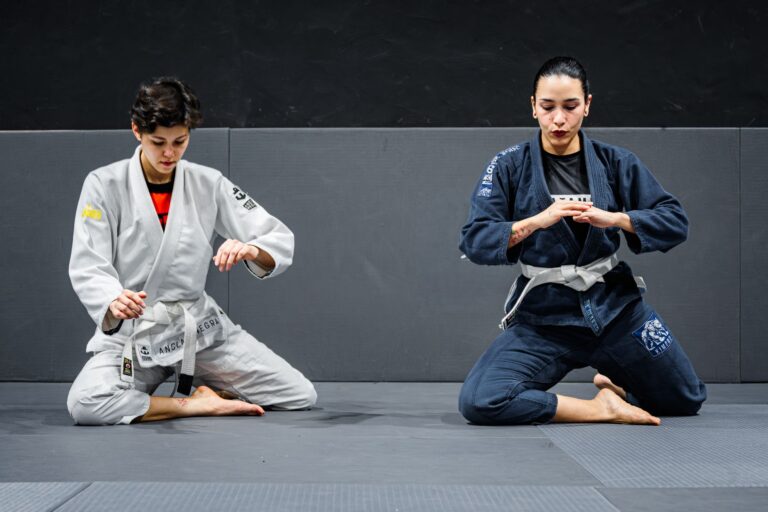
How many times a week should I train BJJ as a beginner depends on your goals, recovery capacity, and schedule—but most beginners see the best results training 2-3 times per week. This frequency allows you to build foundational techniques without overwhelming your body, while maintaining enough consistency to develop muscle memory and progress through belt ranks. At Trein Club in Houston, our beginner classes are specifically designed around this principle, giving new students enough exposure to core positions and movements without the burnout that causes many to quit within their first month.
Starting with 2 sessions weekly lets you learn new techniques in one class, then drill and reinforce them in the next. By week three or four, most beginners notice they’re retaining information better and moving with more confidence on the mats. If you have the time and recovery capacity, adding a third session—perhaps a fundamentals class or open mat—accelerates your learning without the intensity of training 4+ times weekly, which is better reserved for intermediate and advanced practitioners.
The key is consistency over intensity when you’re just beginning. Our ego-free environment at Trein Club means you’ll train alongside instructors who understand beginner pacing, making it easier to stick with a sustainable schedule that actually builds lasting progress.
Recommended Training Frequency for BJJ Beginners
When starting Brazilian Jiu-Jitsu, a fundamental question emerges: how often should you actually train? While individual circumstances vary, evidence from accomplished practitioners, experienced coaches, and sports science research points toward a specific range that optimizes progress while protecting against injury.
Training frequency shapes skill development, physical adaptation, and long-term sustainability in BJJ. Insufficient sessions prevent the neurological patterns needed for technique retention. Excessive training denies your body the recovery time—often underestimated by eager newcomers—that drives actual progress. Finding your optimal frequency prevents stagnation, maintains physical health, and establishes habits that endure for years rather than weeks.
Ideal Weekly Training Schedule for Beginners
High-level coaches and motor learning research converge on a recommendation: beginners should train BJJ 2 to 3 times per week. This cadence provides sufficient recovery between sessions while delivering enough repetition to solidify fundamental techniques.
A practical weekly structure might resemble this:
- Monday: Fundamentals class (60 minutes)
- Wednesday: Fundamentals class (60 minutes)
- Friday: Open mat or light rolling session (45-60 minutes)
This arrangement maintains at least one rest day between demanding sessions, allowing your nervous system and muscles to recover properly. Combining structured instruction (Monday and Wednesday) with less formal practice (Friday) creates equilibrium—building competency without overwhelming your system.
If scheduling permits only two weekly sessions, emphasize consistency over intensity. Training Monday and Thursday offers ideal spacing and remains highly effective for beginners committed to sustained development.
Why 2-3 Times Per Week is the Sweet Spot for Beginners
This frequency sits at the convergence of several physiological and practical factors unique to BJJ newcomers.
Neurological adaptation: Grappling demands your brain encode entirely novel movement patterns. Motor learning research demonstrates that spaced repetition—training with recovery intervals—yields superior long-term retention versus concentrated practice. Training 2-3 times weekly reinforces these patterns sufficiently without the diminishing returns of daily sessions.
Connective tissue adaptation: Grappling places considerable stress on joints, tendons, and ligaments. Beginners’ connective tissues remain particularly vulnerable since they haven’t yet adjusted to grappling mechanics. Training 2-3 times weekly permits collagen remodeling and structural strengthening between sessions, preventing the chronic inflammation and overuse injuries that plague beginners who escalate frequency too rapidly.
Central nervous system recovery: Each grappling session—particularly rolling—generates substantial central nervous system (CNS) fatigue. Your CNS demands 48-72 hours for complete recovery following intense training. Three properly spaced weekly sessions respect this recovery window while maintaining adequate stimulus.
Psychological sustainability: Beginners training 4-5 times weekly frequently experience burnout within 3-6 months. The physical and mental demands of learning grappling are considerable. Training 2-3 times weekly remains demanding enough to generate progress yet sustainable enough to preserve long-term enthusiasm.
Progressive Training Frequency: From Beginner to Advanced
Your optimal frequency should shift as you advance. A realistic progression follows this trajectory:
- Months 0-3 (Complete Beginner): 2 times per week. Concentrate exclusively on fundamentals and movement competency. Your body is adapting to grappling for the first time.
- Months 3-6 (Early Beginner): 2-3 times per week. Introduce a third session once basic positions and escapes feel natural. Begin light rolling practice.
- Months 6-12 (Late Beginner/Early Intermediate): 3-4 times per week. Increase intensity and incorporate specialized training (leg lock fundamentals, competition preparation). Your connective tissues have adapted substantially.
- 1-2 Years+ (Intermediate/Advanced): 4-5+ times per week. Train multiple disciplines, incorporate strength and conditioning, pursue competition. Your body has developed considerable resilience.
This progression acknowledges that adaptation requires time. Advancing to higher frequencies before your body is ready invites injury that can derail your entire grappling journey.
Recovery and Injury Prevention for New BJJ Practitioners
Recovery isn’t merely passive—it’s an active training component that determines whether you advance or stagnate.
Sleep quality and duration: Target 7-9 hours nightly. This window is when your body releases growth hormone and consolidates motor learning. Beginners sacrificing sleep while training intensively experience elevated injury rates and diminished skill acquisition.
Nutrition and hydration: Each grappling session depletes glycogen reserves and creates muscle micro-tears requiring protein synthesis for repair. Consume adequate protein (0.7-1g per pound of bodyweight daily) and maintain hydration throughout training and recovery phases.
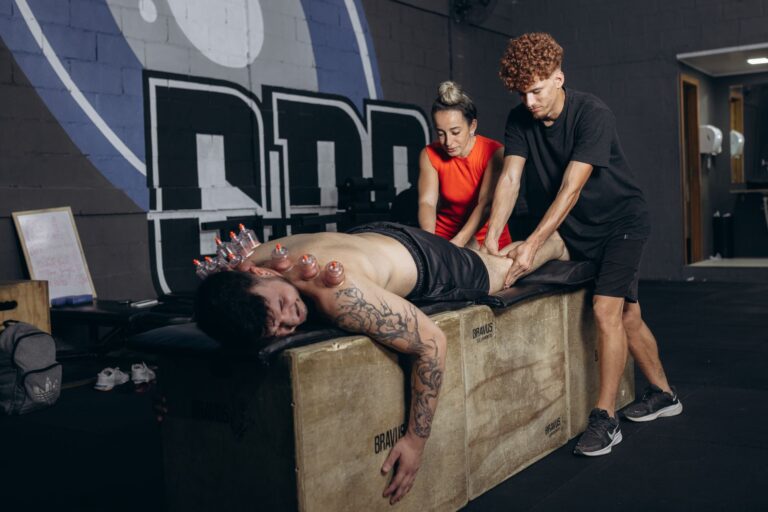
Active recovery days: On non-training days, gentle movement—walking, light yoga, or stretching—enhances circulation and decreases soreness without generating additional fatigue. Many academies, including Trein Club, offer yoga and recovery services specifically tailored for grapplers.
Foam rolling and mobility work: Dedicate 10-15 minutes daily to self-myofascial release and joint mobility. Grappling compresses your shoulders, hips, and spine in unfamiliar patterns. Proactive mobility work prevents the stiffness that triggers compensation patterns and injuries.
Listen to pain signals: Beginners frequently conflate soreness (normal adaptation) with pain (injury warning). Sharp, localized pain—particularly in joints—warrants immediate rest or modified training. Delayed-onset muscle soreness (DOMS) is normal and doesn’t necessitate rest days.
Trein Club’s integrated recovery services—including cold plunge, infrared sauna, and massage therapy—accelerate recovery between sessions and substantially reduce injury risk.
How Much Training is Too Much for Beginners
Additional training doesn’t guarantee accelerated progress in grappling. Frequently, excessive training produces opposite results.
The overtraining threshold: Training BJJ beyond 4-5 times weekly as a beginner typically generates:
- Chronic joint pain and overuse injuries
- Decreased immune function (heightened illness susceptibility)
- Elevated resting heart rate and persistent fatigue
- Skill plateau or regression
- Psychological burnout and diminished enjoyment
The intensity factor: A beginner training 5 times weekly at moderate intensity may outpace someone training 3 times weekly at maximum intensity. Conversely, a beginner training twice weekly with excellent instruction frequently surpasses someone training 5 times weekly with mediocre coaching or excessive rolling.
In grappling, quality supersedes quantity. One focused, expertly-coached fundamentals session where you drill techniques with complete concentration generates more advancement than three unfocused rolling sessions.
Balancing BJJ Training with Other Fitness Activities
Many beginners wish to combine grappling with strength training, running, or other sports. This is entirely feasible—with thoughtful programming.
Complementary activities: Strength and conditioning enhance grappling performance without excessive joint strain. A beginner training BJJ 3 times weekly can incorporate 2 structured strength sessions (emphasizing posterior chain, core, and shoulder stability) without overtraining.
Trein Club’s strength and conditioning programs are specifically engineered to complement BJJ training, addressing the weaknesses and imbalances that grappling creates.
Competing activities: Avoid pairing grappling with other high-impact, high-injury-risk sports (like contact sports or gymnastics) in the same week. If pursuing long-distance running, reduce BJJ frequency to twice weekly to prevent excessive joint loading.
Recovery hierarchy: When combining multiple training modalities, prioritize BJJ recovery first. If you’re training grappling 3 times weekly plus strength training twice weekly, ensure strength sessions don’t compromise BJJ recovery. Schedule strength work on the same day as lighter BJJ sessions or during dedicated off-days.
Practical example: A beginner might structure a balanced week like this:
- Monday: BJJ fundamentals (60 min) + light strength work (20 min)
- Tuesday: Strength and conditioning (45 min)
- Wednesday: BJJ fundamentals (60 min)
- Thursday: Rest or yoga
- Friday: BJJ rolling (45 min)
- Saturday-Sunday: Rest or active recovery
Real-World Training Frequency: What Successful Beginners Actually Do
Theory proves useful, yet what does actual beginner success resemble in practice?
Successful beginners at Trein Club and comparable academies typically adhere to this pattern: they commit to 2-3 sessions weekly for their initial 6 months, emphasize fundamentals classes over rolling, and sustain this consistency for at least 12 months before increasing frequency. The unifying element isn’t intensity or volume—it’s consistency and patience.
Many of Trein Club’s adult students, including those over 40, train 2-3 times weekly and achieve impressive progress. They recognize that regular attendance matters far more than training volume. A student attending Tuesday and Thursday every single week for a year will surpass someone training 5 times weekly for 2 months then stopping.
The most revealing metric isn’t frequency—it’s retention rate. Beginners training 2-3 times weekly demonstrate dramatically higher retention rates (remaining in grappling long-term) compared to those starting at 4-5 times weekly. This indicates that sustainable frequency outweighs maximum frequency.
Competitive beginners preparing for their first tournament often increase to 3-4 times weekly during an 8-12 week competition prep phase. Yet even competitive beginners acknowledge that competition success demands more than increased training volume—it requires proper technique focus, strategic preparation, and sufficient recovery.
FAQ
Is training BJJ 2 days a week enough for a beginner?
Absolutely. Training BJJ twice weekly suffices for beginners, provided the training remains consistent and well-coached. Two sessions weekly permits adequate recovery while delivering sufficient repetition to develop fundamental skills. Numerous beginners achieve blue belt (typically 6-12 months of consistent training) on a twice-weekly schedule. The critical factor is consistency—training twice weekly for 12 months outperforms training 4 times weekly for 3 months.
Can I see decent improvement training BJJ only once per week?
Once-weekly training produces slower advancement than 2-3 times weekly, though improvement remains achievable—particularly during the initial 3-6 months. The limitation is that single weekly sessions provide insufficient repetition for technique retention. Your brain requires spaced repetition to encode motor patterns effectively. If once weekly is your sole option, supplement with open mat sessions, drilling with partners outside class, or video study. However, increasing to twice weekly dramatically accelerates advancement.
How long does it take to master BJJ with consistent training?
Mastery in grappling represents a long-term undertaking. Achieving a black belt (the traditional mastery marker) typically demands 10-15 years of consistent training. However, meaningful competency arrives much sooner: a white belt training 2-3 times weekly reaches functional skill (blue belt level) within 6-12 months. Intermediate competency (purple belt) emerges around 2-3 years. Timeline depends on training frequency, instruction quality, natural athleticism, and age—yet consistency matters more than any other variable.
What is the maximum number of times per week a beginner should train?
Most coaches advise beginners against exceeding 4 times weekly during their first year. Training 5+ times weekly as a complete beginner creates excessive joint stress before connective tissues have adapted, elevates injury risk, and frequently triggers burnout. If you wish to train more than 3 times weekly as a beginner, supplement with lower-intensity activities like yoga, strength training, or open mat drilling rather than additional intense rolling sessions.
Should beginners train BJJ on consecutive days or rest between sessions?
Ideally, beginners should rest at least one day between grappling sessions. Training Monday-Tuesday-Wednesday without breaks accelerates fatigue and heightens injury risk. A superior pattern is Monday-Wednesday-Friday (two-day rest between sessions) or Monday-Thursday (three days between). If your schedule demands consecutive days, ensure one is lighter (fundamentals or drilling only) and the other more demanding. The objective is providing your CNS and joints adequate recovery between demanding sessions.