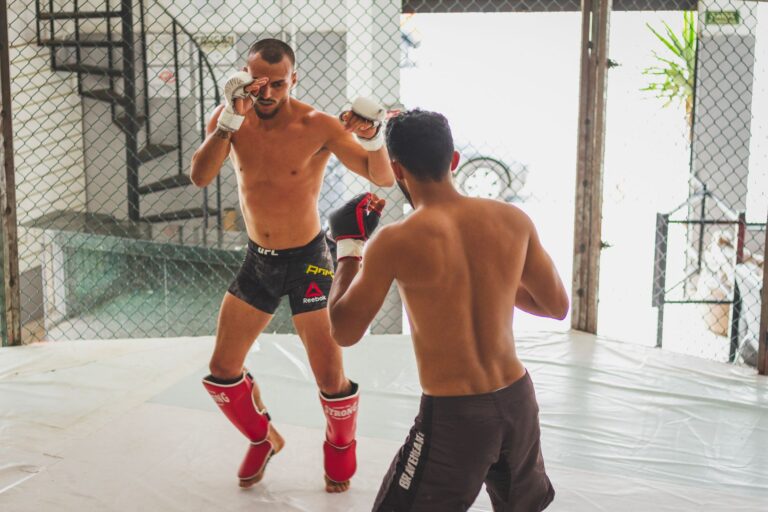
When comparing kickboxing vs Muay Thai for self-defense, the answer depends less on which art is “better” and more on what your body, schedule, and goals actually need. Both are striking-based martial arts that teach you to defend yourself effectively—but they emphasize different techniques, distances, and training philosophies. Kickboxing focuses on punches and kicks with a narrower stance and faster footwork, making it accessible for beginners and ideal if you want quick, practical self-defense skills. Muay Thai, known as “the art of eight limbs,” incorporates punches, kicks, elbows, and knees, offering a more complete stand-up toolkit—but it demands more conditioning and patience to master.
The real advantage comes from training both. At Trein Club in Houston, our striking program blends kickboxing, Muay Thai, and boxing into a well-rounded self-defense curriculum taught by experienced instructors. Rather than debating which discipline wins, we believe the best self-defense art is the one you’ll actually show up for, that builds your confidence, and that fits your life. Whether you’re a complete beginner intimidated by combat sports or someone seeking real-world self-defense skills alongside your jiu-jitsu training, both disciplines thrive when learned in a supportive, ego-free environment where technique and safety come first.
Kickboxing vs Muay Thai for Self-Defense: The Honest Verdict
Short answer up front: Muay Thai is generally the better striking art for real-world self-defense, mostly because it prepares you to fight at every range a street altercation actually unfolds in — long, mid, and especially the messy close quarters where most confrontations end up. Kickboxing is still a legitimate combat sport with crisp punching and kicking, and inside a well-run gym it can absolutely prepare you to hold your own. But when we compare tool-for-tool, range-for-range, and pressure-test-for-pressure-test, the eight weapons and clinch work of Muay Thai give it a decisive edge for civilian self-protection.
That said, the “better” martial art isn’t just the one with more techniques on paper. It’s the one you’ll actually train consistently, under a coach who spars honestly and cares about your development. A dedicated kickboxer with three years of hard sparring will outperform a casual Nak Muay who shows up once a month. Below, we’ll break down the technical, tactical, and cultural differences so you can make an informed decision — and know exactly what to look for when you walk into a gym for the first time.
Key Differences Between Kickboxing and Muay Thai
On the surface, both disciplines look similar: two people in shorts and gloves throwing punches and kicks. But the moment you go beneath the surface, differences in weapons, ranges, and rulesets produce two very different fighters.
Weapons Available: Strikes, Clinch, and Range
Kickboxing, in most modern formats (American, K-1, Dutch), allows punches and kicks — hands and feet. Muay Thai adds elbows and knees to that arsenal, plus an extensive clinch game where fighters grip, control posture, off-balance opponents, and land short, brutal strikes at chest-to-chest range. That means a Nak Muay is trained to operate comfortably across four distinct ranges: long-range kicks, mid-range punches, close-range knees and elbows, and clinch. Kickboxers primarily live in the first two.
Muay Thai’s 8-Point System vs Kickboxing’s 4-Point System
Muay Thai is called “the art of eight limbs” because fighters strike with two fists, two elbows, two knees, and two shins. Kickboxing runs on a 4-point system — two fists and two shins/feet. In a self-defense context, this matters more than it sounds. Elbows are the hardest bone-to-bone weapon on the human body and are devastating at ranges where punches are too tight to throw. Knees, especially from the clinch, generate massive force with almost no travel distance. A Muay Thai student develops both the mechanics and the reflexes to deploy these weapons instinctively when a situation collapses into close range.
The Clinch: Muay Thai’s Biggest Self-Defense Advantage
The clinch is what sets Muay Thai apart from every other striking discipline. Nak Muays learn to control the head and neck, break posture, sweep and dump opponents to the ground, and land short knees and elbows from that dominant position. This is uniquely valuable on the street, where fights almost always devolve into a tie-up or shoving match before anyone throws a real strike. If you don’t know what to do when someone grabs your shirt or wraps you up, you lose. Kickboxers, whose rulesets typically break the clinch instantly, rarely develop these reflexes.
Footwork, Defense, and Evasion Differences
Kickboxing footwork — especially in the Dutch and American traditions — tends to be lighter, more mobile, and more head-movement oriented, borrowing heavily from Western boxing. Muay Thai footwork is traditionally more planted and squared, prioritizing balance for kicks, checks, and clinch entries over lateral evasion. Neither wins universally: mobility helps against a single attacker in open space, while a rooted stance excels when you get grabbed or pushed against a wall. A well-rounded striker eventually borrows from both worlds.
Why Muay Thai Has the Edge in Real-World Self-Defense Scenarios
Real self-defense situations are chaotic, close, and short. They look nothing like point-fighting matches, and they rarely give you the distance to throw a picture-perfect roundhouse. This is where Muay Thai’s DNA really shows.
Street Fights Happen at Close Range — Muay Thai Is Built for It
Most civilian altercations start inside conversational distance — arm’s length or closer. There’s no ring, no dance, no long-range feeling-out process. Someone gets in your face, grabs your collar, throws a wild haymaker. Muay Thai drills exactly this range: pummeling for inside position, throwing elbows on the break, landing knees to the body and thighs, and staying safe when arms get tangled. That’s the exact skill set a real confrontation demands.
Elbows and Knees: Highly Effective Weapons in Tight Spaces
In a bar, elevator, sidewalk, or parking lot, you often don’t have room to extend a punch or chamber a kick. Elbows and knees work in those tight spaces because they need zero windup and rely on hard bone striking soft tissue. A single well-placed elbow can end a fight instantly. Muay Thai students throw thousands of them in pad work and clinch drills, so the motion becomes automatic under pressure.
Clinch Control Prevents Takedowns and Manages Multiple Threats
The clinch isn’t just an offensive tool — it’s defensive gold. Being comfortable when someone bear-hugs you, ties up your arms, or shoots in for a takedown is a massive advantage. The clinch teaches you to frame, break grips, stay upright, and disengage on your terms. Staying on your feet also matters when there might be more than one attacker — going to the ground with multiple threats around is one of the worst mistakes you can make.
Muay Thai Sparring Culture Builds Real Combat Pressure-Testing
Traditional Muay Thai gyms spar frequently, usually at controlled but honest intensity. You learn to eat a shot, keep your composure, breathe, and continue functioning while someone is actively trying to hurt you. That kind of pressure-testing — much closer to what a real confrontation feels like — is more valuable than any single technique. Plenty of kickboxing schools spar too, but the intensity and clinch component in a serious Muay Thai room is usually higher.
When Kickboxing Can Still Be a Valid Self-Defense Choice
None of this means kickboxing is a bad choice. In many cases, it’s actually the right choice — depending on your goals, your city, and the quality of gyms available to you.
Kickboxing Is More Accessible and Widely Available
Kickboxing is offered in far more gyms than authentic Muay Thai, particularly in the U.S. That accessibility matters: the best martial art for you is the one you’ll show up to consistently. If the closest legitimate kickboxing gym is 10 minutes away and the closest serious Muay Thai gym is 45 minutes away, kickboxing wins in the real world. Consistency beats optimization every time.
Strong Kicking Mechanics and Punching Combinations
Dutch-style kickboxing in particular is famous for producing brutal punchers with sharp, layered combinations and heavy low kicks — a skill set that translates cleanly to self-defense. A solid jab-cross-hook combined with a leg kick is enough to end most confrontations. If you’re learning to hit hard, hit accurately, and defend under pressure, you’re building real capability regardless of the label on the door. If you’re curious about getting started, our guide on how to start training kickboxing is a good next step.
Kickboxing as a Gateway to Muay Thai
Many students start with kickboxing because it feels less intimidating, then transition into Muay Thai once they’re comfortable. The punching, kicking, and defensive mechanics carry over almost perfectly — you just layer elbows, knees, and clinch on top. Fighters like Alex Pereira illustrate how a strong kickboxing base can evolve into world-class striking across formats.
How Both Compare to Other Self-Defense Martial Arts
Neither art exists in a vacuum. To make an intelligent choice, it helps to see how they stack up against the other combat disciplines commonly recommended for self-defense.
Muay Thai vs Boxing for Self-Defense
Boxing produces some of the sharpest hands, head movement, and footwork of any combat sport, and a competent boxer is dangerous at any range hands can reach. But boxing has no answer for kicks, clinch, or takedowns — three things that regularly show up in real fights. Muay Thai gives up a little punching sophistication in exchange for a much wider skill set. For pure self-defense, broader coverage wins; for pure hand skills, boxing wins.
Muay Thai vs BJJ for Self-Defense
Brazilian Jiu-Jitsu solves a completely different problem than striking arts. BJJ assumes the fight has already hit the ground — or that you need to take it there to neutralize a bigger, stronger attacker — and gives you the tools to control, submit, or escape without needing to strike. Muay Thai keeps the fight standing and inflicts damage. Both are valid, and both cover blind spots the other has. Neither is complete on its own.
Why Combining Muay Thai with a Grappling Art Is the Optimal Approach
The honest, complete answer for self-defense is: train both a striking art and a grappling art. Muay Thai plus BJJ is arguably the most battle-tested combination on the planet — it’s the foundation of modern MMA for a reason. Striking handles the standing phase, clinch handles the transition, and grappling handles the ground. That’s why our approach at Trein Club is to house both under one roof, with a striking program that blends kickboxing, Muay Thai, and boxing, alongside championship-level Brazilian Jiu-Jitsu.
How to Choose the Right Gym: Kickboxing or Muay Thai
The label above the door matters less than the culture, coaches, and training methodology inside. A great kickboxing gym will produce better self-defense outcomes than a mediocre Muay Thai gym every single time.
Red Flags to Avoid in Any Striking Gym
- No sparring, ever. If students never spar, they never learn to apply techniques under pressure. Cardio-kickboxing classes that never touch resistance are fitness, not self-defense.
- Uncontrolled, ego-driven sparring. The opposite extreme — where beginners get lit up by veterans — is just as bad and drives students away.
- Instructors who can’t explain the “why.” Good coaches teach principles, not just techniques.
- A macho, intimidating culture. Learning to fight requires vulnerability. If you feel judged for asking questions, you’ll never grow.
- Dirty mats, broken bags, no structure. The physical environment reflects the standards of the coaching staff.
What to Look for in a Quality Muay Thai School
A strong Muay Thai program will include distinct fundamentals and advanced tracks, dedicated pad work with coaches (not just partner drills), clinch instruction that goes beyond a quick demo, and controlled sparring appropriate to your level. You should feel welcomed as a beginner, not hazed. Look for coaches with real fight experience or lineage, clean facilities, and — critically — a community that includes people who look like you, whether that’s women, older adults, or complete beginners. If you’re weighing cost as part of the decision, our breakdowns on how much Muay Thai lessons cost and private Muay Thai lessons can give you realistic benchmarks.
Training Frequency: How Often You Need to Train to Be Effective
For genuine self-defense competency, aim for two to three sessions per week minimum. At one session per week, you’re maintaining, not building. At three or more, techniques start becoming reflexive within six to twelve months. Consistency matters more than volume: three focused sessions weekly for two years will make you dangerous. Sporadic sessions for five years will not. Book a striking trial class in Oak Forest, Houston if you want to feel the difference a serious program makes before committing.
Frequently Asked Questions
Is Muay Thai or kickboxing better for beginners with no martial arts experience?
Both are beginner-friendly when taught in a proper fundamentals class. Kickboxing has a slightly gentler learning curve because there are fewer weapons to coordinate — no elbows, knees, or clinch to master in the first month. Muay Thai has a longer runway but a higher ceiling for self-defense. If a quality Muay Thai gym is accessible to you, start there; you’ll pick up kickboxing skills along the way.
Can kickboxing alone protect me in a real street fight?
Yes, if you train seriously and spar regularly. Kickboxing gives you the ability to punch, kick, move, and take a hit — which is more than 95% of the population has. Its main gaps are close-range weapons (elbows, knees) and clinch/grappling defense. Adding a grappling art closes those gaps.
How long does it take to become effective in Muay Thai for self-defense?
With two to three sessions per week and consistent sparring, most students develop functional self-defense capability within six to twelve months. Advanced competency — moving fluidly, reading opponents, controlling the clinch — typically takes two to four years. There’s no shortcut, but the returns compound quickly in the first year.
Is Muay Thai dangerous to train due to the use of elbows and knees?
Muay Thai is not meaningfully more dangerous than kickboxing or boxing when trained properly. Elbows and knees are drilled on pads and bags at full power, but in sparring they’re either omitted, thrown with elbow pads, or delivered light and controlled. Injury rates in reputable gyms are low; the biggest risks are bruises, shin conditioning discomfort, and the occasional strained joint — not concussions or fractures.
What if I can only train twice a week — is Muay Thai still worth it?
Absolutely. Two consistent sessions per week is enough to build real skill over time, especially if you supplement with shadowboxing or bag work at home. Consistency compounds — two sessions per week for two years beats five sessions per week for two months.
Do I need to learn grappling if I already train Muay Thai?
For complete self-defense, yes. Muay Thai handles standing and clinch beautifully but doesn’t teach you what to do if you end up on your back or need to escape a mount. Even a year of foundational Brazilian Jiu-Jitsu dramatically expands your options and gives you the confidence to stay calm if a fight hits the ground.
Is there a meaningful difference between American kickboxing and Dutch kickboxing for self-defense?
Yes. American kickboxing traditionally emphasizes above-the-waist strikes and is closer to karate-boxing. Dutch kickboxing incorporates low kicks, heavy punching combinations, and clinch knees, making it significantly more effective for self-defense and much closer in spirit to Muay Thai. If you’re choosing between the two labels, Dutch-style will serve you better on the street.