Wondering if you’re ready to compete in BJJ? The short answer is: readiness looks different for everyone. Some people feel prepared after six months of consistent training, while others need a year or more—and both timelines are completely valid. The real question isn’t about hitting a magic calendar date; it’s about whether you’ve developed foundational technique, mental resilience, and a genuine desire to test yourself against another grappler in a structured environment.
At Trein Club in Houston, we work with competitors at every level, from first-timers stepping onto the mat for the first time to serious athletes training for IBJJF tournaments. Our champion-led instruction helps you build not just the technical skills competition demands, but also the confidence and discipline to know when you’re truly ready. Whether you’re a beginner wondering if competition is even for you, or an experienced student considering your first tournament, understanding the real markers of readiness—technique, conditioning, mindset, and honest self-assessment—makes all the difference.
The path to competition is personal, and it should be supported by coaches who know you, believe in your growth, and won’t push you before you’re ready.
Are You Ready to Compete in BJJ? The Honest Answer
“Am I ready to compete?” is one of the most frequent conversations we have on the mats at Trein Club, and the honest answer tends to catch people off guard. Readiness in Brazilian Jiu-Jitsu is not a specific belt, a technique count, or a magic number of months logged in the gym. It is a mix of physical capacity, technical reliability, emotional maturity, and — above all — the willingness to step outside your comfort zone and learn something no drilling session can teach you.
Why ‘Ready’ Is a Myth — And Why You Should Compete Anyway
Here is the truth almost every competitor discovers eventually: you will never feel fully ready. Even four-time world champions describe feeling nervous, unprepared, and doubtful before major tournaments. The idea of a clear finish line where you suddenly qualify to compete is a story we tell ourselves to justify waiting. Competition is not a graduation ceremony for skills you have already mastered — it is a laboratory where those skills get tested, refined, and reorganized under pressure. If you wait until you feel ready, you will wait forever.
The Real Signs You Are Ready to Enter Your First BJJ Competition
That said, “just do it” is bad advice without context. There are concrete signals that indicate you have built enough of a foundation to make your first tournament a productive experience rather than a demoralizing one. The benchmarks below are the same ones our coaches use when advising members on their debut event. You do not need to check every box perfectly, but you should see yourself in most of them.
You Can Survive a Full Round of Sparring Without Gassing Out
Matches typically run five to six minutes at white belt, and they are more intense than a normal roll because adrenaline burns through your gas tank faster than expected. If you can currently spar for five or six minutes with a partner your size and still make intelligent decisions in the final minute, you have the cardiovascular base you need. If every round ends with you flat on your back gasping, spend another six to eight weeks building conditioning before you sign up. Strength and conditioning classes, striking rounds, or even consistent yoga breathwork can accelerate this dramatically.
You Have at Least 2–3 Reliable Techniques You Can Execute Under Pressure
You do not need a hundred-move arsenal. What you need is a small, dependable game — a takedown or guard pull you trust, a pass or sweep you can hit against resisting partners, and one or two submissions you understand deeply enough to finish under adrenaline. Competitors who try to showcase everything in their catalog usually freeze. Those who commit to a simple A-game they have drilled thousands of times consistently outperform their belt level.
You Tap Without Hesitation and Understand Basic Safety Rules
This one is non-negotiable. If your ego makes you refuse to tap in training, competition is not the environment to test that habit — it is where serious injuries happen. You should tap early, tap often in practice, and know the basic IBJJF or local ruleset for your division: which submissions are legal at white belt, which positions score points, and what counts as a disqualification. Ignorance of the rules is one of the top reasons beginners lose matches they were technically winning.
You Have Been Training Consistently for at Least 3–6 Months
Three to six months of consistent training — meaning two to four classes per week, not once a week for a year — is the sweet spot where most students have absorbed enough fundamentals to compete meaningfully. Below three months, you are usually still learning how to breathe, frame, and move. Past six months of steady work, hesitation becomes the main obstacle, not skill. If you are still figuring out what belt comes next and how promotions work, our guide on what comes after white belt in jiu-jitsu is a helpful primer.
Your Coach or Training Partners Believe You Are Ready
Your coach sees things you cannot see about yourself: how you react when you get mounted, whether you panic in bad positions, how your technique holds up against strangers on open mat days. When a qualified coach says “sign up,” trust that assessment. When your partners consistently tell you the same, that is also meaningful data. Community perspective corrects the two extremes: the overconfident student who signs up too early and the anxious one who postpones forever.
Mental Readiness vs. Physical Readiness: Which Matters More?
Ask any veteran competitor and they will tell you the same thing: at the beginner level, mental readiness matters more than physical readiness. Two students with identical skill will produce wildly different results based purely on how they manage their internal state on tournament day.
Understanding Competition Nerves and Why They Are Normal
Nerves before a match are not a sign that something is wrong — they are a sign that something matters to you. The racing heart, dry mouth, and jittery legs are your nervous system preparing you for high output. World champions still feel this. The difference is that seasoned competitors have learned to interpret those sensations as readiness rather than dread. Breathwork, which we teach in our yoga program, is one of the most practical tools for this: slow nasal breathing before you step on the mat physically lowers your heart rate and clears the tunnel vision that adrenaline creates.
How to Know If Your Mindset Is Holding You Back (Not Your Skill)
A few questions to sit with honestly: Are you avoiding competition because you genuinely need more time, or because you are afraid of losing in public? Do you have specific technical gaps you are actively working on, or are you postponing indefinitely without a plan? Would you sign up if you knew nobody from your gym would see the result? If your answers point toward fear of judgment rather than genuine skill deficits, your mindset is the block, not your jiu-jitsu.
What Happened to Competitors Who Were ‘Not Mentally Ready’ — Real Lessons
Students who compete before they feel emotionally prepared almost universally report the same thing afterward: it was not as bad as they imagined, they learned more in one tournament than in months of training, and they wish they had done it sooner. Those who wait until they feel completely ready often never sign up at all. The lesson is consistent — the discomfort of preparation is worse than the reality of competing.
How to Prepare for Your First BJJ Competition
Choosing the Right Tournament for Your First Experience
Not every tournament makes a good first tournament. For your debut, look for local events with a strong beginner bracket, clear rulesets, and a friendly atmosphere. In the Houston area, several regional events throughout the year draw large white-belt divisions, which is exactly what you want — plenty of matches against similarly experienced opponents. Skip the massive national circuits for your first outing; they are expensive, stressful, and often have smaller beginner brackets because most attendees are advanced.
How to Simulate Competition Pressure in Training
The gap between training and competing shrinks dramatically when you rehearse the pressure ahead of time. In the six weeks before a tournament, ask your coach to run competition-style rounds: full six-minute matches, referees calling points, no coaching from the sidelines, and rotating unfamiliar partners. Rolling with visitors, entering in-house tournaments, and doing hard rounds at the end of class when you are already tired all replicate the fatigue and unpredictability of tournament day.
Weight Classes, Gi vs. No-Gi, and Division Rules You Must Know
Understand the format before you register. Gi competition emphasizes grips, collar chokes, and lapel-based control; no-gi is faster, sweatier, and rewards different techniques like leg entanglements and body-lock passing. Most beginners start with gi because it slows the pace and rewards technique over athleticism. Choose your weight class carefully — competing at your natural walking weight is almost always smarter for a first tournament than cutting, which drains energy and hurts performance.
What to Do in the Final Week Before the Competition
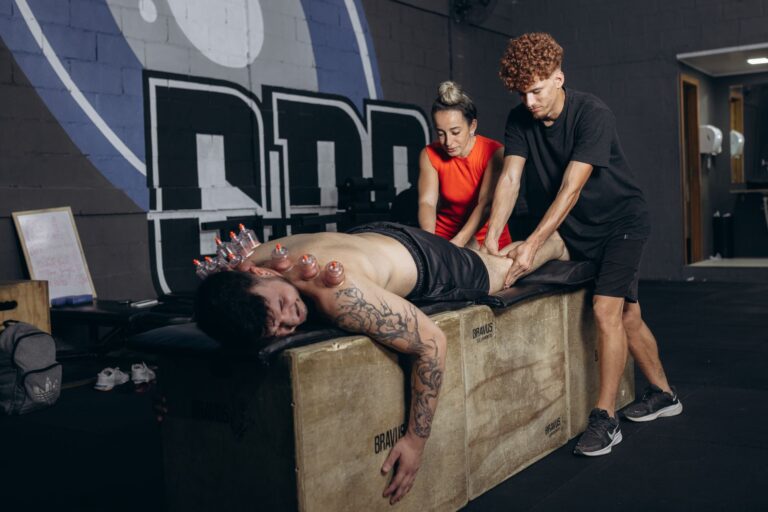
The final week is not the time to learn new techniques. Reduce training volume, sharpen the two or three moves you plan to use, sleep well, hydrate, and eat normally. Do light mobility work — this is where recovery services shine. At Trein Club, competitors regularly use the infrared sauna, cold plunge, and massage services during their final week to arrive on the mat fresh instead of beaten up. Visualize your matches, review the rules one more time, and pack your bag two days early so tournament morning stays calm.
Special Considerations: Kids and BJJ Competition Readiness
Age and Emotional Maturity: When Is a Child Ready to Compete?
For kids, readiness has less to do with technique and more to do with emotional resilience. A child who cries after losing a game of tag is probably not ready to lose a match in front of a hundred strangers. A child who bounces back from setbacks, listens to their coach, and enjoys rolling with unfamiliar partners is usually ready around ages seven to nine, though every kid is different. Many parents ask us about this — we cover the broader picture in our guide to how kids’ BJJ classes work.
How Parents and Coaches Should Approach the Decision Together
The best decisions happen when parents and coaches communicate openly. Parents know their child’s emotional patterns; coaches know the child’s technical development and behavior on the mat. Neither should override the other. And critically, the child has to want to compete. Kids who are pushed into tournaments to satisfy parental ambition rarely enjoy the process and often walk away from the sport altogether. Kids who ask to compete, on the other hand, usually thrive regardless of the result.
Valid Reasons NOT to Compete (And When to Wait)
Injury, Burnout, and Other Legitimate Reasons to Skip Competition
Sitting out is sometimes the right call. If you have a lingering injury — a tweaked knee, a chronic shoulder issue, a recent concussion — competing under adrenaline where you cannot feel warning signs is a fast track to something worse. Burnout is another valid reason. If training feels like a chore, adding tournament stress will not fix it; a reset with mobility work, yoga, or a lighter training block usually does more for long-term progress than forcing a match.
Competing for the Wrong Reasons: Ego, Pressure, and Peer Influence
The worst reason to compete is because someone else wants you to. Signing up to prove something to a partner, a friend, or an internet stranger rarely produces a good experience. Competing because your teammates are and you feel left out is understandable but should still be examined honestly. The right reason is simple: you want to test yourself, learn faster, and see where your game stands. Everything else is noise.
What to Expect at Your First BJJ Competition
The Typical Day-of Timeline and Logistics
Expect a long day. Arrive early, weigh in as soon as possible (many tournaments require weigh-in immediately before your match, in your gi), and then wait. And wait some more. Brackets rarely run on schedule. Bring water, easily digestible snacks, a warm-up layer, and a book or headphones. Warm up about fifteen to twenty minutes before your division is called — not two hours ahead. When your match is announced, breathe, bump fists with your opponent, and trust the training that got you there.
Win or Lose: How to Use Competition Results to Accelerate Your Growth
Every match, win or lose, is data. Film your matches if possible and rewatch them the next day — not the same night, when emotions are still high. Look for patterns: where do you freeze, what positions score against you, what worked, what did not. One tournament typically reveals more about your game than three months of regular training. That is the real reason to step on the mat: not to win a medal, but to compress your learning curve dramatically.
Frequently Asked Questions
How many months of training do I need before competing in BJJ?
Three to six months of consistent training — two to four classes per week — is the typical sweet spot. Below three months you are usually still absorbing fundamentals, and past six months hesitation becomes the main obstacle rather than skill. Ultimately, your coach’s opinion matters more than any specific timeline.
Is it okay to compete as a white belt in BJJ?
Absolutely. White belt is the most common division at every tournament and the ideal time to start building competition experience. Waiting until blue belt to compete for the first time often means facing more experienced opponents, since blue belts have already been tested in the arena themselves.
What if I lose my first BJJ competition?
Most people lose their first competition, and it is not a big deal. Losing exposes exactly what you need to work on, which is more valuable than winning without learning anything. Watch your match footage, identify one or two specific technical takeaways, and get back to training the following week.
How do I deal with competition nerves in BJJ?
Slow nasal breathing, focus on your simple game plan rather than the outcome, and reframe nervous sensations as readiness rather than dread. Regular exposure to pressure — through hard sparring rounds, in-house tournaments, and eventually more competitions — is the only long-term solution. Yoga and breathwork practice help significantly.
Should I ask my coach before signing up for a BJJ tournament?
Yes, always. Your coach can assess whether you are technically and mentally prepared, recommend the right tournament for your level, and help you build a focused game plan. Signing up without your coach’s input often leads to mismatched expectations and avoidable mistakes on tournament day.
Can I compete in BJJ if I only know a few techniques?
Yes — in fact, having a small, reliable game usually outperforms a large, shallow one at the beginner level. Two or three techniques you can execute against a resisting opponent are more valuable in competition than twenty moves you have only drilled without pressure.
What is the difference between competing in Gi and No-Gi BJJ?
Gi competition emphasizes grips, collar chokes, and lapel-based control at a slower, more technical pace. No-Gi is faster, more athletic, and rewards different techniques like leg entanglements and body-lock passing. Most beginners find Gi more forgiving for a first tournament because it slows the pace and highlights technique over scrambling.
How do I know if my child is ready to compete in BJJ?
Look for emotional resilience rather than technical perfection. A child who handles losing at other games, listens to their coach, enjoys rolling with unfamiliar partners, and expresses genuine interest in competing is usually ready. Kids who are pushed into competition rarely enjoy it — the desire should come from them.