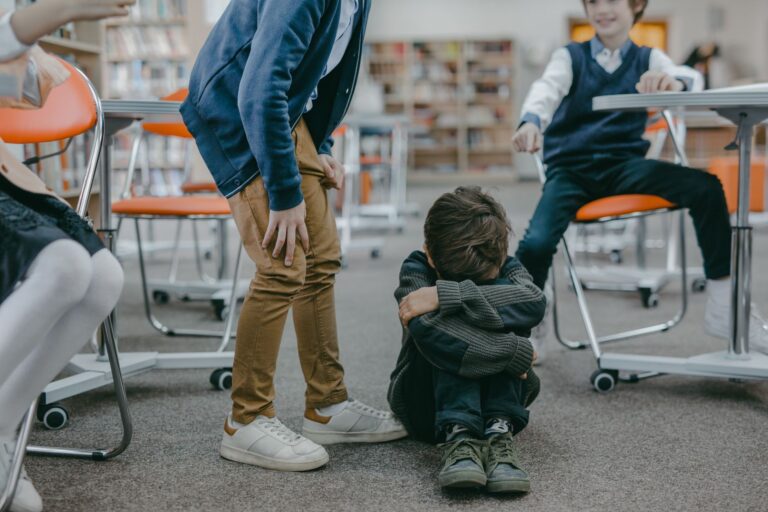
Bullying leaves deep scars, and finding the right outlet for your child to rebuild confidence can be transformative. How does BJJ help kids deal with bullying? Brazilian Jiu-Jitsu teaches children that physical size doesn’t determine outcome—technique, persistence, and heart do. On the mat, a smaller kid can submit a larger one, shifting their entire sense of what’s possible. That shift in self-perception extends far beyond grappling: kids develop genuine confidence, learn to set boundaries, and understand their own capability in ways that traditional sports often don’t offer.
Beyond the physical skills, BJJ creates a culture of respect and community where every student—regardless of size, strength, or background—belongs. There’s no bench, no hierarchy of talent that excludes the struggling kid. Everyone trains together, everyone fails safely, and everyone gets celebrated for showing up. This environment directly counters the isolation and shame bullying creates. Kids learn that vulnerability on the mat is a strength, not a weakness, and that asking for help is how you grow.
At Trein Club in Houston, we’ve watched countless children transform through our kids’ BJJ program—not by becoming tougher or more aggressive, but by becoming more grounded, more present, and more connected to a family of peers who lift each other up.
Why BJJ Is One of the Most Effective Tools for Kids Dealing with Bullying
Bullying rarely ends after a single confrontation. It’s a pattern — repeated, targeted, and designed to make a child feel powerless. That’s why the tools we hand kids to cope with it must go beyond the physical moment: they need to restore the child’s sense of agency, their body language, their composure under pressure, and their belief that they can protect themselves without turning into aggressors. Brazilian Jiu-Jitsu tackles all of this at once, which is why so many child psychologists, educators, and self-defense experts recommend it above other martial arts when the goal is stopping bullying.
Unlike striking arts, BJJ is built around control rather than damage. A trained child can neutralize a bigger, stronger, angrier peer without throwing a single punch — pinning them, immobilizing them, and holding them until an adult arrives. This matters enormously in a school setting, where zero-tolerance policies often punish the child who “fought back” as harshly as the initial aggressor. BJJ offers a way to defend that keeps the child safe, keeps the other kid safe, and keeps everyone out of disciplinary trouble.
The Difference Between Fighting Back and Defending Yourself: What BJJ Teaches Kids
One of the first lessons in any well-run kids’ BJJ class is the distinction between fighting and defending. Fighting is about winning, ego, or retaliation. Defending is about staying safe and stopping harm. Instructors reinforce this constantly: you don’t start conflicts, you don’t escalate, and you use your training only after talking, walking away, or seeking help have failed. The child learns that new physical skills come paired with responsibility — a lesson that quietly reshapes how they carry themselves in every interaction, not just violent ones.
How BJJ Builds the Confidence That Stops Bullying Before It Starts
Most bullying is stopped not by force but by the impression a potential target gives off before anything physical happens. Bullies are opportunists — they scan for signals of weakness, hesitation, or isolation. A child who has spent months rolling on the mats with peers, being tested physically, and coming out the other side stops projecting those signals. The change is often visible within weeks: parents describe their kids standing taller, making eye contact, and speaking with a steadier voice.
How Body Language and Assertiveness Developed in BJJ Deter Bullies
Confidence is a physical language. Shoulders back, chin level, a calm and steady stride, direct eye contact, a firm tone — these are cues bullies register instantly and subconsciously. BJJ trains all of them by default. When a child spends hours a week engaged in respectful, controlled physical contact with peers and coaches, their nervous system stops treating close-range human interaction as a threat. That composure travels with them into the hallway, the playground, and the bus stop.
Why Confident Kids Are Less Likely to Be Targeted by Bullies
Research on bullying consistently shows that children who appear confident, socially connected, and physically at ease are far less likely to be selected as targets. Bullies gravitate toward isolated, anxious, or physically hesitant kids because the “reward” — a satisfying reaction — is more likely. A BJJ kid, by contrast, tends to have a training family behind them, a sense of physical competence, and the calm that comes from knowing options exist. That combination is often enough to make a bully move on before anything begins.
The Physical Skills BJJ Gives Kids to Handle Bullying Situations Safely
When prevention fails and a physical altercation begins, BJJ equips kids with a toolkit designed for exactly the kind of conflict they’re likely to face at school: close-range, unarmed, often initiated by pushing, grabbing, or tackling. Understanding how kids’ BJJ classes work helps parents see why the techniques taught are so well-suited to real playground dynamics.
Clinch Control and Takedown Defense: Neutralizing Aggression Without Striking
Most schoolyard confrontations begin with a shove or a grab. BJJ teaches kids to establish clinch control — hand positioning, underhooks, framing — so that when an aggressor lunges, the trained child can absorb the momentum, redirect it, and secure a superior position. Takedown defense means the targeted child stays on their feet even when a bigger kid tries to tackle them, buying time for adults to step in.
Ground Control and Escape Techniques: How Kids Can Protect Themselves If Taken Down
If the fight does go to the ground — and most school fights do — BJJ is uniquely valuable. Kids learn to escape from being pinned underneath, to protect their head, to reverse positions, and to hold a stronger opponent down safely. A child who has drilled mount escapes hundreds of times does not panic when a bully lands on top of them; they methodically bridge, shrimp, and recover position. That composure alone often ends the confrontation.
Why BJJ’s Emphasis on Control Over Damage Is Ideal for School-Age Conflicts
Punching a bully in the face may feel satisfying, but it lands the defender in the principal’s office alongside the aggressor. BJJ’s control-based approach — pinning, holding, immobilizing — allows a child to stop a fight without inflicting injury. Witnesses, cameras, and teachers see a child restraining someone, not attacking them. That’s a huge difference in how the incident gets classified, and it protects the child socially and legally.
The Verbal and Social Skills BJJ Develops to Prevent Bullying
Good kids’ BJJ programs spend as much time on words as they do on techniques. Instructors run scenarios where kids rehearse what to say when someone starts trouble, how to firmly ask an aggressor to stop, when to walk away, and how to report to an adult. These verbal tools are the first line of defense, and they’re practiced just like an armbar or a hip escape.
Teaching Kids to De-Escalate: The Talk-First Principle in Anti-Bullying BJJ Programs
The talk-first principle is central: hands are the last resort. Kids are taught specific phrases — clear, calm, and non-provocative — and are coached on tone and body language. They rehearse standing their ground verbally without insulting or challenging the other child. The goal is to give the aggressor an off-ramp while making it clear that the target is not a soft mark.
How BJJ Training Helps Kids Recognize Bullying Situations Early
BJJ sharpens situational awareness. Kids who spar regularly become attuned to intent, posture, and distance. They notice when someone is closing space, when a group is forming, when a joke is turning mean. Spotting the early stages of a bullying situation gives them time to leave, seek help, or verbally defuse before things escalate.
How BJJ Addresses the Emotional Side of Being Bullied
Bullying wounds a child emotionally long after the physical incident ends. Anxiety, shame, and loneliness often outlast the bruises. BJJ works on all three, not through therapy talk but through the lived experience of the mat.
Managing Fear and Anxiety: How Sparring Prepares Kids for Real-World Stress
Live sparring — rolling, in BJJ terms — teaches the nervous system to function under pressure. A kid who has felt the adrenaline of a difficult roll and worked through it does not freeze the way an untrained child might. Their heart still races, but they can think, breathe, and act. That physiological training is impossible to replicate through conversation alone.
Building Resilience Through Failure: Why Tapping Out Teaches Kids to Keep Going
In BJJ, you lose constantly. You get caught, you tap, you reset, you try again. This is one of the sport’s greatest gifts to a bullied child. It normalizes failure as part of growth rather than a source of shame. A kid who has tapped out five hundred times and returned stronger understands, on a bone-deep level, that being knocked down is not the same as being defeated.
How Belonging to a BJJ Team Combats the Isolation Bullying Creates
Bullying isolates. It convinces the target that they’re alone, weird, or unwanted. A BJJ team does the opposite. The child walks into class and is greeted by name, high-fived by older belts, coached by adults who genuinely care about their progress. That sense of belonging — “organized like a team, fighting like a family” — is often the single most healing element for a bullied kid. At Trein Club, this culture is intentional: parents consistently report that their children found their people on the mats.
Structured Anti-Bullying BJJ Programs: What Parents Should Know
Not every kids’ BJJ program is designed with bullying in mind. Some are essentially adult classes shrunk down for children, focused on competition. Parents dealing with a bullying situation should look for programs that explicitly weave anti-bullying pedagogy into the curriculum.
What the Gracie Bullyproof Program Teaches and How It Works
The Gracie Bullyproof program, developed by the Gracie family, is the most well-known anti-bullying BJJ curriculum. It emphasizes verbal de-escalation, non-violent control techniques, and role-playing common bullying scenarios. Techniques are introduced in a specific order tied to what a child is most likely to encounter — grabs, headlocks, shoves, tackles — rather than sport-oriented sequences.
What to Look for in a Kids’ BJJ Program Focused on Anti-Bullying
Parents should look for: instructors who openly discuss values and behavior, not just technique; a clean, welcoming culture free of ego and intimidation; classes small enough that coaches know each child; live rolling introduced age-appropriately; and open communication between coaches and parents about how the child is progressing socially, not just technically.
How BJJ Instructors Reinforce Anti-Bullying Values Inside and Outside the Gym
The best instructors treat mat time as character development. They talk openly about respect, about protecting smaller training partners, about using skills responsibly. They ask kids about school, notice when something is off, and reinforce the “talk first, defend only if needed” rule constantly. Over time, this becomes internalized as identity — the child sees themselves as someone who protects, not someone who is hunted.
BJJ vs. Other Martial Arts for Anti-Bullying: Which Is Best for Kids?
Why Grappling-Based Arts Have Advantages Over Striking Arts in Bullying Scenarios
Striking arts like karate, taekwondo, and boxing teach kids to hit. That’s useful, but it comes with real drawbacks in a school context: strikes cause visible injury, they escalate rather than contain, and they usually put the defender in as much trouble as the aggressor. Grappling arts let a child stop a fight without hitting, which is almost always the outcome a parent, teacher, and administrator want. If you’re curious how striking compares more broadly, see our take on self-defense effectiveness.
How BJJ Compares to Wrestling, Judo, and Karate for Bullying Prevention
Wrestling and judo share BJJ’s grappling foundation and are excellent choices. Wrestling excels at takedowns and top control but lacks BJJ’s submission-based finishing tools. Judo emphasizes throws, which are powerful but can cause injury on hard surfaces. Karate builds discipline and confidence but relies on striking. BJJ’s blend of standing control, ground control, and submissions — paired with its philosophy of restraint over damage — makes it the most complete option for the specific problem of bullying.
Real Parent and Child Experiences: Does BJJ Actually Help with Bullying?
What Parents Report After Enrolling Bullied Kids in BJJ
Parents consistently describe a sequence: within a few weeks, the child seems calmer at home. Within a couple of months, teachers notice better focus and a straighter posture. Within six months, the bullying often stops — sometimes because the child handled a situation directly, sometimes because they simply stopped signaling as a target. Beyond bullying, parents report improved sleep, better appetite, deeper friendships, and a child who wants to be at the gym as much as they want to be home.
What Kids Say About How BJJ Changed the Way They Handle Bullying
Kids describe it in simpler terms. They say they’re not scared anymore. They say they know what to do. They say they have friends who “get it.” They say the bully “just stopped trying.” What they rarely say is that they fought — because in most cases, they never had to. The confidence itself did the work.
When BJJ Is Not Enough: Combining Martial Arts with Other Anti-Bullying Strategies
BJJ is powerful but not a standalone solution. Bullying is a systemic problem that requires school involvement, parental engagement, and sometimes professional support. Think of BJJ as one leg of a stool — critical, but incomplete on its own.
How to Talk to Schools and Teachers Alongside BJJ Training
Parents should document incidents, communicate clearly and calmly with teachers and administrators, and insist on written plans of action. BJJ gives the child tools, but the adults in the school environment need to do their part too. A well-run school takes bullying seriously; a parent’s role is to make sure that seriousness is applied to their child’s specific situation.
The Role of Parents in Reinforcing BJJ’s Anti-Bullying Lessons at Home
Parents reinforce BJJ’s lessons by talking about them at home. Ask the child what they learned. Role-play verbal responses. Celebrate small wins in confidence and character, not just belt promotions. Model the same calm assertiveness you want them to develop. And make sure the child knows that no matter what happens at school or on the mat, home is safe.
FAQ: At what age should I enroll my child in BJJ to help with bullying?
Most kids’ BJJ programs start around age 4 or 5, but the ideal window for anti-bullying benefits is between 6 and 12, when children are old enough to grasp the verbal and emotional lessons and young enough to build a strong physical foundation over years. That said, teenagers benefit enormously too — it’s never too late to start.
FAQ: Will BJJ make my child more aggressive or likely to start fights?
The opposite, almost universally. BJJ kids know what real conflict feels like, so they have nothing to prove. They tend to become calmer, more patient, and less reactive. A good program actively teaches that starting fights is a violation of the art’s values, and instructors reinforce this constantly.
FAQ: How long does it take for BJJ to make a difference in a bullied child’s confidence?
Parents typically notice changes within four to eight weeks — better posture, more eye contact, a calmer demeanor. Deeper transformations in how the child handles bullying situations usually take three to six months of consistent training, two to three times per week.
FAQ: What if my child is being bullied inside the BJJ class itself?
A well-run kids’ program does not tolerate bullying on the mats, period. Instructors should notice and address it immediately. If you feel a gym isn’t handling peer dynamics well, that’s a red flag — visit other schools. Culture matters as much as curriculum.
FAQ: Is BJJ safe for young children, and what should I expect in a kids’ class?
BJJ is one of the safer martial arts for kids because there’s no striking. Injuries are less common than in soccer, football, or gymnastics. A typical kids’ class includes warm-ups, drilling a specific technique, positional games, and sometimes light rolling with peers of similar size and age.
FAQ: Can BJJ help kids who are bullied online or emotionally, not just physically?
Yes. The confidence, resilience, and community BJJ provides address emotional bullying just as effectively as physical bullying. A child who feels strong, connected, and capable is far more resistant to the psychological damage of online harassment or social exclusion.
FAQ: Should my child tell their school they train BJJ?
There’s no need to advertise it, and doing so can occasionally paint a target. It’s usually better to let the child’s calm, confident behavior speak for itself. If a physical incident does occur, the fact that they used control rather than strikes will reflect well on both them and their training.