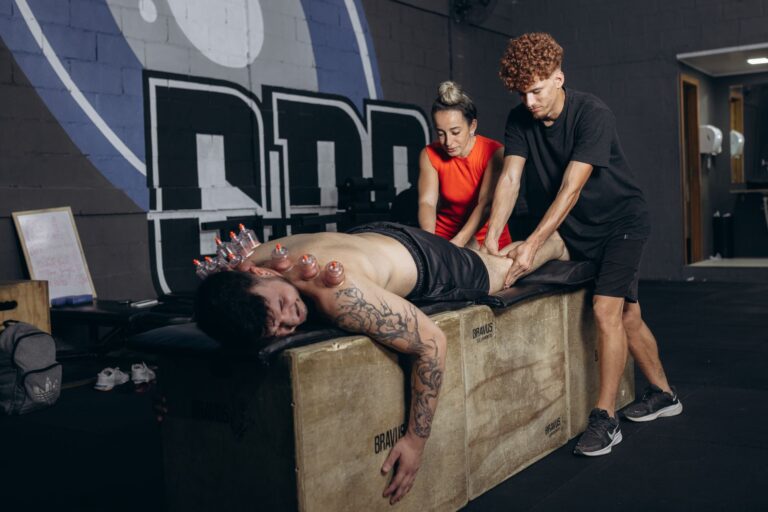
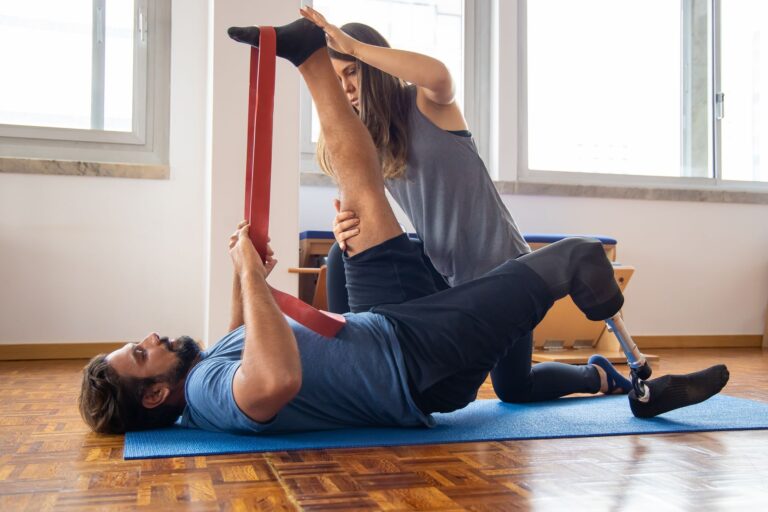
How often should you do mobility training depends on your goals, training intensity, and current fitness level—but for most people, especially those practicing Brazilian Jiu-Jitsu or striking, 2-4 dedicated mobility sessions per week strikes the right balance between performance gains and recovery. If you’re training BJJ hard multiple times weekly, your joints and connective tissues are under real stress, and mobility work becomes as important as the training itself. The goal isn’t just flexibility; it’s preparing your body to move safely through the demanding positions and transitions that martial arts demand, while reducing injury risk and accelerating recovery.
At Trein Club in Houston, we’ve built mobility training into our philosophy because we believe recovery and longevity matter as much as strength and technique. Our yoga program—led by founder and 4x World Champion Pedro Araujo—uses Vinyasa flow and athlete-specific mobility work to enhance performance and keep your body balanced. Combined with our recovery services like massage, cold plunge, and infrared sauna, mobility becomes part of a complete system designed to help you train harder, recover smarter, and show up consistently.
How Often Should You Do Mobility Training? The Short Answer
For most people, the sweet spot lands at 3 to 5 mobility sessions per week, each running 10 to 30 minutes. If your goal is general health, joint longevity, and moving well into your 60s and beyond, three focused sessions a week will already produce noticeable change within 4 to 6 weeks. If you train hard — Brazilian Jiu-Jitsu, striking, lifting, running — you’ll benefit from daily short doses of 5 to 15 minutes, paired with two longer sessions that address problem areas. Full rest from mobility isn’t required the way it is for high-intensity strength work: tissues respond to frequent, low-intensity input better than to occasional heroic efforts.
The honest answer, though, is that “how often” depends on what you’re actually doing during those sessions, how demanding the rest of your training is, and whether you’re addressing a specific restriction or maintaining what you already have. The rest of this guide breaks down exactly how to calibrate frequency to your body, your goals, and your schedule.
What Counts as Mobility Training (and What Doesn’t)
Mobility training is the deliberate practice of expanding and controlling your range of motion at each joint. It blends active positions, loaded end-ranges, and neuromuscular control drills — not just passively sinking into a stretch. Scrolling through your phone while touching your toes doesn’t count. Actively lowering into a deep squat, holding it, breathing, and pressing your knees out with intention? That’s the real thing.
Mobility vs. Flexibility vs. Stretching: Key Differences
Flexibility is the passive range a joint can reach — how far someone can push your leg into a hamstring stretch, for example. Stretching is the act of elongating tissue, usually passively. Mobility is your ability to actively move a joint through its available range with strength and control. You can be flexible without being mobile (picture the person who drops into the splits but can’t kick above their waist under their own power). True mobility fuses flexibility with active strength at end range — which is why it transfers so well to sports like jiu-jitsu, striking, and lifting.
Corrective Mobility vs. General Mobility: Why the Distinction Matters for Frequency
Corrective mobility targets a specific limitation — a stuck hip, a rounded upper back, an ankle that won’t let you squat deep. This work usually demands higher frequency, often daily, in short doses (5–10 minutes), until the restriction resolves. General mobility maintains what you already have. Three sessions per week can keep you functional. Confusing the two is why many people plateau: they try to fix a chronic restriction with once-a-week yoga instead of daily targeted work.
The Evidence-Based Recommended Frequency for Mobility Training
Research on range-of-motion training consistently shows that frequency matters more than duration. Short, frequent exposures outperform long, infrequent sessions when it comes to lasting change in tissue length and joint control.
Minimum Effective Dose: How Few Days Can You Get Away With?
Studies on static and dynamic stretching interventions suggest that 2 sessions per week is roughly the floor for maintaining range of motion in healthy adults. Below that, you tend to lose ground — especially past age 35, when connective tissue stiffens more readily. Two well-designed 20–30-minute sessions can hold the line, but they rarely produce meaningful improvement.
Optimal Frequency: What Research and Experts Actually Recommend
For real gains — measurably deeper squats, cleaner overhead positions, better hip rotation for guard retention — the literature clusters around 4 to 5 sessions per week, totaling 60 to 120 minutes weekly. Splitting that into shorter, more frequent blocks (say, 15 minutes five days a week) tends to outperform two long sessions of an hour each. This is precisely why practices like Vinyasa flow work so well for athletes: the continuous flow of postures delivers sustained mobility input without the joint fatigue of static end-range holds.
Is Daily Mobility Training Safe and Beneficial?
Yes, daily mobility work is both safe and beneficial for the overwhelming majority of people — provided the intensity is calibrated appropriately. A 10-minute morning routine of controlled articular rotations, hip openers, and thoracic drills sits closer to brushing your teeth than to a workout. What you want to avoid is aggressive daily end-range loading without recovery — that can irritate joints. The rule of thumb: daily gentle mobility, yes; daily maximum-effort stretching to failure, no.
How Frequency Should Change Based on Your Goal
Mobility Training for General Health and Longevity
If your goal is to move well for life, 3 sessions per week of 20–30 minutes is a solid baseline. Focus on hips, spine, and shoulders — the areas that stiffen most with age and desk work. Yoga once or twice per week counts, and it also delivers breathwork and nervous-system benefits you won’t get from pure mobility drills.
Mobility Training for Strength and Muscle Building
Lifters usually need 4 to 5 short sessions per week, with an emphasis on positions that limit performance: ankle dorsiflexion for squats, thoracic extension for overhead pressing, hip internal rotation for pulls. Pair 5–10 minutes of targeted mobility as a warm-up before lifts, and add one longer 20–30-minute standalone session on a rest day.
Mobility Training for Runners and Endurance Athletes
Runners typically lock up in hips and calves. Aim for daily 10-minute post-run mobility plus one or two longer sessions per week focused on hip flexors, ankles, and thoracic rotation. Ignoring mobility is the fastest way to accumulate the small compensations that lead to IT band pain and knee issues.
Mobility Training for Injury Prevention and Recovery
If you’re rehabbing an injury or coming off years of inactivity, frequency goes up and intensity goes down. Daily 10–20-minute sessions of gentle, pain-free ranges rebuild tissue tolerance faster than aggressive 2x-per-week work. This is also where combat athletes benefit most: BJJ practitioners at Trein Club often use daily mobility not to gain new range, but to keep the tissues resilient through the demands of rolling.
Mobility Training for Desk Workers and Sedentary Lifestyles
If you sit 8+ hours a day, your body is being trained into flexion for a third of your waking life. Counteract it with short daily doses — even 5 minutes every couple of hours — targeting hip flexors, thoracic extension, and neck. One longer weekly session (a yoga class is ideal) ties everything together.
How Long Should Each Mobility Session Last?
Session length depends on the goal. A pre-workout dynamic warm-up needs only 5–10 minutes. A dedicated standalone session can run 20–45 minutes. A full yoga class typically lands at 60–75 minutes and delivers mobility, breathwork, and recovery in a single block.
Short Daily Sessions vs. Longer Weekly Sessions: Which Works Better?
For most people, short and frequent wins. Fifteen minutes a day for six days beats a single 90-minute weekend session for measurable improvement. Tissue adaptation responds to consistent, sub-maximal input. That said, longer weekly sessions have unique value — they let you access positions you can’t reach in a quick routine and give you time to combine mobility with breathwork and mindfulness. The ideal setup is both: daily short doses plus one long session per week.
How to Fit Mobility Work Into a Busy Schedule
Anchor mobility to something you already do daily. Five minutes while coffee brews. Ten minutes while watching a show at night. Two minutes of hip openers between meetings. The people who “don’t have time” are usually waiting for a 45-minute window that will never materialize. Micro-doses accumulate. Then one dedicated class per week — a yoga session, a mobility-focused strength class — anchors the practice.
When to Do Mobility Training: Timing Within Your Day and Workout
Before a Workout: Dynamic Mobility as Warm-Up
Pre-workout mobility should be dynamic and short: 5–10 minutes of controlled articular rotations, leg swings, thoracic rotations, and movement-specific drills. Skip long static holds before lifting, sprinting, or sparring — they can temporarily blunt power output. Before jiu-jitsu, we lean on hip circles, deep squat rocks, thoracic openers, and neck articulation.
After a Workout: Static Stretching and Cool-Down Mobility
Post-workout is when longer static holds and cool-down mobility earn their keep. Your tissues are warm, your nervous system is receptive, and 10–15 minutes of held positions can meaningfully improve range over time. This is also a great window for breathwork to shift you out of sympathetic drive.
Standalone Mobility Sessions: Morning, Evening, or Rest Days?
Mornings suit gentle, waking-up mobility — think 10 minutes of joint circles and a few sun salutations. Evenings favor longer, deeper work when the body has been moving all day. Rest days are perfect for full mobility-focused sessions or a yoga class. There’s no single right time — the best time is the one you’ll actually repeat.
Body-Part Breakdown: Frequency Recommendations by Area
Hip Mobility: How Often and Which Exercises to Prioritize
Hips demand the most attention for most modern adults. Aim for daily 5–10 minutes of hip work if you sit a lot or train combat sports. Prioritize 90/90 transitions, deep squat holds, Cossack squats, and hip CARs (controlled articular rotations). For grapplers, hip internal and external rotation translate directly to guard retention and escapes.
Shoulder and Thoracic Spine Mobility Frequency
The thoracic spine locks up faster than any other area for desk workers. Train it 4–6 days per week with open-books, thread-the-needle, and thoracic extensions over a foam roller. Shoulder mobility (band dislocates, wall slides, shoulder CARs) responds well to 3–4 sessions per week. Overhead athletes and strikers should sit closer to daily.
Ankle and Lower Body Mobility Frequency
Ankles are often ignored until they limit a squat or contribute to a knee issue. 3–5 sessions per week of banded ankle distractions, wall dorsiflexion, and calf work goes a long way. Runners should be daily.
Signs You’re Not Doing Mobility Training Often Enough
The body sends clear signals when mobility work is falling short. Watch for:
- Chronic stiffness that lingers 30+ minutes after waking
- Squat depth that regresses over weeks
- Nagging low-grade joint aches — hips, shoulders, knees — that never quite go away
- Feeling “old” during warm-ups
- Reduced performance in movements you used to do easily
- Frequent small tweaks and strains during training
Signs You Might Be Overdoing Mobility Work
Yes, it’s possible to overshoot — usually by hammering aggressive daily end-range stretching. Signs include:
- Joint achiness that shows up after mobility work, not before
- Feeling loose but weak or unstable
- Pinching sensations in hips or shoulders during previously comfortable positions
- Diminishing returns despite more time invested
If any of these show up, dial back intensity (not necessarily frequency), spend more time on controlled end range rather than passive stretching, and add strength work at your new ranges.
Sample Weekly Mobility Training Schedules
3-Day-Per-Week Mobility Plan (Beginner)
- Monday: 20 min full-body mobility flow (hips, spine, shoulders)
- Wednesday: 30–45 min yoga class (Vinyasa is ideal)
- Friday: 20 min lower-body focus (hips, ankles, hamstrings)
This is the minimum baseline for meaningful progress and works well for beginners or busy professionals just getting started.
5-Day-Per-Week Mobility Plan (Intermediate to Advanced)
- Monday: 10 min pre-workout dynamic + 10 min post-workout static
- Tuesday: 15 min thoracic and shoulder focus
- Wednesday: 60 min yoga class
- Thursday: 10 min pre-workout + 10 min hip focus
- Saturday: 20 min full-body flow
This schedule pairs beautifully with a BJJ, striking, or lifting week. Many athletes who add yoga to their week report faster recovery and fewer nagging injuries within a month.
Daily Full-Body Mobility Routine (10–15 Minutes)
- Neck CARs — 2 rotations each direction
- Shoulder CARs — 3 each side
- Cat-cow — 8 reps
- Thread-the-needle — 5 each side
- World’s greatest stretch — 3 each side
- Deep squat hold with knee drives — 60 seconds
- 90/90 hip transitions — 8 reps
- Cossack squats — 5 each side
- Wall dorsiflexion — 8 each side
- Down dog to cobra flow — 5 reps
Ten minutes. Every day. This alone will transform how you feel in 30 days.
How to Track Progress and Know When to Adjust Frequency
Track a handful of simple benchmarks every 2–4 weeks: squat depth (film from the side), overhead reach against a wall, sit-and-reach distance, and 90/90 comfort. If numbers improve, hold the current plan. If they plateau for 3–4 weeks, either add one session, layer in loaded end-range work, or change the stimulus (swap static holds for isometric end-range contractions, for example). If numbers regress or you’re feeling beat up, reduce intensity and preserve frequency — never the other way around. Consistency, not heroics, is what moves the needle.
At Trein Club, mobility is built into every corner of our programming — from yoga classes designed specifically for athletes to strength and conditioning sessions that emphasize loaded ranges, to recovery services that support the tissue work.
FAQ: How often should beginners do mobility training?
Beginners should start with 3 sessions per week of 15–20 minutes, focusing on the biggest limiters: hips, thoracic spine, and shoulders. Add a weekly yoga class as your longer session — it accelerates learning and puts a coach’s eye on your positions. Once the 3-day habit feels automatic (usually after 3–4 weeks), add a fourth day. Progress in mobility comes from consistency more than intensity, so build the habit before you build the volume.
FAQ: Can you do mobility training every day without overtraining?
Yes — as long as intensity is calibrated. Daily 10–15-minute sessions of controlled articular rotations, gentle flows, and pain-free ranges do not cause overtraining. Where people run into trouble is aggressive daily end-range stretching, forcing splits or deep squats past comfort, or stacking long yoga sessions on top of heavy training with no recovery. The safe rule: daily gentle mobility is fine; daily maximum-effort mobility is not. Listen to your joints, not just your muscles — joint achiness is the first sign to dial back intensity while keeping the habit intact.