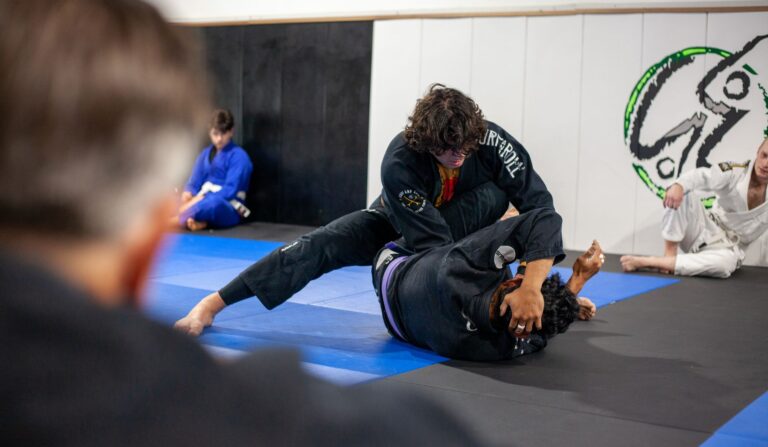
How often should strength and mobility training be conducted depends entirely on your goals, experience level, and what else you’re doing on the mat. For Brazilian Jiu-Jitsu athletes, the answer isn’t one-size-fits-all—it’s personal. A beginner rolling three times per week might benefit from one dedicated strength session, while a competitor training five days a week could handle three or four. The key is understanding that strength and mobility aren’t add-ons to jiu-jitsu; they’re foundational to longevity, injury prevention, and performance. When you neglect them, you plateau faster, recover slower, and risk the repetitive strain injuries that creep up after months on the mats.
At Trein Club in Houston, we’ve built our strength and conditioning program around this reality. Our coaches work with you to balance hard rolling with intentional strength work—whether that’s functional training, mobility flows, or recovery protocols—so you can show up consistently without burning out or breaking down. The goal isn’t to turn you into a powerlifter; it’s to build the resilience and movement quality that let you train for life, not just for a season. Your body will thank you, and so will your jiu-jitsu game.
How Often Should You Do Strength and Mobility Training: The Evidence-Based Answer
The short, research-backed answer is this: most adults do well with strength training two to three days per week and mobility work on most days — anywhere from three to seven sessions weekly, depending on session length. That range isn’t arbitrary. It reflects decades of exercise science and public health data showing that skeletal muscle, tendons, and joints adapt best to consistent, submaximal stimulation spread across the week, rather than a single punishing weekend blowout.
Still, the “right” frequency is never a single number. It shifts with your goal (hypertrophy, longevity, injury prevention, athletic performance), your training age (novice vs. seasoned lifter), your recovery capacity, and whatever else fills your week. A grappler drilling five nights a week has very different mobility needs than a desk-bound parent squeezing in two yoga classes. Below, we unpack the guidelines, the meta-analysis data, and practical weekly templates so you can match frequency to your life — not the other way around.
Official Guidelines for Strength Training Frequency (ACSM, NHS, NIA)
Three of the most cited authorities on adult exercise — the American College of Sports Medicine (ACSM), the UK’s National Health Service (NHS), and the U.S. National Institute on Aging (NIA) — arrive at remarkably similar recommendations. Understanding the floor (the minimum to see health benefits) and the ceiling (where returns start to diminish) helps you plan a realistic week.
General Population: Minimum and Optimal Weekly Frequency
ACSM and the NHS both recommend that healthy adults perform muscle-strengthening activities on at least two days per week, covering all major muscle groups (legs, hips, back, chest, abdomen, shoulders, and arms). Two sessions is the minimum threshold for preserving lean mass, bone density, and metabolic health. The sweet spot for most non-athletes sits at two to four sessions per week. Past four, gains typically flatten unless per-session volume is deliberately dialed back.
Mobility and Flexibility Training: How Many Days Per Week Is Enough
ACSM guidelines suggest flexibility work on a minimum of two to three days per week, but daily mobility practice is safe and often preferable, especially for athletes and desk workers. Sessions can be as short as 10 minutes. For a deeper dive into how frequency scales with goals, see our guide on how often you should do mobility training and what mobility training actually involves.
Combining Strength and Mobility: Can You Train Both on the Same Day
Yes — and for most people it’s the most efficient structure. Dynamic mobility drills work perfectly as a warm-up before lifting, while longer static or flow-based work fits naturally at the end of a session, when tissues are warm. Stacking both practices on the same day frees rest days for genuine recovery and simplifies scheduling.
What the Research Says: Training Frequency and Muscle Strength Gains
Sports science over the past decade has largely settled the “how often” debate. The consensus: frequency matters less than we once believed, provided weekly volume is matched.
Meta-Analysis Findings: 1x vs 2x vs 3x Per Week for Strength Gains
A landmark 2018 meta-analysis by Grgic et al. reviewed dozens of studies and found that training a muscle group twice per week produced significantly greater strength gains than once per week. The step from two to three sessions, however, added only marginal further improvements. Translation: if you can only commit to two full-body sessions weekly, you’re capturing the lion’s share of the available benefit.
Training Volume vs Frequency: Which Matters More for Hypertrophy
For muscle growth specifically, total weekly volume (sets × reps × load) is the main driver. Frequency matters because spreading volume across multiple sessions preserves quality per set. Someone doing 12 hard sets for legs in one session will fatigue and lose output; splitting those 12 sets across two days keeps intensity high. The rule of thumb: 10–20 hard sets per muscle group per week, distributed across two to four sessions.
Range of Motion and Muscle Growth: How Mobility Work Enhances Strength Outcomes
Training through a full range of motion produces greater hypertrophy and strength adaptations than partial-range work — a finding replicated across studies on squats, presses, and curls. Mobility training expands the useful range you can safely load, which is why athletes who add yoga or dedicated joint work often push past strength plateaus. This is one reason yoga is so effective for athletes: it directly enlarges the training real estate available for strength gains.
Recommended Training Frequency by Goal
For Muscle Hypertrophy and Strength: Optimal Sessions Per Week
If your primary goal is visible muscle growth or maximal strength, aim for three to four sessions per week, using upper/lower splits or push/pull/legs rotations. That structure lets you hit each muscle group twice weekly with enough recovery between exposures.
For Functional Fitness and Daily Performance
For general functional capacity — carrying groceries, playing with kids, staying pain-free on the mats — two full-body sessions plus three to four short mobility sessions per week is plenty. Emphasize compound movements (squats, hinges, pushes, pulls, carries) and joint-level control drills. This is essentially the template used in Trein Club’s strength and conditioning program, built to support jiu-jitsu, striking, and everyday longevity.
For Weight Management and Metabolic Health
Strength training two to three days per week combined with 150 minutes of moderate cardio meets WHO recommendations for metabolic health. The strength component is critical: it protects lean mass during caloric deficits, which in turn safeguards your resting metabolic rate. Mobility-based classes like vinyasa flow yoga also contribute — see our breakdown of how many calories vinyasa flow burns for realistic numbers.
Frequency Recommendations by Population and Health Status
Older Adults: How Often to Train for Bone Density, Balance, and Osteoarthritis
The National Institute on Aging recommends that adults over 65 perform strength training at least two non-consecutive days per week, with balance work added on most days. For bone density (particularly in post-menopausal women), higher-impact loading two to three times weekly is more effective than low-load, high-rep circuits. Mobility work — done gently and daily — helps manage osteoarthritis symptoms without triggering flare-ups.
People With Cardiovascular Disease: Safe Training Frequency Guidelines
For individuals with stable cardiovascular disease, ACSM recommends resistance training two to three days per week at moderate intensity (roughly 40–60% of one-rep max), with medical clearance and initial supervision. Frequency stays similar to healthy adults; intensity is what’s dialed down.
Individuals With Neurological Conditions (MS, Stroke, Parkinson’s): Adapted Frequency
Emerging research supports two to three strength sessions weekly for people with MS, post-stroke, or Parkinson’s disease, paired with daily mobility and balance practice. Sessions are typically shorter (20–30 minutes) with longer rest intervals. Consistency over intensity is the guiding principle.
Beginners vs Intermediate vs Advanced Trainees: Adjusting Frequency Over Time
- Beginners (0–6 months): Two full-body sessions per week. Neuromuscular adaptations come quickly; more frequency at this stage usually just adds soreness without extra benefit.
- Intermediate (6 months–2 years): Three sessions per week, either full-body or upper/lower split.
- Advanced (2+ years): Four to five sessions weekly, often using body-part splits or specialized programming to manage fatigue and volume.
How to Structure a Weekly Strength and Mobility Training Schedule
Sample 2-Day Per Week Full-Body Program
- Monday: Squat variation, horizontal press, horizontal pull, core carry, 10 min mobility flow.
- Thursday: Hinge variation (deadlift or RDL), vertical press, vertical pull, single-leg work, 10 min mobility flow.
- Other days: Optional 15–20 min mobility, yoga, or walking.
Sample 3-Day Per Week Strength and Mobility Split
- Monday: Lower-body strength + hip mobility.
- Wednesday: Upper-body strength + shoulder and thoracic mobility.
- Friday: Full-body power/conditioning + full-body flow.
- Weekend: One longer yoga or restorative session.
Sample 4-Day Per Week Program for Intermediate Trainees
- Monday: Lower push (squat focus).
- Tuesday: Upper push/pull.
- Thursday: Lower pull (hinge focus).
- Friday: Upper push/pull + accessories.
- Daily: 10–15 min mobility, ideally including a vinyasa flow once or twice a week.
Key Principles to Maximize Results Regardless of Frequency
Progressive Overload: Why It Matters More Than How Often You Train
Whether you train twice or five times a week, you have to gradually raise the demand on your body — more weight, more reps, cleaner technique, longer range of motion — for adaptation to keep going. A lifter using the same loads for a year across four weekly sessions will progress less than someone lifting twice a week with steady overload.
Recovery and Rest Days: How to Avoid Overtraining
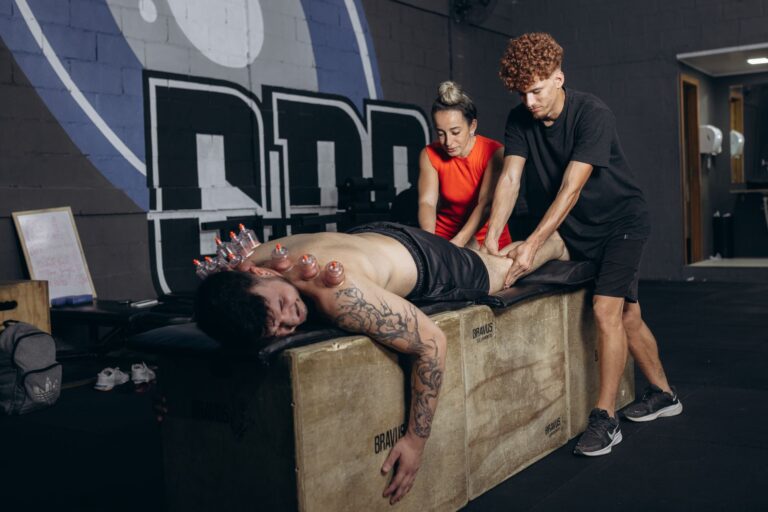
Muscle and connective tissue rebuild during rest, not during training itself. Signs you’re under-recovered include lingering soreness, disrupted sleep, elevated resting heart rate, and stalled performance. Recovery tools — sleep, protein intake, active mobility, and modalities like infrared sauna sessions and cold plunge — extend how much productive training your body can absorb.
Consistency Over Intensity: Long-Term Adherence Strategies
The best training frequency is the one you’ll still be doing in two years. Two sessions weekly for a decade beats five sessions weekly that burn out in six weeks. Build your schedule around your actual life — work, family, jiu-jitsu classes, sleep — and treat mobility as the daily glue that holds everything else together. At Trein Club, we design programs around this exact principle: personalized frequency, real recovery, and a community that makes showing up the easy part.
Frequently Asked Questions
Is it okay to do strength training every day?
Only if volume and intensity are carefully modulated, and different muscle groups are targeted on different days. For most people, two to four sessions per week produces better results than daily lifting, because recovery is where adaptation actually happens.
How often should beginners do strength training?
Two full-body sessions per week is ideal for the first three to six months. This delivers enough stimulus for rapid strength and technique gains while giving the body room to adapt without excessive soreness.
How many days per week should I do mobility or flexibility training?
A minimum of two to three days per week, but short daily sessions (10–15 minutes) are safe and yield better long-term joint health. Athletes and desk workers benefit most from daily practice.
Can I combine strength and mobility training in the same session?
Absolutely. Use dynamic mobility as your warm-up and static or flow-based mobility as your cooldown. This is the most time-efficient structure for busy adults.
How often should older adults do strength training?
At least two non-consecutive days per week, per NIA and ACSM guidelines, ideally paired with daily balance and mobility work to protect against falls and preserve independence.
Will training twice a week give the same results as training three times a week?
For general health and most strength outcomes, yes — provided weekly volume and effort are matched. For maximum hypertrophy or advanced strength gains, three to four sessions weekly offers a modest additional edge.