
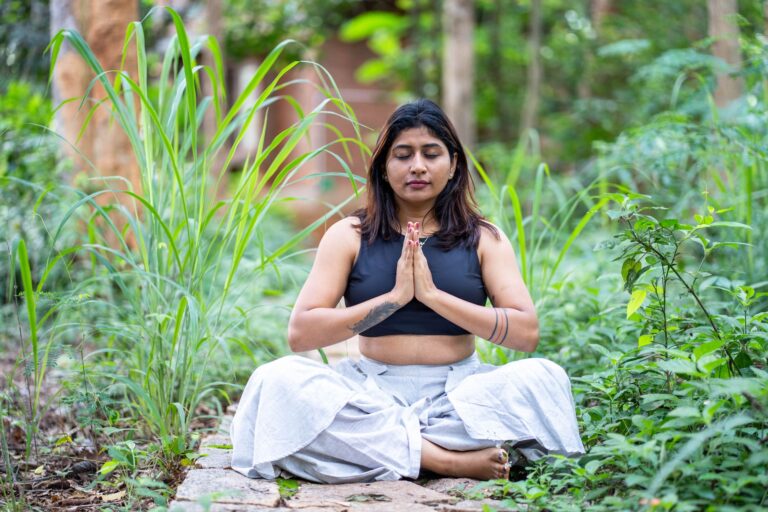
Learning how to practice yoga meditation doesn’t require years of experience or a quiet mountaintop retreat—it’s a skill you can develop right now, wherever you are, to calm your mind and strengthen your body. Whether you’re looking to reduce stress, improve focus, or deepen your connection between breath and movement, yoga meditation is one of the most accessible wellness practices available, and it pairs beautifully with other forms of training and recovery.
At Trein Club in Houston, we’ve built our entire wellness philosophy around this integration. Our yoga program, led by Pedro Araujo—a 4x Jiu-Jitsu World Champion and 500+ hour certified yoga trainer—combines Vinyasa flow, mobility work for athletes, and mindfulness breathwork to help you find balance both on and off the mat. Many of our members discover that consistent yoga meditation practice transforms not just their flexibility and strength, but their ability to stay calm under pressure, manage stress, and show up as their best selves in daily life.
In this guide, we’ll walk you through the fundamentals of yoga meditation: how to set up your practice, simple techniques to get started, and how to build a routine that actually sticks. You don’t need to be a yogi or an athlete—just an open mind and a few minutes a day.
What Is Yoga Meditation and Why It Matters
Yoga meditation is the deliberate marriage of movement, breath, and inward attention that has anchored the yogic tradition for thousands of years. Rather than sitting silently on a cushion in isolation, this approach uses the body as a doorway: postures release physical tension, breathwork settles the nervous system, and only then does the mind grow quiet enough for genuine stillness. For anyone chasing sharper focus, less stress, or a stronger connection between mind and body, learning how to practice yoga meditation is one of the most useful skills you can build.
The Difference Between Yoga and Meditation — and How They Work Together
Yoga, in its classical sense, is not just the physical postures (asanas) most people picture. It is an eight-limbed system in which posture, breath control (pranayama), sensory withdrawal (pratyahara), concentration (dharana), and meditation (dhyana) build on each other. Meditation is one limb within yoga, not a separate discipline. When you pair physical yoga with meditation, the body prepares the mind — a sequence that consistently produces deeper, more sustainable stillness than sitting cold.
Key Benefits of Yoga Meditation: What the Research Says
Peer-reviewed studies link consistent yoga meditation to lower cortisol, reduced blood pressure, improved heart rate variability, better sleep quality, and measurable decreases in anxiety and depressive symptoms. Neuroimaging research shows changes in the prefrontal cortex, hippocampus, and amygdala after eight to twelve weeks of regular practice — regions tied to focus, memory, and emotional regulation. For athletes and martial artists, gains also extend to reaction time, recovery, and pain tolerance.
How to Set Up Your Yoga Meditation Practice
Choosing the Right Time, Space, and Duration
The two windows most traditions favor are early morning (before the day’s noise floods in) and evening (to decompress). Pick a corner of your home that is quiet, uncluttered, and consistent — the brain associates repeated cues with the state you want to enter. Begin with 15 to 20 minutes total: 10 minutes of gentle movement plus 5 to 10 minutes of seated meditation. Duration matters less than showing up daily.
What You Need (and Don’t Need) to Get Started
You need almost nothing: a mat or rug, a cushion or folded blanket to lift your hips, and comfortable clothing. Optional but helpful: a timer, a light shawl for savasana, and a journal. You do not need incense, expensive apps, a specific religion, or a flexible body. The single non-negotiable is honest attention.
How Often Should You Practice Yoga Meditation?
Daily, even briefly, beats long weekend sessions. Ten focused minutes six days a week rewires the nervous system faster than a full hour once a week. If daily feels aggressive, commit to four sessions per week for the first month and let momentum carry you forward.
Preparing Your Body: Yoga Poses to Do Before Meditation
10 Best Yoga Poses to Open the Body and Calm the Mind
These poses release the hips, spine, and shoulders — the three areas that most sabotage seated meditation:
- Child’s Pose (Balasana) — grounds the forehead, calms the vagus nerve.
- Cat-Cow — mobilizes the spine and syncs breath with movement.
- Downward-Facing Dog — decompresses the spine, opens hamstrings and shoulders.
- Low Lunge (Anjaneyasana) — releases hip flexors that lock up from sitting.
- Pigeon Pose — deep external hip rotation, essential for comfortable cross-legged sitting.
- Seated Forward Fold (Paschimottanasana) — lengthens the posterior chain.
- Butterfly (Baddha Konasana) — opens the inner thighs.
- Supine Twist — resets the spine and stimulates the parasympathetic response.
- Bridge Pose — counters forward-flexed posture and opens the chest.
- Legs Up the Wall (Viparita Karani) — a nervous-system reset before meditation.
If tight hips or a stiff spine are your barrier to sitting, working on mobility training alongside your yoga practice will pay dividends fast.
How Long to Hold Each Pose Before Sitting
Five to eight slow breaths per pose is a strong baseline. Long enough to unlock tissue, short enough to keep the mind engaged. In restorative or yin-style pre-meditation sessions, hold longer shapes (2–5 minutes) with props to deepen fascial release.
Transitioning Smoothly from Asana to Seated Meditation
Never jump straight from a strenuous flow into meditation. Layer down: dynamic poses → gentle floor poses → a short savasana (3–5 minutes) → seated position. This staircase pulls the nervous system from active to receptive without shocking it.
Breathwork as the Bridge Between Yoga and Meditation
Pranayama Basics: Breathing Techniques That Deepen Meditation
Three foundational techniques are enough for years of practice:
- Ujjayi (ocean breath) — a soft throat constriction that lengthens each inhale and exhale.
- Nadi Shodhana (alternate nostril breathing) — balances the two hemispheres of the nervous system.
- Box breathing (sama vritti) — equal counts of inhale, hold, exhale, hold; excellent for anxiety.
Five minutes of pranayama between your poses and your meditation dramatically shortens the runway to stillness.
How to Use the Breath as Your Meditation Anchor
Rather than trying to empty the mind, give it one job: track the breath. Feel the cool air at the nostrils on the inhale, the warmer air on the exhale. When thoughts pull you away — and they will — return to that sensation without judgment. The return is the practice.
Step-by-Step Guide to Practicing Yoga Meditation
Step 1 — Ground Yourself with a Body Scan
Lie down or sit and sweep attention from the crown of the head to the toes. Name each area, notice tension, and let it soften. This shifts you from thinking mode to sensing mode in under two minutes.
Step 2 — Establish a Comfortable Seated Position
Sit cross-legged on a cushion with hips higher than knees, or in a chair with both feet flat. Stack ears over shoulders, shoulders over hips. Rest hands on the thighs or in your lap. Comfort is not optional — pain hijacks attention.
Step 3 — Set an Intention or Sankalpa
A sankalpa is a short, present-tense statement: “I am calm and focused.” “I am open to whatever arises.” Set it once, at the start, and release it. It works below the surface.
Step 4 — Follow the Breath and Observe the Mind
Watch the breath enter and leave. When a thought appears, label it gently — “thinking,” “planning,” “remembering” — and return to the breath. You are not trying to defeat thought; you are training the reflex to return.
Step 5 — Use a Mantra, Drishti, or Visualization if Needed
If the mind is especially busy, add a focal point: silently repeat “so-ham” on the inhale and exhale, gaze softly at a candle flame (drishti), or picture a still lake. These tools give the restless mind a job.
Step 6 — Close the Practice with Gratitude and Stillness
Before you open your eyes, take three long breaths, mentally acknowledge one thing you are grateful for, and bow the head slightly. This closing ritual bookends the session and reinforces the neural pattern.
Common Yoga Meditation Styles and Which to Choose
Mindfulness-Based Yoga Meditation
The most accessible entry point: open awareness of breath, body, and thought without judgment. Ideal for beginners, high-stress professionals, and anyone with a busy mind.
Mantra and Japa Meditation in the Yoga Tradition
Repeated silent or whispered sound — “Om,” “So-ham,” or a longer Sanskrit mantra — often counted on a 108-bead mala. Excellent for practitioners who find pure silence too slippery.
Yoga Nidra: The Meditation of Conscious Sleep
A guided lying-down practice that walks you through the body, breath, and imagery. Twenty minutes of yoga nidra can feel like two hours of sleep and is especially powerful for recovery, trauma release, and insomnia. It pairs beautifully with contrast therapy as part of a full recovery ritual.
Trataka and Other Classical Concentration Practices
Trataka is candle-gazing: soft, unblinking focus on a flame until the eyes water, then closing them and holding the internal image. It sharpens dharana (concentration) faster than almost any other technique.
Building Meditation Into the Architecture of Your Yoga Practice
Using Asana as Moving Meditation
A vinyasa flow, done slowly with breath tightly linked to movement, is already meditation — you’re just doing it standing up. The mind cannot wander if it is fully occupied by the next transition and the current breath.
How Savasana Prepares the Mind for Deeper Meditation
Savasana — final rest — is not a nap. It is the pose where the nervous system integrates everything the practice just delivered. Skipping it means skipping the download. Five minutes of savasana before seated meditation opens the door wide.
Structuring a Full Session: Asana → Pranayama → Meditation
The classical arc for a 45-minute home session:
- 5 minutes centering and body scan
- 20 minutes asana (movement)
- 5 minutes savasana
- 5 minutes pranayama
- 10 minutes seated meditation
Compress or expand any segment, but keep the order — it mirrors how the nervous system naturally moves from active to receptive. Adding targeted mobility work once or twice a week accelerates progress for anyone whose hips or shoulders resist sitting still.
Overcoming Common Challenges in Yoga Meditation
What to Do When the Mind Won’t Quiet Down
Stop trying to force silence. Instead, watch the noise the way you would watch weather passing through. Add a stronger anchor: count breaths from one to ten, then start over. If you lose count, restart without judgment. The lost count is the practice, not the failure.
Dealing with Physical Discomfort During Seated Meditation
Discomfort is almost always a setup problem. Elevate the hips higher, sit against a wall, or use a meditation bench. If the knees ache, sit in a chair — the tradition cares about the mind, not the leg position. Chronic tightness usually points to a mobility gap worth addressing off the cushion.
Staying Consistent When Motivation Fades
Shrink the ask. On low-motivation days, sit for two minutes. Two minutes always happens. Track it on a calendar; don’t break the chain. Practice at the same time daily so it becomes identity, not decision.
Yoga Meditation for Specific Goals
Yoga Meditation for Stress and Anxiety Relief
Lean on long exhales and box breathing. A 4-second inhale with an 8-second exhale directly activates the parasympathetic nervous system. Add legs-up-the-wall for 5 minutes before sitting to accelerate the effect.
Yoga Meditation for Better Sleep
Do a short, gentle floor sequence in dim light, then 15 minutes of yoga nidra in bed. Avoid stimulating pranayama (like kapalabhati) at night. Combine with heat-based recovery — the benefits of infrared sauna extend to deeper, more restorative sleep.
Yoga Meditation for Focus and Cognitive Performance
Trataka and mantra meditation are the sharpest tools here. Ten minutes daily builds sustained attention that transfers directly to work, study, and training. Alternate nostril breathing before demanding cognitive tasks is a proven pre-performance ritual.
Yoga Meditation for Emotional Healing and Self-Awareness
Open-awareness meditation — noticing what arises without pushing it away — is where deep emotional work happens. Pair it with journaling immediately after the session. If heavy material surfaces, a qualified teacher or therapist alongside the practice matters.
Frequently Asked Questions
Can beginners practice yoga meditation without prior experience?
Absolutely. Yoga meditation was designed to meet you where you are. Start with 5–10 minutes daily, follow the sequence in this guide, and progress will come faster than you expect.
How is yoga meditation different from regular mindfulness meditation?
Mindfulness meditation typically starts and ends on the cushion. Yoga meditation uses physical postures and breathwork to prepare the body first, which makes seated stillness dramatically more accessible — especially for people with tight hips, back pain, or restless minds.
How long should a yoga meditation session last?
Anywhere from 15 to 60 minutes total. A useful default: 20 minutes of movement plus 10 minutes of seated meditation. Consistency matters far more than duration.
Can I practice yoga meditation without doing physical poses first?
Yes, but you’ll likely find sitting harder. Even 3–5 minutes of gentle stretching and breathwork beforehand makes a significant difference.
Is yoga meditation compatible with religious beliefs, including Christianity?
Yes. Yoga meditation is a technology of attention, not a religion. Practitioners of every faith — and none — use it to reduce stress, improve focus, and deepen their inner life. You can pray during the practice, use a scripture verse as a mantra, or simply focus on the breath.
What is the best time of day to practice yoga meditation?
Early morning (before the day’s momentum takes over) and evening (to decompress) are the two strongest windows. Pick the one you can defend consistently.
How soon will I notice results from a regular yoga meditation practice?
Most people feel calmer within a single session. Structural changes — better sleep, lower baseline stress, sharper focus — typically show up in 2 to 4 weeks of daily practice. Neurological changes visible on imaging appear around 8 weeks.