Whether you’re training Brazilian Jiu-Jitsu, striking, yoga, or strength and conditioning, how to incorporate mobility training into your routine can be the difference between plateauing and evolving. Most people think of mobility as a luxury—something to squeeze in after the “real” work is done. But at Trein Club, we treat it with the same intention and rigor as any other aspect of your practice. Mobility work isn’t just about touching your toes; it’s about building the movement capacity, joint resilience, and body awareness that keep you performing at your best, prevent injury, and help you move with confidence both on and off the mat.
The challenge most athletes face is knowing where to start. Should mobility training happen before or after training? How long should it take? What exercises actually matter for your goals? These questions matter because poor mobility integration wastes time and often leads to frustration. At Trein Club, our yoga program—led by Pedro Araujo, a 4x Jiu-Jitsu World Champion and 500+ hour certified yoga trainer—blends Vinyasa flow with targeted mobility work designed specifically for martial artists and athletes. We’ve learned what works through years of training champions and beginners alike.
What Is Mobility Training and Why It Matters for Every Fitness Level
Mobility training is the practice of improving your ability to move a joint actively through its full range of motion with control. It sits at the crossroads of flexibility, strength, and motor control — and it may be the most underrated variable in any long-term fitness plan. Whether you are a first-time gym-goer, a busy parent, a competitive Brazilian Jiu-Jitsu athlete, or someone unwinding years of desk work, the quality of your joint movement dictates how well your body executes everything else you ask of it. Squats get deeper, punches land sharper, guard retention feels easier, and everyday tasks like tying shoes or picking up a child stop feeling like a compromise.
At Trein Club, mobility is not an afterthought bolted onto a strength program — it threads through our yoga classes, our functional training sessions, and even the way our BJJ instructors warm up the room. If you want a deeper primer before diving in, our overview of what mobility training actually is pairs well with this guide.
Mobility vs. Flexibility vs. Stability: Understanding the Key Differences
These three terms get used interchangeably, and that confusion is exactly why so many training programs stall. Flexibility is passive — the length a muscle can reach when something external (gravity, a partner, a strap) pulls it there. Mobility is active — your ability to move a joint through that same range under your own power and with control. Stability is the neuromuscular capacity to hold a position without unwanted movement. A dancer can drop into a full split (flexibility) yet be unable to lift the top leg an inch off the ground unassisted (poor active mobility). A powerlifter may squat 500 pounds (stability) but struggle to reach overhead without arching the lower back (poor shoulder mobility). Genuine training addresses all three.
The Science-Backed Benefits of Regular Mobility Training
Consistent mobility work improves synovial fluid circulation in the joints, lowers injury risk, sharpens neuromuscular efficiency, and supports better posture. Research on active range-of-motion training also links it to reduced chronic low-back pain, improved athletic performance, and a slower age-related decline in movement quality. For grapplers and strikers specifically, hip and thoracic range translate directly into cleaner submissions, stronger rotational power, and fewer nagging injuries. If you are curious about how quickly these changes take hold, we break it down in how effective mobility training really is.
How to Assess Your Current Mobility Before Starting a Program
Jumping into a routine without knowing where your restrictions live is like driving somewhere new without checking the map. A brief self-assessment reveals which joints deserve priority, which are already serviceable, and which are quietly forcing compensations elsewhere in the body.
Simple Self-Assessment Tests for Hips, Shoulders, Ankles, and Thoracic Spine
- Deep squat hold: Can you sit in a full squat, feet flat, chest tall, for 60 seconds? This screens hips, ankles, and thoracic spine simultaneously.
- Shoulder flexion against a wall: Stand with your back and hips flat against a wall. Raise your arms overhead. Can your wrists touch the wall without your lower back arching?
- Ankle wall test: Kneel facing a wall, front foot roughly five inches from it. Can your knee touch the wall without your heel lifting?
- Seated thoracic rotation: Sit cross-legged with a stick behind your neck. Rotate left and right. Aim for at least 45 degrees each direction without the hips shifting.
How to Identify Your Mobility Weak Points and Prioritize Them
Whichever test felt worst — that is your starting point. Focus on one or two restrictions rather than trying to fix everything at once. If your deep squat collapses at the ankles, no amount of hip work will unlock the position. Address the upstream cause first, retest weekly, and expect meaningful change within three to six weeks of consistent effort.
How to Incorporate Mobility Training Into Your Existing Workout Routine
The single biggest reason mobility programs fail is that people treat them as a separate obligation instead of weaving them into what they already do. Below are five practical entry points — pick the one that suits your current schedule and personality, not the “ideal” one.
Option 1: Use Mobility Work as a Pre-Workout Warm-Up (5–10 Minutes)
Swap static stretching for dynamic, joint-specific drills that prep the movements you are about to perform. Before BJJ: hip CARs (controlled articular rotations), 90/90 transitions, and cat-cow. Before squatting: ankle rockers, deep squat holds, and thoracic openers. This is the highest-ROI slot because it directly raises the quality of the session that follows.
Option 2: Add Mobility Drills as a Post-Workout Cool-Down
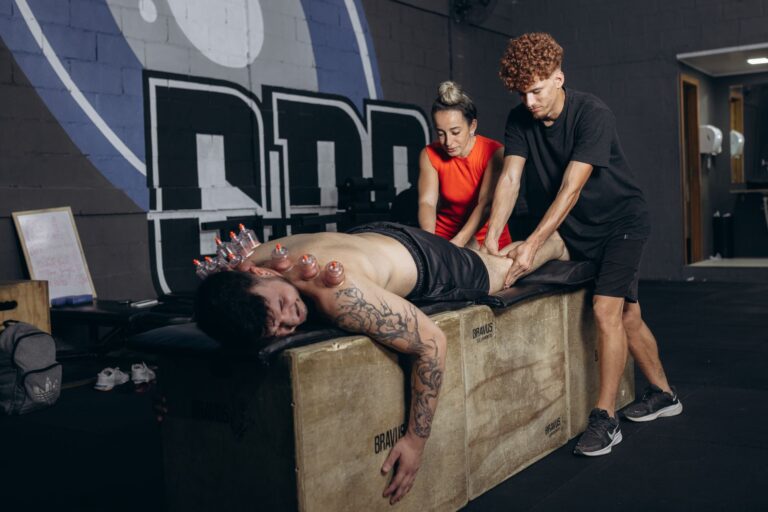
After training, your tissues are warm and responsive — ideal for longer holds and end-range work. Spend 10 minutes on the restrictions you flagged in your assessment. This is also a strong moment to pair mobility with recovery tools like our infrared sauna or a session in the cold plunge to accelerate the parasympathetic downshift.
Option 3: Dedicate Standalone Mobility Sessions (Ideal Frequency and Duration)
Two to three 30-minute sessions per week — think a Vinyasa yoga class or a focused mobility flow — will move the needle faster than daily five-minute scraps. For guidance on volume, our article on how often to do mobility training lays out sample frequencies by goal.
Option 4: Pair Mobility Exercises as Supersets Between Strength Sets
Between sets of bench press, drop into a doorway pec stretch or a thoracic extension over a foam roller. Between deadlifts, do 90/90 hip switches. You reclaim rest time that would otherwise be spent scrolling your phone, and you accumulate serious mobility volume across a training week without adding a single minute to your workout.
Option 5: Integrate Daily Movement Snacks Throughout the Day
Two-minute “snacks” scattered through the day — a deep squat while brushing your teeth, shoulder CARs before meetings, a hip flexor stretch after each hour of sitting — compound remarkably. For more on when in the day mobility work pays off most, we have a dedicated breakdown.
How to Build Strength and Mobility at the Same Time
Mobility without strength at end range is fragile. Strength without mobility is brittle. The most efficient athletes develop them together.
The Best Compound Movements That Simultaneously Build Strength and Range of Motion
- Overhead squats: Demands ankle, hip, thoracic, and shoulder range under load.
- Bulgarian split squats: Opens the hip flexor of the rear leg while loading the front leg through deep flexion.
- Turkish get-ups: A moving mobility assessment loaded with a kettlebell.
- Romanian deadlifts: Trains hamstring length under tension — active flexibility at its best.
- Cossack squats: Lateral hip range plus adductor strength in one movement.
How to Use Bodyweight Training to Develop Active Mobility
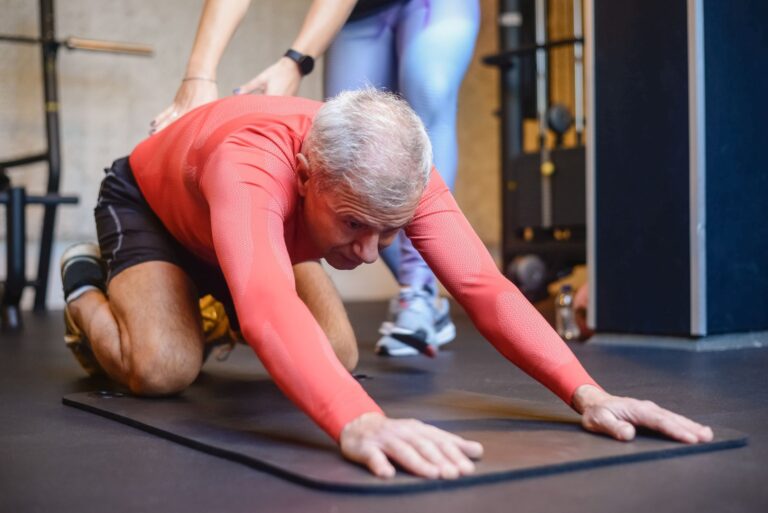
Bodyweight work — pistol squats, deep lunges, animal flows, handstand progressions, Jefferson curls — forces you to own each position without external load masking weakness. This is exactly how our functional mobility training philosophy is built: earn the range, then load it.
A Complete Full-Body Mobility Routine You Can Do Every Day
Here is a 15–20 minute daily flow that covers the major joints. Move slowly, breathe through your nose, and prioritize control over range.
Neck and Thoracic Spine Mobility Exercises
- Chin tucks — 10 reps
- Cat-cow — 8 slow cycles
- Thread the needle — 6 per side
- Open book stretch — 8 per side
Shoulder and Upper Body Mobility Drills
- Shoulder CARs — 3 per direction, per side
- Wall slides — 10 reps
- Prone Y-T-W raises — 8 of each
- Doorway pec stretch — 30 seconds per side
Hip Flexor and Hip Rotator Mobility Exercises
- 90/90 hip switches — 10 per side
- Half-kneeling hip flexor stretch with reach — 30 seconds per side
- Deep squat hold with rotations — 60 seconds
- Cossack squat — 8 per side
Ankle and Knee Mobility Drills
- Ankle rockers against wall — 10 per side
- ATG split squat — 8 per side
- Tibialis raises — 15 reps
- Elephant walks — 30 seconds
Recommended Sets, Reps, and Hold Times for Each Exercise
General rule: dynamic drills — 8 to 12 controlled reps; active holds — 20 to 45 seconds; end-range strength positions (like a deep squat pause) — 60 to 90 seconds. One quality round of the full flow above beats three rushed ones.
How to Incorporate Mobility Training Into a Home Workout Plan (No Equipment Needed)
Mobility is the most equipment-free discipline in fitness. Your bodyweight, a wall, and a few square feet of floor are enough.
6 Effective Strategies for Home-Based Mobility Work
- Stack mobility onto existing habits (morning coffee = 5 minutes of hip work).
- Use short YouTube or app-guided flows to remove decision fatigue.
- Set a phone timer to stand and move every 45 minutes of desk work.
- Perform CARs for every major joint once daily — takes under 10 minutes.
- Convert TV time into floor time: sit in 90/90, deep squat, or pigeon while watching.
- Track it. A simple checklist on the fridge dramatically improves adherence.
Minimal Equipment Options That Enhance Mobility at Home
A foam roller, a lacrosse ball, a resistance band, and a yoga mat cover 95% of what you need. Add a sturdy chair for supported stretches and a pull-up bar for passive shoulder hangs, and you have a full home mobility gym for under $100.
How to Add Mobility Training When You Also Do Endurance or Cardio Work
Runners, cyclists, and HIIT enthusiasts often develop the tightest hips and thoracic spines of anyone in the gym — precisely because repetitive-plane cardio locks tissues into short, narrow patterns.
Scheduling Mobility Around Running, Cycling, or HIIT Sessions
Do dynamic mobility before cardio to prime the joints, and save longer end-range work for after or on separate days. Avoid deep static stretching immediately before high-intensity intervals — it can temporarily reduce power output. On rest days, a 20-minute flow doubles as active recovery.
Mobility Drills Specifically Beneficial for Endurance Athletes
- Hip flexor openers to counter the shortened stride pattern of cyclists.
- Thoracic rotations to restore rotational range lost during running.
- Ankle dorsiflexion drills to improve stride economy.
- Adductor work (frog stretch, Cossack squats) to balance sagittal-plane dominance.
Sample Weekly Mobility Training Schedule for Beginners, Intermediate, and Advanced
Beginner Weekly Plan: Getting Started With 3 Days Per Week
- Mon: 15-minute full-body mobility flow.
- Wed: Yoga class or guided mobility session (30–45 min).
- Fri: 15-minute flow focused on your weakest area from assessment.
- Daily: Two “movement snacks” of 2 minutes each.
Intermediate Weekly Plan: Combining Mobility With Strength and Cardio
- Mon: Strength + 10 min pre-workout mobility.
- Tue: BJJ or striking + 5 min post-class mobility.
- Wed: Standalone 30-min mobility or yoga session.
- Thu: Strength + supersetted mobility between lifts.
- Fri: Cardio + 15 min post-cardio mobility.
- Sat: BJJ or long yoga flow.
- Sun: Rest or 20-min recovery flow.
Advanced Weekly Plan: Daily Mobility Maintenance and Performance Optimization
Advanced practitioners perform 10 minutes of daily CARs and joint prep, add two 45-minute dedicated sessions per week (often yoga and end-range strength work), and layer mobility supersets into every strength session. Recovery modalities — sauna, cold plunge, massage — become weekly staples rather than occasional luxuries. Read more on how mobility feeds back into everyday life at this level.
Common Mistakes to Avoid When Starting a Mobility Training Program
- Chasing range instead of control. Owning 90% of your range with strength beats flopping into 100% with none.
- Skipping the assessment. You cannot fix what you have not measured.
- Doing too much, too soon. Twenty minutes a day of quality work beats a two-hour weekend cram.
- Only stretching, never strengthening. Passive length without active control is an injury waiting to happen.
- Confusing soreness with progress. Real gains show up in movement quality, not next-day discomfort.
- Training in isolation. A community — a yoga class, a BJJ mat, a group of training partners — dramatically improves consistency. That is why our facility puts yoga, strength, jiu-jitsu, and recovery under one roof.
- Ignoring recovery. Adaptations happen between sessions. Sleep, hydration, and tools like contrast therapy accelerate the process.
Mobility is not a phase or a warm-up gimmick — it is the foundation that lets every other kind of training keep working for you decade after decade. Start small, assess honestly, and let the practice compound.