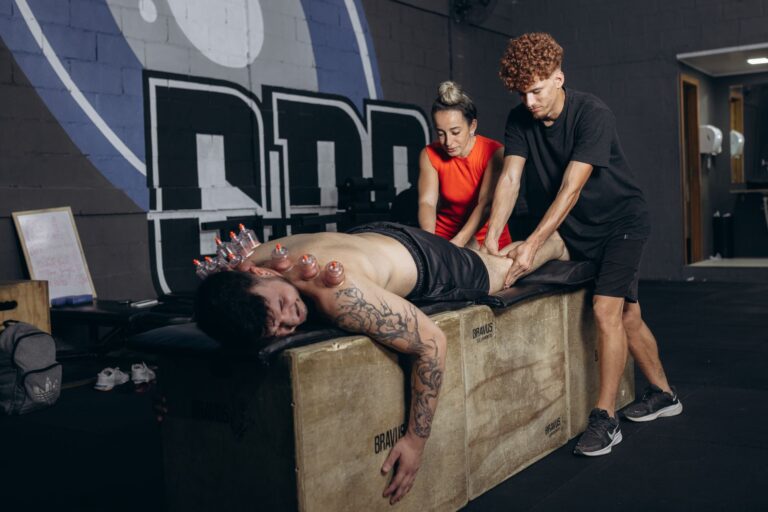

Why is mobility training important? If you’re training Brazilian Jiu-Jitsu, lifting weights, or pushing your body in any way, the answer is simple: mobility is what keeps you moving well, injury-free, and performing at your best. Mobility training—the combination of flexibility, strength, and control through a full range of motion—isn’t just for elite athletes or people recovering from injury. It’s foundational for anyone who wants to move with intention, prevent pain, and actually enjoy the training they show up for.
Whether you’re a beginner stepping onto the mat for the first time, a parent watching your child discover confidence through martial arts, or a serious practitioner training toward competition, mobility work directly impacts your results. It improves your technique in jiu-jitsu, reduces your risk of injury, speeds up recovery, and helps you feel stronger and more capable in daily life. At Trein Club, we treat mobility training as equally important as the training itself—which is why our yoga and strength programs, led by 4x World Champion Pedro Araujo and his team, focus on building athletes who move well, recover fast, and stay healthy for the long term.
What Is Mobility Training and Why Does It Matter?
Mobility training is the practice of improving how well your joints move through their full, active range of motion — with control, strength, and stability. Unlike passive stretching, which lengthens a muscle while you sit still, mobility work demands that your body own every degree of that range: reach it, hold it, and produce force from it. That distinction is why mobility has quietly become the connective tissue between strength training, martial arts, yoga, and long-term health.
It matters because modern life systematically shrinks the way we move. Hours at a desk lock the hips. Phone posture rounds the thoracic spine. Repetitive sport patterns overload one side of the body. Over time, joints lose access to positions they were designed to reach, and the nervous system stops trusting those positions altogether. The result is stiffness, nagging pain, plateaued performance, and a rising risk of getting hurt during even ordinary tasks — reaching overhead, squatting down to pick something up, turning to look behind you while driving.
Understanding what mobility training actually is reframes fitness from “how much can I lift” to “how well can I move.” And that shift is what makes it foundational for every population, from world-class competitors to parents chasing kids around the house.
Key Benefits of Mobility Training for Everyday Life
The rewards of consistent mobility work reach far beyond athletic contexts. They show up in how you sit at your desk, how you sleep, how you carry groceries, and how you feel getting out of bed in the morning.
Improved Joint Range of Motion and Flexibility
The most immediate payoff is expanded, usable range of motion. Regular mobility drills gradually restore access to positions the body has lost — deeper squats, freer overhead reaching, fuller rotation through the spine. Unlike passive flexibility, this range is active, meaning you can control and produce strength within it, not just fall into it.
Reduced Risk of Injury During Exercise and Daily Activities
Most non-contact injuries happen when a joint is forced into a position it wasn’t prepared for. Mobility training expands that prepared range, so the awkward reach, sudden twist, or heavy load doesn’t push you past your body’s control. This is why mobility is often described as insurance you pay in ten-minute daily installments.
Better Posture and Spinal Health
Poor posture is rarely a discipline problem — it’s a mobility problem. Tight hip flexors tilt the pelvis. A stiff thoracic spine collapses the chest forward. Locked-up shoulders round in. Mobility work addresses the mechanical causes, so standing tall stops feeling like effort and starts feeling like default.
Enhanced Athletic Performance and Movement Efficiency
For athletes, mobility is a direct performance multiplier. A jiu-jitsu player with mobile hips can invert, recover guard, and attack from angles others can’t reach. A striker with a mobile thoracic spine rotates harder and delivers more transfer through each punch. A lifter who can hit depth without compensation loads the right muscles instead of grinding joints. Efficient movement is faster, stronger, and less costly.
Pain Relief and Management of Chronic Musculoskeletal Conditions
Chronic low-back pain, cranky knees, stiff necks, and aching shoulders often trace back to restricted mobility elsewhere in the chain. When adjacent joints move well, overloaded areas get a break. Many people report significant, lasting relief from persistent discomfort within weeks of steady mobility work.
Mobility vs. Flexibility vs. Stability: Understanding the Differences
These three terms get used interchangeably, but they describe different qualities. Flexibility is passive — how far a muscle can be lengthened when something else does the work (gravity, a strap, a partner). Mobility is active — how far you can move a joint under your own control, with strength through the range. Stability is the ability to resist unwanted movement and hold position under load.
A useful mental model: flexibility is potential, mobility is usable, stability is protected. Someone can be extremely flexible yet lack mobility because they can’t actively reach their end range. Someone can be strong and stable but lack mobility because their joints never travel far. True functional movement requires all three working together, and mobility training is the bridge that turns flexibility into something the body can actually put to use.
How Mobility Training Works: The Science Behind It
How Joints, Muscles, and Connective Tissue Respond to Mobility Work
Joints thrive on movement. Synovial fluid — the lubricant inside your joints — is stimulated by motion, delivering nutrients to cartilage that has no direct blood supply. Regular mobility work keeps this circulation active, slowing age-related degeneration. Muscles adapt by adding sarcomeres (contractile units) in length when they’re routinely loaded at long ranges, and fascia — the connective tissue web wrapping everything — gradually becomes more pliable and hydrated when it experiences varied, low-load stress.
Neurological Adaptations: Training Your Nervous System for Better Movement
Much of what feels like “tightness” isn’t structural — it’s neurological. Your nervous system limits range in positions it doesn’t trust, essentially applying a protective brake. Mobility training, especially active and loaded variations, teaches the nervous system that end ranges are safe and controllable. This is why gains can happen surprisingly fast in the early weeks: you’re not remodeling tissue yet, you’re changing the brain’s permission settings. Sustained practice then unlocks the slower structural changes.
Who Needs Mobility Training? (Spoiler: Everyone Does)
Mobility Training for Athletes and Sporting Populations
Athletes need mobility to express their skill fully and to survive the volume of training their sport demands. In grappling, supple hips and spines are the difference between defending and getting stuck. In striking, rotation and shoulder freedom drive power. In any sport, the athlete who moves well recovers faster, absorbs contact better, and stays healthier across a season.
Mobility Training for Sedentary or Desk-Bound Individuals
Ironically, the people who need mobility most often think they don’t need it at all. Sitting eight to ten hours a day shortens hip flexors, weakens glutes, rounds the upper back, and dulls proprioception. For desk workers, mobility isn’t optional — it’s the counterweight to a posture the body was never designed to hold for that long.
Mobility Training for Older Adults and Injury Rehabilitation
Maintaining mobility is one of the strongest predictors of independence in later life. Standing from a chair, climbing stairs, reaching an overhead shelf, and catching yourself from a stumble all depend on preserved range and control. In rehabilitation, mobility work re-establishes movement patterns after injury and prevents compensation from becoming permanent.
The Most Effective Mobility Training Methods and Techniques
Dynamic Stretching and Active Range of Motion Drills
Controlled articular rotations (CARs), leg swings, arm circles, and cat-cow are examples of active drills that ask joints to move through their full range under their own power. They’re efficient, warm the body up, and directly teach the nervous system to access range.
Proprioceptive Neuromuscular Facilitation (PNF) Stretching
PNF alternates contracting and relaxing a muscle at end range. Contracting a stretched muscle briefly, then relaxing and moving deeper, exploits reflexes that unlock greater range. It’s one of the fastest ways to gain flexibility, particularly for stubborn areas like hamstrings and hips.
Foam Rolling and Myofascial Release
Rolling and self-massage tools work primarily by down-regulating overactive muscles and improving tissue hydration. They’re most effective as preparation for active mobility work — not a substitute for it. A few minutes on tight areas before drills makes the drills more productive.
Yoga and Movement-Based Mobility Practices
Yoga combines strength, breath, and range in a way few other practices match. Vinyasa flow in particular blends mobility with control, teaching the body to move fluidly between positions instead of holding static shapes. At Trein Club, yoga is led by Pedro Araujo himself and designed specifically to support athletes and martial artists — mobility training packaged inside a mindful, breath-driven practice.
Strength Training Through Full Range of Motion
Perhaps the most underrated mobility method. Lifting through complete ranges — full-depth squats, deficit deadlifts, deep push-ups, overhead pressing with true lockout — builds strength and range simultaneously. This creates mobility that carries load, which is the whole point.
How to Build a Daily Mobility Routine: A Practical Guide
Best Time to Do Mobility Work: Pre-Workout, Post-Workout, or Standalone?
All three work, and each serves a different purpose. Pre-workout mobility should be active and dynamic — priming the joints you’re about to load. Post-workout mobility can be slower and more restorative, using the elevated tissue temperature to gain range. Standalone sessions, even ten minutes on a rest day, are where the deepest changes often happen because the body isn’t pre-fatigued. For a deeper look at timing, see when to do mobility training.
Sample Beginner Daily Mobility Routine (10–15 Minutes)
- Cat-cow: 8–10 slow reps to wake up the spine
- World’s greatest stretch: 5 per side for hips, thoracic, and hamstrings
- 90/90 hip switches: 8 per side for hip internal and external rotation
- Thoracic rotations (quadruped): 8 per side for upper back
- Deep squat hold with reach: 60 seconds, adding gentle rotations
- Shoulder CARs: 3 slow circles per side, each direction
- Ankle rocks against a wall: 10 per side
If you’re brand new, this guide to starting mobility training walks you through the first weeks step by step.
Key Body Areas to Prioritize: Hips, Thoracic Spine, Ankles, and Shoulders
These four areas drive almost every human movement, and they’re the four most commonly restricted by modern life. Hips move you through the world. The thoracic spine dictates posture and rotational power. Ankles govern squatting, walking, and balance. Shoulders determine everything overhead. Prioritize these and you’ll feel disproportionate returns.
Common Mistakes People Make with Mobility Training
Confusing Passive Stretching with True Mobility Work
Sitting in a pigeon pose for two minutes may feel productive, but if you can’t actively reach that range without the floor holding you there, it’s not mobility. Add active elements — lift the leg, press into positions, control the return — to convert flexibility into mobility.
Skipping Mobility Work When Pressed for Time
Mobility is usually the first thing cut when schedules tighten. But five focused minutes daily beats a heroic hour once a month. Consistency compounds; sporadic effort doesn’t.
Neglecting Specific Problem Areas or Muscle Imbalances
Most people default to drills they’re already good at and avoid the ones they need. If your left hip is tighter than your right, it deserves more work, not equal work. Honest self-assessment — or a coach’s eye — reveals the asymmetries worth targeting.
How Long Does It Take to See Results from Mobility Training?
Neurological gains — feeling looser, moving more freely, dropping into a slightly deeper squat — often appear within one to two weeks of consistent daily practice. Structural changes to muscle length and fascial tissue take longer: expect meaningful, visible improvements around the six-to-eight week mark, and substantial transformation of restricted areas over three to six months. The pattern is slow and quiet, then suddenly obvious. Read more on how effective mobility training actually is when practiced consistently.
Mobility Training and Long-Term Health: What the Research Says
Research consistently links preserved mobility to lower fall risk in older adults, reduced incidence of chronic musculoskeletal pain, better metabolic outcomes (movement quality supports movement quantity), and improved mental health markers through the mind-body integration that active mobility work provides. Studies on active range of motion training show benefits for joint health, tendon resilience, and neuromuscular control across every age group tested. Combined with recovery modalities like cold plunge therapy and infrared sauna sessions, mobility becomes part of an integrated system for longevity — not a niche gym practice but a cornerstone of aging well.
Frequently Asked Questions
What is the difference between mobility and flexibility?
Flexibility is passive — how far a muscle can be lengthened when something external moves it. Mobility is active — how far you can move a joint under your own strength and control. Flexibility is potential; mobility is usable.
How often should I do mobility training?
Daily practice, even in short sessions of 10–15 minutes, produces the best results. Three to four dedicated weekly sessions also work well. See our full breakdown on how often to do mobility training for specifics.
Can mobility training help with back pain?
Yes, often significantly. Most non-pathological back pain is driven by restricted hips and a stiff thoracic spine forcing the lumbar region to overwork. Restoring mobility in those areas typically reduces symptoms within weeks.
Is mobility training suitable for beginners?
Absolutely — beginners often see the fastest gains because they’re starting from the most restricted baseline. Simple daily routines require no equipment and no prior experience.
Should I do mobility training before or after lifting weights?
Both, with different flavors. Pre-lift mobility should be active and dynamic to prepare joints for load. Post-lift can be slower and more restorative. Longer, deeper sessions are best done on rest days when the body is fresh.
Can mobility training replace stretching?
For most people, yes — because mobility work already includes range-of-motion training, but adds the strength and control that static stretching alone lacks. Passive stretching still has a place, but it shouldn’t be the whole program.
Does mobility training help with injury prevention?
Yes. By expanding the range in which your joints have strength and control, mobility training reduces the likelihood that sudden or awkward movements exceed what your body can safely handle.
How is mobility training different from physical therapy?
Physical therapy diagnoses and treats specific injuries or dysfunctions under a clinical model. Mobility training is a proactive, ongoing practice for healthy individuals to preserve and expand movement capacity. The two complement each other — PT restores what’s broken; mobility training keeps what’s working, working.