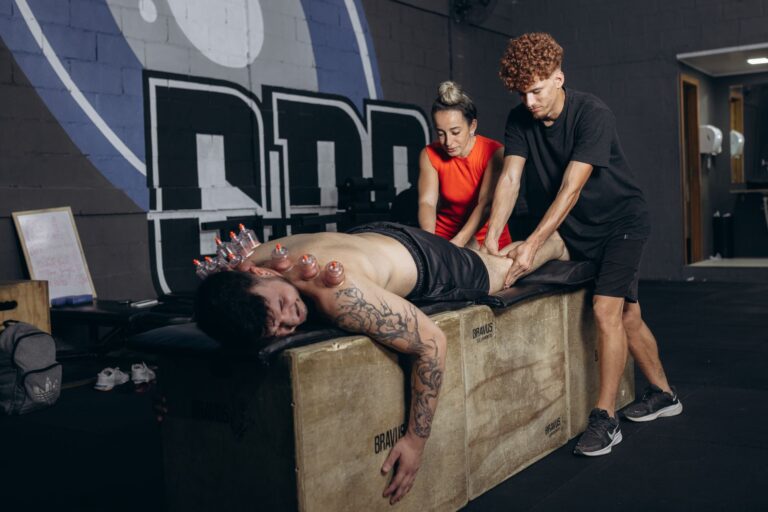
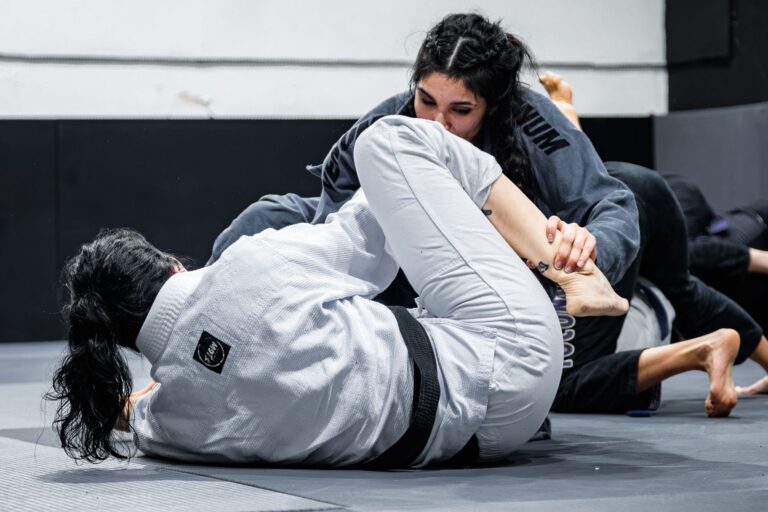
How important is mobility training? If you’re training Brazilian Jiu-Jitsu, the answer is simple: it’s foundational. Mobility—the ability to move your joints through their full range of motion with control—directly impacts your performance on the mat, your injury resilience, and how long you can train without pain. Many grapplers focus almost exclusively on technique and strength, overlooking the fact that restricted mobility limits your ability to execute positions, defend submissions, and recover from training. A tight hip can sabotage your guard game. Stiff shoulders compromise your passing and escapes. Limited ankle mobility affects your footwork and base.
At Trein Club in Houston, mobility training is woven into everything we do—from our Vinyasa flow yoga classes designed specifically for martial artists to our strength and conditioning program, all led by Pedro Araujo, a 4x Jiu-Jitsu World Champion and 500+ hour certified yoga trainer. We treat mobility not as a luxury add-on, but as an essential pillar of athletic development, longevity, and the quality of your training experience. Whether you’re a beginner finding your first comfortable position or an advanced competitor looking to evolve your game, improving your mobility changes everything.
What Is Mobility Training and Why Does It Matter?
Mobility training is the practice of improving how well your joints move through their full, usable range of motion — with control, strength, and stability. The goal isn’t to turn you into a contortionist. It’s about being able to squat down to play with your kid, reach an overhead shelf without pinching your shoulder, roll on the jiu-jitsu mats without tweaking a knee, or sit at a desk for eight hours and still stand up feeling human. In a world where most of us alternate between long hours of sitting and sporadic bursts of intense exercise, mobility becomes the quiet variable that determines whether your body feels 30 or 60.
The real question isn’t whether mobility matters — it’s how much you’re willing to let stiffness, compensation, and eventual injury dictate your quality of life. For athletes, mobility is performance. For desk workers, it’s pain prevention. For older adults, it’s independence. That’s why at Trein Club we treat it as a foundational pillar alongside strength, skill work, and recovery.
The Difference Between Mobility, Flexibility, and Stability
These three terms get used interchangeably, and that’s part of why so many people train them poorly. Flexibility is passive — the length a muscle can reach when something else moves it (gravity, a partner, a strap). Mobility is active — the range you can control on your own, under load, with intent. Stability is your ability to hold and own that range without wobbling or collapsing. You can be flexible without being mobile (picture someone who can touch their toes but can’t squat), and you can be mobile without being stable (someone who reaches deep positions but gets injured under load).
How Mobility Training Differs from Static Stretching
Static stretching — holding a hamstring stretch for 60 seconds, for example — lengthens tissue passively. Mobility training, by contrast, uses controlled articular rotations, end-range strength work, loaded stretching, and movement flows to teach the nervous system that new ranges are safe and useful. Static stretching tells your muscle to relax; mobility training tells your brain to trust the position. That distinction is critical if you want ranges you can actually use during a rolling round, a heavy deadlift, or a game of tag with your kids.
Key Benefits of Mobility Training for Everyday Life
The dividends of consistent mobility work show up everywhere — inside the gym, on the mats, and in the small moments of daily life that most people don’t associate with fitness at all.
Improved Joint Health and Range of Motion
Joints are living tissue, and they thrive on movement. Synovial fluid — the lubricant inside your joints — is produced and circulated primarily when you move through range. Regular mobility work nourishes cartilage, keeps capsules supple, and protects the surrounding tissues from the slow decline that follows disuse. Hips, shoulders, ankles, and the thoracic spine are the four regions most people lose first, and the four that respond fastest to dedicated attention.
Injury Prevention and Reduced Chronic Pain
Most non-contact injuries aren’t freak accidents — they’re the final rep of a compensation pattern that’s been building for months. When your hips don’t rotate, your lower back rotates for them. When your ankles don’t dorsiflex, your knees cave. Mobility training addresses these restrictions at the source, and consistent practice is one of the most reliable ways to reduce nagging back, shoulder, and knee pain. If you want to dig deeper into the mechanics, our breakdown of what mobility training actually does to your tissues and nervous system is a good next read.
Better Posture and Movement Efficiency
Posture isn’t about standing up straight because someone told you to — it’s about having the range and strength to stack your joints without effort. Mobility work opens the thoracic spine, unglues the hips from hours of sitting, and restores the shoulder positions we lose to keyboards and phones. The result is movement that costs less energy and looks and feels smoother.
Enhanced Athletic and Functional Performance
Every athletic skill has a mobility ceiling. A jiu-jitsu player with locked hips can’t invert or play open guard efficiently. A striker with a stiff thoracic spine loses rotational power on the cross. A runner with poor ankle mobility burns extra energy on every step. Improving usable range doesn’t just prevent injury — it unlocks technique that was previously mechanically impossible.
How Important Is Mobility Training for Different Populations?
The honest answer to “how important is mobility training?” depends on who’s asking. But for virtually every population, the answer sits somewhere between important and essential.
Mobility Training for Older Adults: Independence and Fall Prevention
For adults over 55, mobility is arguably the single most important physical quality to preserve. The ability to get up off the floor, step over an obstacle, turn to look behind you while driving, or catch yourself when you stumble is entirely dictated by joint range and control. Research consistently links mobility and balance work to reduced fall risk, better gait, and greater long-term independence — outcomes that matter far more than any PR in the gym.
Mobility Training for Athletes and Active Individuals
For competitors and serious hobbyists, mobility is the difference between plateauing and progressing. It’s also the difference between a long career and one cut short by chronic issues. That’s why our yoga and mobility program at Trein — led personally by Pedro Araujo — is built specifically around the demands of grapplers, strikers, and lifters. If you’re curious about integrating it, our guide on when to do mobility training around your main sessions is a useful starting point.
Mobility Training for Sedentary or Desk-Bound People
If you sit six to ten hours a day, mobility isn’t optional — it’s the counterweight that keeps your body from adapting to the shape of your chair. Hip flexors shorten, glutes deactivate, the upper back rounds, and the neck creeps forward. Twenty focused minutes of mobility work, three to five times a week, can reverse most of these adaptations. Our post on how important mobility training is in your everyday activities goes into practical detail for exactly this profile.
What the Science Says: Research-Backed Evidence on Mobility Training
Mobility training is often marketed on vibes and Instagram reels, but the peer-reviewed literature has been building a solid case for years.
Studies on Mobility Training and Walking Function in Older Adults
Multiple randomized trials have shown that structured mobility and balance interventions improve gait speed, stride length, and Timed Up-and-Go scores in older adults — all validated predictors of independence and longevity. Gait speed in particular is such a strong marker that geriatricians sometimes call it “the sixth vital sign.”
Core Training vs. Mobility Training: What Research Reveals
Studies comparing core stability protocols to mobility-focused protocols generally find that neither is superior in isolation — but combined programs consistently outperform either alone. Translation: crunches without hip mobility, or hip mobility without trunk control, will always underperform an integrated approach. That’s why functional programs blend both.
Flexibility and Functional Ability: Findings from NIH and PubMed
Meta-analyses on NIH and PubMed databases consistently link improved joint range of motion to better performance on functional tasks — sit-to-stand, stair climb, reaching, carrying. The effect is dose-dependent: more consistent practice produces bigger functional gains, with a plateau reached somewhere around four to five sessions per week for most people. For a deeper breakdown of measurable outcomes, see our article on how effective mobility training really is.
How to Incorporate Mobility Training Into Your Fitness Routine
Knowing that mobility matters is easy. Actually training it consistently is where most people fall short. The good news: it doesn’t require hours a day or fancy equipment.
How Often Should You Do Mobility Work?
For most people, three to five sessions per week of 15 to 30 minutes is the sweet spot for visible progress within six to eight weeks. Daily short doses — even 10 minutes — beat one long weekend session. Consistency wins every time. Our detailed frequency guide on how often to do mobility training breaks this down further by goal and experience level.
Best Times to Train Mobility: Pre-Workout, Post-Workout, or Standalone?
All three work, and each has a purpose:
- Pre-workout: Dynamic drills prime the joints and nervous system for the demands ahead — critical before jiu-jitsu rolling, striking, or heavy lifting.
- Post-workout: Slower, controlled work helps downregulate the nervous system and consolidate new ranges while tissues are warm.
- Standalone sessions: Dedicated mobility days — think a yoga or mobility flow class — are where the deepest, most durable gains happen.
Pairing mobility work with recovery tools like infrared sauna or cold plunge therapy can further amplify results by managing inflammation and improving tissue quality between sessions.
Essential Mobility Exercises to Start With
If you’re new, focus on these foundational movements before chasing anything fancy:
- Controlled Articular Rotations (CARs) for shoulders and hips — daily.
- 90/90 hip switches for internal and external hip rotation.
- Cat-cow and thoracic openers for spinal segmentation.
- Deep squat holds with active reaching for hips, ankles, and thoracic spine.
- Wall slides and prone Y-T-Ws for shoulder health.
If you want a structured on-ramp, our guide on how to start mobility training lays out a beginner-friendly first month.
Common Mistakes People Make with Mobility Training
Confusing Passive Stretching with Active Mobility Work
The most frequent mistake is spending 20 minutes in passive stretches, feeling looser, and calling it mobility training. Passive length without active control is fragile and doesn’t transfer to real movement. Every stretch should have an “own it” component — a moment where you push against the end range, contract the muscle, or hold the position without support.
Neglecting Mobility Until Pain or Injury Occurs
The other classic mistake is treating mobility as rehab instead of maintenance. By the time your shoulder hurts or your back locks up, you’re paying interest on years of neglect. Mobility work is dramatically more effective — and takes far less time — when done preventively.
Frequently Asked Questions
How important is mobility training compared to strength training?
They’re not competitors — they’re partners. Strength without mobility is brittle; mobility without strength is fragile. For general health, aim for both. If you’re currently doing only one, adding 15 minutes of daily mobility to a strength routine typically produces faster overall progress than piling on more lifting volume.
Can mobility training help with back pain?
In most non-pathological cases, yes. A large portion of chronic back pain comes from restricted hips and a stiff thoracic spine forcing the lumbar spine to compensate. Restoring range in the segments above and below the lower back frequently reduces or eliminates the pain. If pain is severe or radiating, see a professional first.
How long does it take to see results from mobility training?
Most people feel meaningful changes — less stiffness, easier movement — within two to three weeks of consistent daily practice. Structural changes in range and control show up around six to eight weeks. Deeper adaptations continue for months.
Is mobility training suitable for beginners?
Absolutely — arguably more so than any other training modality. It’s low-impact, scalable, and forgiving. Beginners often see the fastest results because they have the most room to improve. Our introduction to mobility training is written specifically for people starting from zero.
How is mobility training different from yoga or Pilates?
There’s significant overlap, especially with certain yoga styles. Yoga tends to emphasize flow, breath, and mind-body connection; Pilates emphasizes core control and precision; mobility training is more targeted at joint-specific range and end-range strength. At Trein, our yoga program is intentionally built to include mobility work for athletes — you get the best of both worlds.
Should older adults do mobility training every day?
Yes — with the caveat that “every day” should mean short, gentle sessions of 10 to 20 minutes rather than long, intense ones. Daily low-dose mobility is one of the most impactful habits an older adult can build for long-term independence and fall prevention.