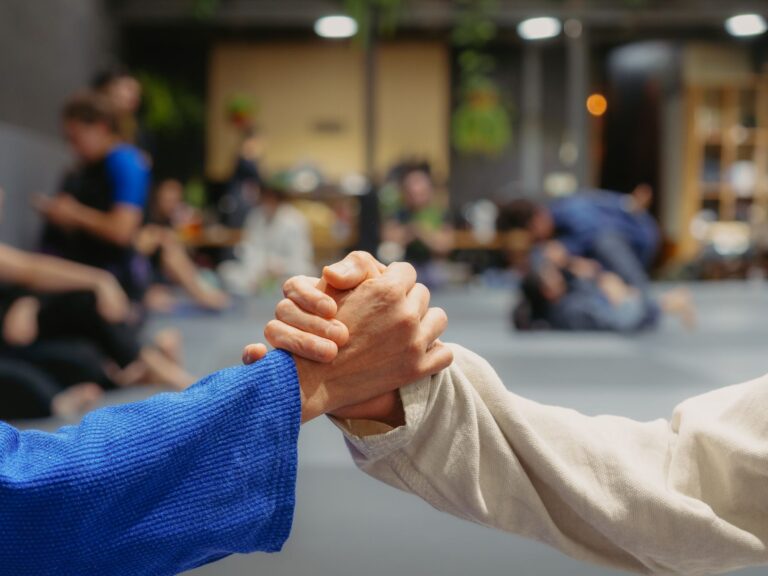
If you’re researching how much is jiu-jitsu for kids in Houston, you’re probably weighing whether it’s worth the investment—and whether your child will actually stick with it. The truth is that pricing varies widely depending on the academy, class frequency, and what’s included, but what matters more is finding a program where your kid genuinely wants to show up, where they build real confidence instead of just learning moves, and where the instructors actually care about their growth. At Trein Club in Oak Forest, kids train directly under Pedro Araujo, a 4x Jiu-Jitsu World Champion, and his team of accomplished coaches—but the focus isn’t on creating tiny competitors. Instead, parents consistently describe our program as transformative for children’s confidence, focus, and discipline, especially kids who never connected with traditional team sports.
Beyond the mats, Trein Club is built as a complete wellness space where your child has access to yoga, strength training, and recovery services alongside world-class jiu-jitsu instruction, all in a clean, intentionally designed 19,000-square-foot facility. We believe movement should fit your family’s life, not the other way around—which is why we offer flexible scheduling, a homeschool program, and summer camps that integrate into your routine.
How Much Does Jiu-Jitsu Cost for Kids? (2024 Price Breakdown)
The short answer: kids Brazilian Jiu-Jitsu typically runs between $120 and $250 per month in the United States, with elite academies in major metros like Houston, Los Angeles, or New York reaching $200–$300 for unlimited classes and full family benefits. The fuller answer depends on where you live, how often your child trains, whether the academy folds a gi and belt testing into the membership, and whether you plan to enter local tournaments. Unlike traditional after-school sports, BJJ is usually structured as a monthly membership rather than a per-season fee, which changes how parents should compare value.
Below, we break down the real numbers — including hidden costs most parents don’t see coming — and show how to judge whether an academy’s price actually matches the quality of instruction, safety, and long-term impact on your child. If you’re a Houston parent researching options, this guide will also help you understand where premium, champion-led programs like the kids BJJ program at Trein Club fit within the market.
Average Monthly Cost of Kids BJJ Classes by Region
Kids BJJ pricing varies more by geography than by age or skill level. Rent, instructor credentials, and local demand shape what a family pays in a mid-size Texas suburb versus a boutique gym in Sydney’s inner city.
United States: Typical Price Range for Kids BJJ
Across the U.S., kids memberships generally fall into three tiers. Budget or community-based gyms charge $80–$130 per month, usually with limited class times (two sessions per week) and shared facilities. Mid-tier academies range from $130–$180 per month and typically offer unlimited kids classes, a beginner gi, and structured belt progression. Premium academies — especially in Houston, Miami, Los Angeles, Austin, and New York — run $180–$275 per month and bundle unlimited training, family perks, dedicated youth coaches, and often access to yoga, striking, or summer camp programs.
In Houston specifically, most reputable kids programs sit in the $150–$225 range, with the higher end reserved for academies where the head instructor is a decorated black belt and the space includes clean, dedicated kids mats.
Canada: What Parents Pay for Kids Jiu-Jitsu
In Canada, expect CAD $110–$200 per month for kids BJJ, with Toronto, Vancouver, and Montreal at the top end. Many Canadian academies build the gi into a starter package that runs CAD $150–$250 upfront, and belt testing fees (CAD $30–$60) are often billed separately. Smaller cities like Halifax, Winnipeg, or Quebec City tend to price closer to CAD $100–$140 per month for two to three classes weekly.
Australia: Kids BJJ Pricing in Sydney and Beyond
Australian pricing is typically AUD $140–$240 per month. Sydney and Melbourne dominate the higher end, with boutique academies charging AUD $220+ for unlimited kids training. Brisbane, Perth, and Adelaide are more accessible at AUD $130–$180. Australian gyms often include the gi in the sign-up fee, which is a nice differentiator compared to the U.S. model.
What’s Included in a Kids BJJ Membership Fee?
A well-structured kids membership should include far more than a stack of class credits. At quality academies, the monthly fee covers unlimited access to age-appropriate classes, a structured curriculum by belt level, belt testing and stripe promotions, coaching from experienced instructors, access to open mats or family training days, and often a starter gi. Some clubs — including Trein Club — also fold in access to broader wellness programming, homeschool BJJ classes, and priority enrollment for events like Summer Camp.
Unlimited Classes vs. Per-Class Pricing: Which Is Better for Kids?
Unlimited memberships almost always win for kids. BJJ is a skill sport built on repetition, and children who train two to three times per week progress dramatically faster than those attending once. Per-class or “drop-in” pricing (typically $20–$35 per class) makes sense only for families sampling the sport or dealing with irregular schedules. For any child committed for three months or more, unlimited plans deliver better value and better development. Understanding how kids BJJ classes are structured helps you evaluate whether a program actually justifies unlimited training.
Family Discounts and Sibling Plans at BJJ Gyms
Family pricing is one of the most underused perks in BJJ. Most academies offer 10–25% off for a second family member and even deeper discounts for a third. Some offer flat-rate family memberships (for example, $299/month for the whole household) that dramatically lower the per-person cost. If two siblings train, a well-negotiated family plan can bring the effective monthly cost per child down to $120–$150 even at premium gyms.
Hidden Costs of Kids Jiu-Jitsu Parents Often Overlook
The sticker price of a membership is only part of the equation. Parents should budget for a few additional line items, all of which are optional or one-time in most cases.
Gi (Uniform) Cost: What You Need to Buy Before the First Class
A kids gi costs $50–$120, depending on brand and durability. Entry-level uniforms from Sanabul, Fuji, or Elite Sports work perfectly for the first year. Higher-end brands like Shoyoroll or Origin last longer but rarely make sense for a child who will outgrow the uniform within months. Many academies include a starter gi with enrollment or sell branded ones at cost. Children also need one white belt (usually included) and should have a rash guard ($25–$40) for no-gi classes.
Belt Testing and Graduation Fees Explained
Kids BJJ uses a color belt progression (white, gray, yellow, orange, green) that differs from the adult system. Belt testing fees typically run $30–$75 per promotion and cover the new belt, certificate, and often a ceremony. Some gyms roll testing into the membership. If you’re curious about how the progression works, this breakdown of belt progression is a helpful reference — kids’ belts differ, but the philosophy of gradual mastery is identical.
Competition Entry Fees: Optional but Worth Knowing
Tournaments are optional, but many kids love them. Local competitions cost $60–$95 per entry, while IBJJF or NAGA events run $85–$150. Add travel, coach fees, and a competition gi, and a serious tournament season can add $500–$1,500 annually. That said, most kids compete two to three times per year at most, and it’s a fantastic character-building experience for those interested. If you want to help your child prepare mentally, these competitor mental strategies translate well to young athletes.
What Age Can Kids Start Jiu-Jitsu and How Does Age Affect Pricing?
Kids can start Brazilian Jiu-Jitsu as young as age 3 at academies with dedicated tiny-tot programs, though most children join between ages 5 and 10. Age affects pricing mainly through program structure and class frequency rather than a per-year fee difference.
Little Kids Programs (Ages 3–6): Pricing and What to Expect
Little Kids classes focus on coordination, body awareness, listening skills, and basic movements framed as games. Expect $110–$170 per month for two to three classes per week. Sessions are shorter (30–40 minutes) and heavy on play-based learning. This age group is where confidence and focus develop rapidly — parents often report visible changes within the first few months.
Junior Programs (Ages 7–12): Class Structure and Cost
Junior programs are the core of most kids BJJ curriculums. Classes run 45–60 minutes and blend technique, drilling, and light live rolling. Monthly rates land at $140–$220 for unlimited training. This is the age range where belt progression starts to matter, where children can begin competing safely, and where the sport’s discipline benefits become most visible in schoolwork and home behavior.
Teen Programs (Ages 13–17): Transitioning to Adult Pricing
Teen programs bridge the gap to adult classes. Some academies fold teens into adult fundamentals; others keep a dedicated teen track. Expect $160–$250 per month, sometimes with the option to attend both teen and adult classes for a modest upcharge. Teens also become eligible for adjacent programs like striking classes for beginners, which pair well with BJJ for well-rounded development.
How to Find Affordable Kids BJJ Classes Without Sacrificing Quality
Affordability and quality don’t have to be in conflict. The key is knowing where to look and what to ask.
Trial Classes and Free First Lessons: How to Test Before You Commit
Nearly every reputable academy offers a trial. Some are single free classes; the best offer multi-class trials so kids can experience the environment across different coaches and training partners. Trein Club, for example, invites new families to experience three classes before committing to a membership, which is enough for most children to know whether they’ve found their sport. Before signing anything, always ask about the trial policy — it’s the single best filter for finding the right academy.
Scholarship and Reduced-Fee Programs at BJJ Academies
Many gyms quietly offer scholarships, hardship rates, or work-trade arrangements. Ask directly. Nonprofits like Kids Kicking Cancer, Beat the Streets, and various local BJJ foundations subsidize training for kids in specific circumstances. Homeschool families should also ask about daytime homeschool BJJ programs, which are often priced below evening classes.
Community Recreation Centers vs. Private BJJ Gyms: Cost Comparison
Rec centers and YMCAs occasionally offer BJJ or grappling programs at $40–$80 per month, but the trade-offs are real: instructors are often lower-ranked, mats are shared with other sports, and curriculum is inconsistent. For casual exposure, they work fine. For genuine skill development, safety, and long-term progression, a dedicated academy with certified black belt instruction is worth the price difference.
Is Kids Jiu-Jitsu Worth the Cost? Benefits That Justify the Investment
Ask any parent whose child has trained for six months and you’ll get a version of the same answer: yes, and it’s not close. The return on investment for kids BJJ shows up in areas most sports don’t touch.
Physical Development: Fitness, Coordination, and Strength
BJJ builds full-body strength, cardiovascular endurance, flexibility, and proprioception simultaneously. Unlike sports built around one motor pattern (soccer, baseball, swimming), grappling forces kids to move in every plane, use both sides of their body, and constantly adjust to a resisting partner. Children who train regularly show improved posture, better balance, and noticeably stronger core stability.
Mental Benefits: Discipline, Confidence, and Bully Prevention
This is where BJJ separates itself from every other youth sport. The mat teaches emotional regulation under pressure, patience through failure, and problem-solving in real time. Children who train develop calm confidence — they know what they can do, so they don’t need to prove it. That translates directly to bully situations: kids who train rarely need to fight because their body language changes. This deeper look at BJJ and bullying explores the mechanics of why it works.
Kids BJJ Cost vs. Other Youth Sports: How Does It Compare?
Compared to other youth activities, BJJ is competitively priced and often cheaper over a full year:
- Club soccer: $1,500–$3,500/year plus travel
- Competitive gymnastics: $200–$400/month plus meet fees
- Ice hockey: $2,000–$8,000/year including equipment
- Dance (competitive): $150–$300/month plus costumes and competitions
- Karate/Taekwondo: $120–$200/month with frequent belt testing fees ($50–$100 each)
- Kids BJJ: $120–$250/month, often with unlimited training
BJJ also has one major structural advantage: no season. Your child trains year-round, on their own schedule, without tryouts, bench time, or the politics of team selection. Every session is a training opportunity where every kid participates fully.
FAQ: How much does kids jiu-jitsu cost per month on average?
In the U.S., expect $120–$250 per month for unlimited kids BJJ classes. Budget gyms and community programs can run as low as $80, while premium academies in major cities reach $275. The national average sits around $160–$180 for a quality program with three or more classes per week.
FAQ: What age should my child start jiu-jitsu?
Most children can start between ages 4 and 6, when they can follow group instructions and control basic movements. Some academies accept kids as young as 3 in dedicated tiny-tot programs. There’s no upper age limit — teens starting at 13 or 14 still progress rapidly and gain enormous benefit from the sport.
FAQ: Do kids need to buy a gi (uniform) before their first BJJ class?
No. For a trial class, kids can wear athletic clothes with no zippers or buttons — usually a t-shirt and sweatpants or leggings. If your child continues, plan to buy a beginner gi ($50–$120) within the first two to three weeks. Many academies include a starter gi in the enrollment package.
FAQ: Are there any extra fees beyond the monthly membership for kids BJJ?
Potentially yes: gi purchase ($50–$120 one-time), belt testing ($30–$75 per promotion, roughly twice a year), and optional tournament entries ($60–$150 each). Reputable academies disclose all fees upfront — always ask for a full pricing sheet before enrolling.
FAQ: Is jiu-jitsu safe for young children?
Yes, when taught properly. BJJ is a grappling art with no striking, which means far fewer impact injuries than football, soccer, or even gymnastics. Kids programs focus on positional control, tap-out awareness, and controlled drilling. Injury rates in youth BJJ are among the lowest of any organized sport when instruction is qualified.
FAQ: Can I get a family discount if multiple kids enroll in BJJ?
Almost always. Most academies discount the second family member by 10–25% and offer even better rates for a third. Some offer flat-rate family memberships. Always ask specifically about sibling and parent-child pricing — it’s rarely advertised but nearly universal.
FAQ: How many classes per week do kids typically attend for BJJ?
Two to three classes per week is the sweet spot for consistent progress without burnout. Kids who train once a week still benefit but progress slowly. Highly engaged children (especially those preparing for tournaments) may train four to five times weekly, though this is uncommon and unnecessary for most.
FAQ: Is kids jiu-jitsu more expensive than karate or other martial arts?
Roughly comparable. Karate and taekwondo typically cost $120–$200/month, similar to BJJ. However, traditional martial arts often add mandatory belt testing fees ($50–$100 every few months), which can push their annual cost above BJJ. When comparing options, curious families also weigh the differences between striking and grappling arts — this comparison of striking disciplines is useful for parents evaluating the full martial arts landscape.